Brazil INMETRO Toy Certification: A Classification Guide for LED Drawing Boards
The direct answer is to determine the applicable INMETRO product family and certification route for the exact LED board and obtain local confirmation before importing or selling, while avoiding ordering Brazilian packaging or a shipment on the assumption that an LED acrylic board is automatically exempt from, or automatically covered by, toy certification.
1. Decide scope before deciding whether a certificate is needed
Brazil's INMETRO toy framework applies to products that fall within the regulated toy scope; a product's marketing name alone does not decide the question. Assess intended play use, age, design, claims, and the exact LED-board configuration with a Brazilian conformity specialist before ordering market-specific stock.
A light-up acrylic drawing board can be presented as a creative activity product, educational aid, gift, or toy. Those labels describe commercial positioning but do not replace the legal scope analysis. Start with the product's intended use, age range, directions, sales context, included markers and accessories, power configuration, and foreseeable play. Provide the conformity body or local adviser with the exact retail sample, photographs, technical description, and proposed package and listing. Ask for a written scope rationale tied to Portaria 302/2021 and its current amendments.
INMETRO's official FAQ says Portaria 302/2021 sets technical requirements and provides for compulsory certification and registration for covered toys. It does not say every acrylic board is a toy. The importer should avoid both false confidence in a claimed exemption and needless certification on a product that may not be within scope. Do not print a conformity mark or register a family before the appropriate Brazilian route is confirmed. If the item combines a board with markers, batteries, or another accessory, ask whether the set or each item needs separate treatment.
INMETRO's registry currently includes a family named for creative-activity toys made of plastic. This is an example that makes scope screening important, not proof that every acrylic LED drawing board belongs to that family.
- Describe intended use and target age, not just the product name.
- Ask for a written scope decision for the exact retail configuration.
- Keep toys and other regulated components distinct in the analysis.
2. Understand certification and registration as separate steps
For toys covered by the current Brazilian rule, INMETRO describes compulsory conformity certification and registration. Buyers should verify the current procedure, product-family scope, certification model, and registration status rather than treating a lab report or supplier logo as authorization to sell.
The certification process evaluates conformity through the route defined by the regulation and applicable conformity-assessment requirements. The importer should identify the responsible Brazilian applicant, the product family, models and variants included, the manufacturer and factory location, and the certificate's current scope. A certificate for another brand, a similar shaped board, or a previous base revision may not cover the item being ordered. Verify the details in the official registry and confirm with an accredited product certification body (OCP) responsible for the selected scope.
Registration is not the same document as the certificate. INMETRO's FAQ and registry distinguish the conformity process from the registration required for covered toys offered in Brazil. Confirm the sequence and who files before placing a purchase order or scheduling an import. As of the current official guidance, the transition periods referenced for older rules have passed for the relevant covered goods; check current rules and any later amendments. Do not rely on an old stock exception or a third-party claim without a current record.
Official INMETRO pages state that covered toys must be certified and registered for sale. Confirm the current rule and record; a foreign laboratory report may be evidence but should not be presented as the Brazilian conformity certificate.
- Check certificate holder, factory, family, models, and status.
- Verify the associated registration in the official INMETRO system.
- Confirm the current sequence with an accredited OCP before importing.
3. Define a defensible model family for shaped-board variants
A certificate or registration must be checked against the configuration and family represented. A buyer should document which shapes, LED bases, power methods, markers, and packaging variants are included and ask the certification body whether those variants fit the approved family.
A distributor may want a cloud, heart, rocket, and animal range, but a shared brand or acrylic material does not prove they belong in one certification family. Prepare a versioned matrix of SKU, silhouette, panel, base, electronics, cable or battery, included writing tools, age label, and retail package. Identify what varies and what stays constant. Give the same matrix to the supplier and the local certification body so a later purchase order does not introduce a different accessory or power source that was absent from the assessed sample.
A factory sample can be useful for product identity and component review, but it cannot establish INMETRO scope by itself. The conformity body should decide sample selection, test needs, factory audit or certification model, and the evidence necessary for the product family. Keep the approved sample and its serial or reference record aligned with the final mass-production specification. If there is a component change, ask whether the certificate holder must notify or update the certification before shipment.
The registry's product detail can show holder, manufacturer, family, certification model, and status. Check the live record on the date of procurement because certificate status and scope can change.
- List each model and the differences across the range.
- Use the OCP to decide whether variants share one family.
- Freeze the production sample and approval reference before bulk manufacture.
4. Review Portuguese-language marking and consumer information
For a covered toy, the buyer should review the exact product and package against current Brazilian marking, age, warning, instruction, and registration requirements in Portuguese. Do not approve an INMETRO seal or age statement from a generic overseas packaging template.
INMETRO's official FAQ identifies markings and information on the toy and package, including age-range indication and Portuguese-language warnings or instructions. The required content depends on toy type and the rule; the importer should have local regulatory and language reviewers check the print-ready artwork. Confirm that the producer/importer, product identifier, certificate or registration details where required, and directions match the certified product. Artwork should be checked at actual size for legibility and placement, not only on a desktop proof.
Create one controlled Brazilian artwork version tied to the exact approved board. Match the image, silhouette, base, marker count, instructions, age positioning, and package contents to the production sample. Keep source files, translation approval, OCP feedback, and print proof revision. If the family contains different sets, make sure the listing and package do not combine a board with accessories that were not assessed. A Portuguese translation alone is not regulatory review; local expertise should evaluate meaning, warnings, and required fields.
The current INMETRO FAQ says covered toys are subject to the Portaria 302/2021 route, and notes post-transition dates for older rules. Do not rely on a legacy stock allowance without checking whether it applies to the specific goods and timeline.
- Use local Portuguese review for the market artwork.
- Verify the age statement and warnings for the exact toy family.
- Reconcile package claims, certificate details, and packed contents.
5. Coordinate certification with the import and retail calendar
A Brazil launch plan should place scope review, certification, registration, packaging approval, import-document preparation, and retail timing in a sequence with explicit owners. Do not assume the supplier's sample lead time includes third-party assessment or government registration.
Before requesting a quotation, tell the supplier that Brazil is the intended market and that local certification scope is being evaluated. Agree on the sample configuration, factory and model data, material or component information the OCP may request, and the person who authorizes sample shipments. The Brazilian importer should contact its OCP early to understand the available procedure and required evidence. Keep the commercial production date conditional on the steps that actually apply; an unsupported promise that certification will finish by a particular date is not a sound launch plan.
Separate factory milestones from local approval milestones. The supplier can manufacture a sample, share factual product data, and review the final pack. The importer and certification body own the local application, tests, and registration decisions. Build contingency for a test query, model-family adjustment, revised label, or additional sample. Attach the current certificate and registry record to the order file before goods are marketed. A shipment inspection can confirm agreed appearance and packing observations but cannot replace the statutory conformity certificate or product registration.
Brazilian consumer information should be reviewed in Portuguese by a qualified local professional. Translation accuracy and regulatory sufficiency are related but distinct checks.
- Ask the OCP for the current process before confirming launch dates.
- Define which samples and product facts the supplier will provide.
- Do not equate pre-shipment inspection with INMETRO approval.
6. Keep marketplace, importer, and registry data aligned
The Brazilian seller should align the marketplace product page, package, invoice description, certificate, registration record, and actual imported variant. A product listing cannot cure missing certification, and an incorrect variant association can confuse a buyer and compliance reviewer.
Use a SKU master that records the Portuguese and English product names, brand owner, importer, manufacturer, factory, model, registration reference if applicable, age range, included set, and approved image version. For each marketplace offer, confirm whether the displayed item is precisely the registered model and who is responsible for listing accuracy. If one offer bundles multiple boards, ask the OCP whether the bundle is within scope and how its registration should be represented. Keep archived page captures when significant claims or package details change.
At receiving, reconcile quantity and model against the import documents and purchase order. If the goods arrive under a different revision, quarantine the question rather than editing a record to match after the fact. Ask the supplier to explain the difference and seek direction from the Brazilian compliance owner before selling. LumDigi can assist with supplier-held configuration details for its board projects; it cannot issue an INMETRO certificate, make a legal classification, or register a product for a Brazilian importer.
Where a set includes a board, markers, cable, or battery, give the full set description to the OCP. Do not assume a component tested separately automatically covers the retail set or its packaging.
- Use the registration scope as a controlled reference for each offer.
- Keep listing claims and package images versioned.
- Escalate a SKU or pack mismatch before retail sale.
7. Brazil buyer checklist for an LED board project
Before placing a Brazil order, settle the toy-scope question, identify the local applicant and OCP, document the model family, confirm certificate and registration steps, review Portuguese artwork, and reconcile marketplace data with the approved product.
A sourcing brief should include intended age and use, channels, board shapes, base and power method, markers and accessories, retail packaging, quantity scenario, and target sales date. Ask the OCP to confirm whether the described item is within Portaria 302/2021, which family and models are covered, which certification model applies, and what current records are required. Have the importer maintain a decision log and record source dates; this matters because rules and administrative lists can change.
Before release, compare the approved certificate and registry entry with the purchase order, production sample, label proof, and listing. Confirm there is no unapproved component or age-positioning change. Keep supplier communications and inspection records as supporting factual evidence. If the product is outside toy scope, document the legal analysis and check whether another regulation applies. For any uncertain point, use an accredited OCP and Brazilian legal adviser rather than extrapolating from a competitor listing.
An inspection report documents only its agreed scope, date, sample, and method. It does not create or replace a required certificate or registration.
- Obtain a written product-scope decision.
- Validate certificate and registration for the exact family and importer.
- Approve Portuguese package and online data against the final sample.
8. Conclusion: classify first, then plan the Brazilian certification path
The key decision is not whether every LED drawing board needs an INMETRO certificate; it is whether the exact product falls within a regulated family and what current steps apply. Resolve that question locally before importing or selling.
For a covered toy, INMETRO describes compulsory conformity certification and registration. The buyer should verify both the product family and the current registration record, then align the package and market data with the approved variant. That is more reliable than relying on an overseas certificate, a supplier's broad assurance, or a product title.
Share your Brazil channel, product use and age position, board shape and power configuration, pack, and expected quantity when discussing a LumDigi project. We can provide supplier-held product information for the local assessment. The Brazilian importer and qualified conformity professionals must decide scope, certification, registration, label obligations, and release.
This article is not a classification ruling. Use the current Brazilian technical regulation, an accredited OCP, and local legal advice for the specific board and importer.
- Do not infer scope from a product name.
- Check current official records for the exact product family.
- Keep supplier facts separate from local regulatory conclusions.
Frequently asked questions
Does every LED drawing board need INMETRO toy certification in Brazil?
No universal conclusion should be made from the product name. The toy regulation applies to products within its scope. Assess intended use, age, design, claims, accessories, and the exact retail set with an accredited Brazilian conformity body or qualified adviser.
What does INMETRO Portaria 302/2021 require for covered toys?
INMETRO says the regulation establishes technical requirements and compulsory conformity certification, with registration required for commercial sale of covered toys. Confirm the current route and exact family in official sources.
Is a foreign test report enough to sell a toy in Brazil?
Do not assume so. The importer should follow the Brazilian conformity-assessment and registration route applicable to the product and verify the current certificate and registry entry.
What should an LED board importer send to an OCP?
Provide the exact sample, intended age and use, model variants, base and power arrangement, accessories, package, instructions, manufacturer/factory, and sales presentation. Ask the OCP to confirm scope and the current certification steps.
Image planning for this topic
These notes document the role and intended context of the two visuals used in this guide.
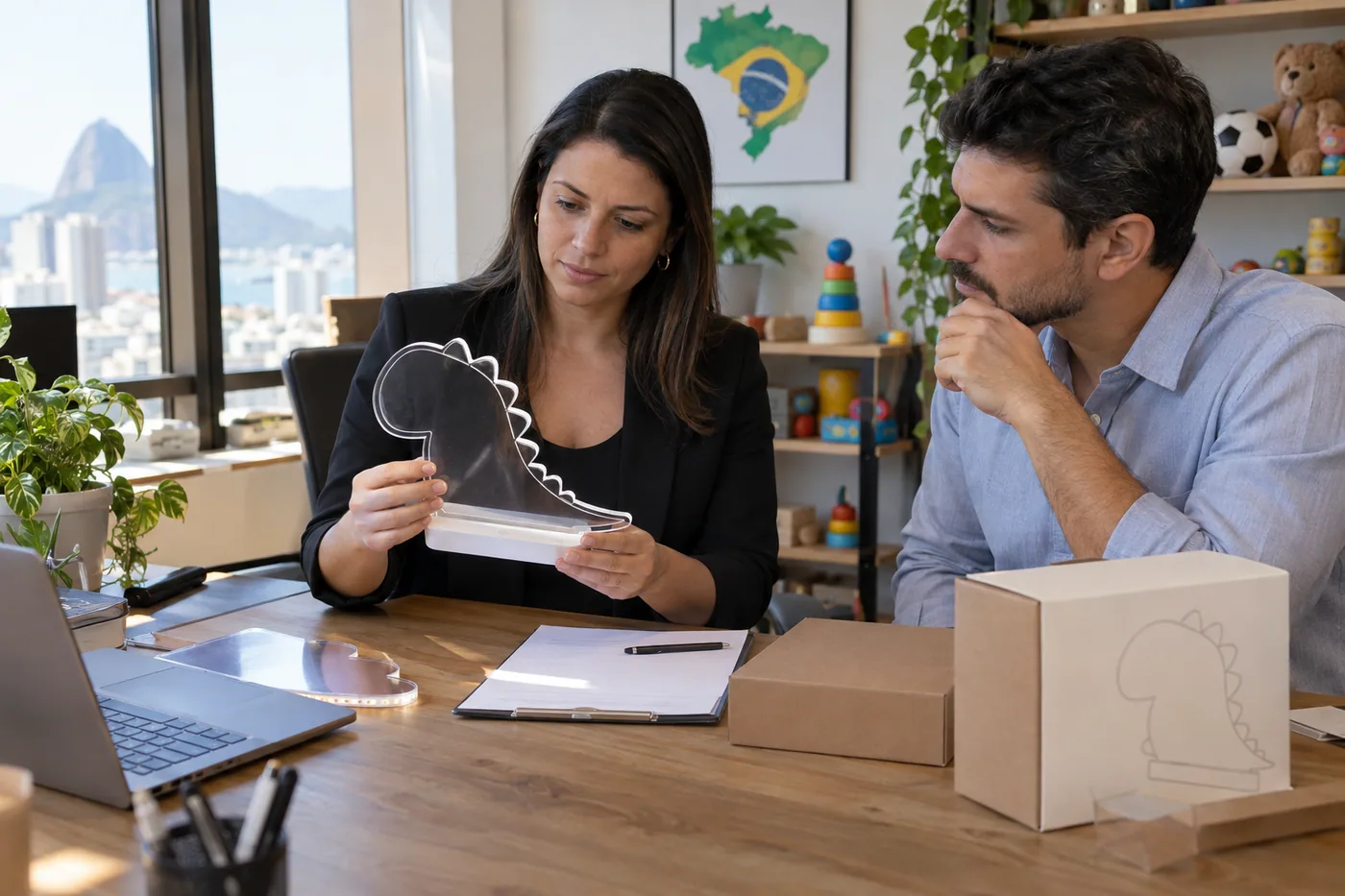
Show a buyer decision context for Brazil INMETRO Toy Certification: A Classification Guide for LED Drawing Boards.
- Placement
- hero
- Caption
- A Brazilian buyer documents the intended age, use, and exact product version for a local scope review.
- ALT text
- Brazilian buyer reviews a shaped acrylic LED board and product age-use brief
View AI image direction
Photorealistic documentary photograph for a LumDigi B2B article about Brazil INMETRO Toy Certification: A Classification Guide for LED Drawing Boards. Use case: photorealistic-natural. Asset type: editorial blog photograph. Scene: a Brazilian product buyer in a real office reviews a shaped acrylic LED drawing board sample, a blank age/use brief, and neutral packaging mockups ahead of a local product-scope assessment. The documents are blank or unreadable; this is an evaluation discussion, not a government certification. Warm natural daylight, realistic materials, landscape 3:2 documentary photography. No INMETRO logo, no certificate, no readable text, no watermark, no overlay. Real acrylic texture, candid commercial setting, landscape composition, no readable logos, no certificates, no text overlay, no watermark.
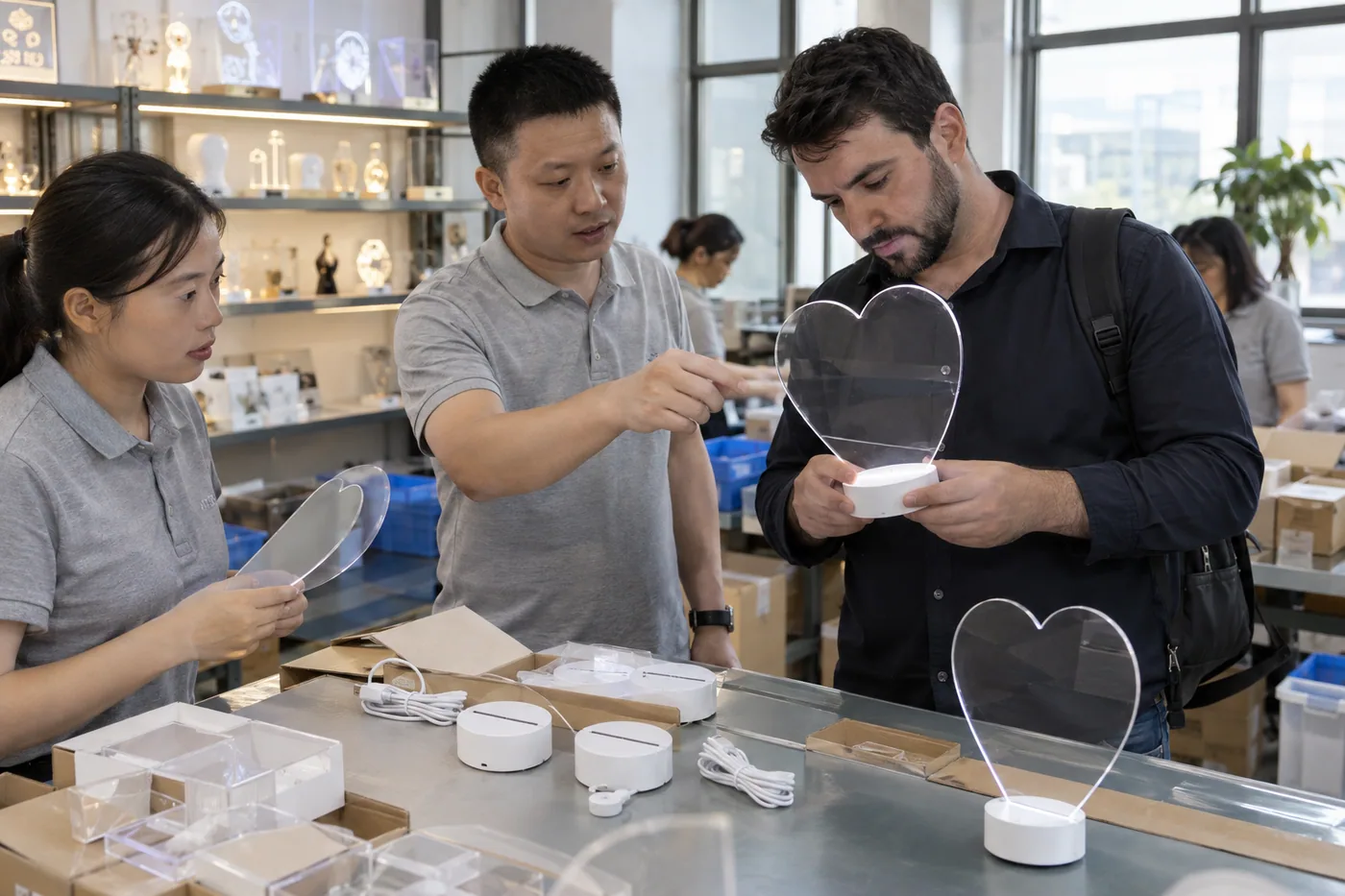
Show practical factory or shipment-review context for Brazil INMETRO Toy Certification: A Classification Guide for LED Drawing Boards.
- Placement
- after-key-considerations
- Caption
- Chinese Asian factory staff and a Brazil-focused importer compare an LED board sample with neutral product records before certification planning.
- ALT text
- Chinese factory staff and overseas importer inspect a heart-shaped LED drawing board sample
View AI image direction
Photorealistic documentary photograph for a LumDigi B2B article about Brazil INMETRO Toy Certification: A Classification Guide for LED Drawing Boards. Use case: photorealistic-natural. Asset type: editorial blog photograph. Scene: Chinese Asian factory staff and an overseas Brazilian importer inspect a heart-shaped light-up acrylic board and its base while comparing a neutral blank sample specification. All factory workers are Chinese/Asian adults. Candid professional sample room, natural industrial daylight, realistic acrylic edges, landscape 3:2. No readable documents, no official mark, no logo, no certificate, no claim of approval, no text overlay, no watermark. Real acrylic texture, candid commercial setting, landscape composition, no readable logos, no certificates, no text overlay, no watermark.
Turn the article into a practical sourcing brief
Use the checkpoints above to document the product, evidence, packaging, and approval decisions relevant to your market. A clear brief helps suppliers respond to the same commercial question and gives your team a traceable basis for the next step.
Useful external references
- INMETRO: What Portaria 302/2021 establishes for toys
Official guidance says covered toys are subject to technical requirements, compulsory certification, and registration for sale.
- INMETRO: Products and services subject to registration
Official searchable registry for product families, registration records, and certification information; check the current entry for the exact family.
- Brazil Federal Revenue: Products subject to compulsory INMETRO certification
Official import-control overview that includes toys and points importers to the applicable conformity regulation.

LED Drawing Board Buyer Documentation Checklist for Market Review
A practical B2B guide for importers and compliance coordinators who need to organize product information and questions for the buyer's own market review and qualified advisors.
Read article
LED Drawing Board Supplier Evidence Request Guide
A practical B2B guide for importers and sourcing managers who need to request configuration-specific product, packaging and production evidence from a supplier.
Read article
LED Drawing Board 3PL Inbound Preparation Guide
A B2B buying guide for ecommerce sellers, 3PL coordinators, and distributors who need to prepare a configuration-specific inbound handover using approved SKU, pack, carton, and quantity information.
Read article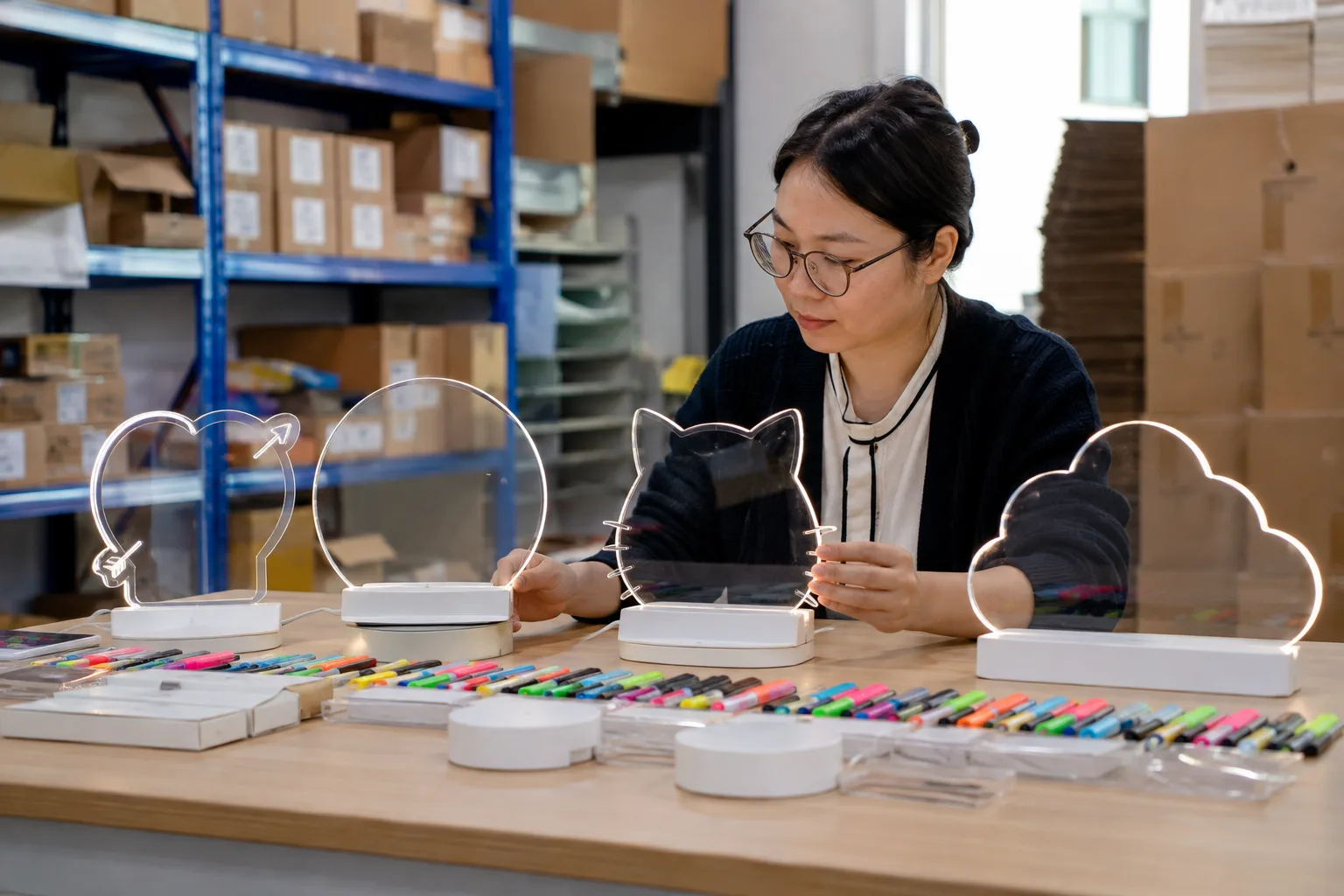
LED Drawing Board Catalog Planning Guide for Wholesale Sellers
A B2B buying guide for distributors, exporters, and retail sales teams who need to build a catalog from controlled product references rather than mixed concept images.
Read article