B2B product sourcing • Private label • Production insight
Get a quote
Home/Insights/B2B Buyer Guide
B2B BUYER GUIDE

Japan Product Safety Scope for Cross-Border LED Drawing Board Sellers

A B2B buying guide for cross-border ecommerce sellers, Japanese importers, distributors, and overseas brands entering Japan who need to screen the exact LED board, intended age, electrical components, sales route, and designated-product status before selecting Japanese safety labels or a local representative.

15 min readUpdated August 2026By LumDigi B2B Team
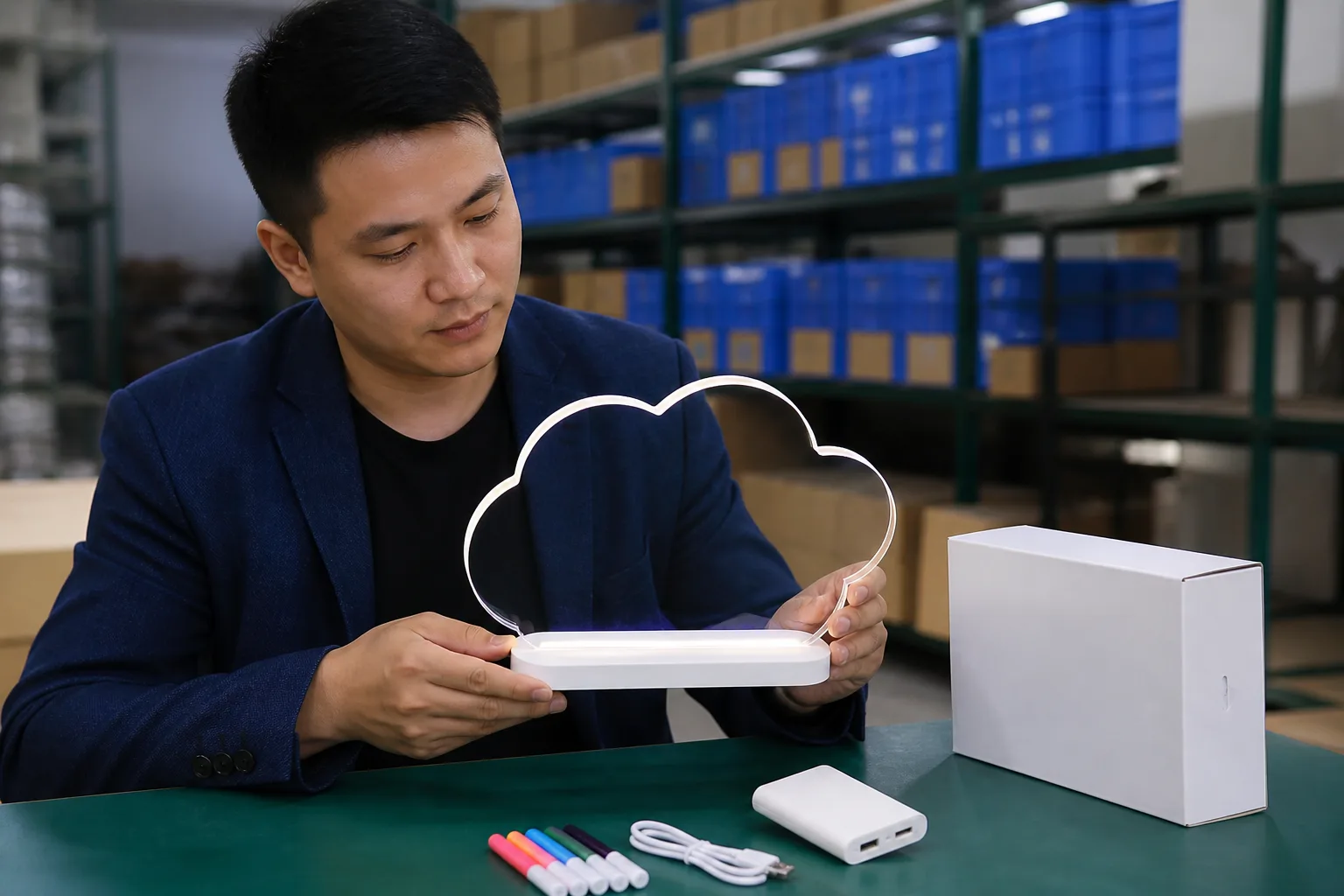
Japanese ecommerce manager reviews a shaped LED board, base and age-use plan
A Japan-market product team reviews intended age, power design, and sales route for an LED drawing board.
DIRECT ANSWER

Japan Product Safety Scope for Cross-Border LED Drawing Board Sellers

The direct answer is to screen the exact LED board, intended age, electrical components, sales route, and designated-product status before selecting Japanese safety labels or a local representative, while avoiding assuming every LED drawing board requires PSE or the new infant-toy mark, or assuming that foreign online sellers have no obligations because a Japanese importer is absent.
01

1. Screen product, age, and sales route separately

Japan's product-safety rules do not apply to every children's product in the same way. A seller should assess intended play age, product design, power components, designated-product scope, and whether it sells through a Japanese importer or directly to consumers from overseas.

METI's guidance for the new infant-toy rule says the regulation covers toys designed for play and intended for children under 36 months. A shaped LED board marketed for older children is not automatically within that new under-three rule, but age text alone is not enough if design, claims, or foreseeable use point elsewhere. Preserve the product brief, age statement, instructions, artwork, advertising, and retail sample for a Japanese adviser to review. Do not assume that calling the item educational removes it from toy regulation.

Separately, METI's overseas-operator guidance addresses foreign businesses that directly sell designated PS-mark products to Japanese consumers without a domestic importer. That does not mean every foreign online sale triggers a PS mark or domestic-responsible-person duty. First determine whether the exact product is on a designated list, then map the seller and import route. These are separate scope questions; a buyer should not copy a PSE or PSC mark from a visually similar item.

METI states that the infant-toy regulation applies to items designed for play and intended for children under 36 months. A product not designed for play or expressly intended for an older age may be treated differently, but the complete facts need local review.

  • Confirm age and intended use from the real product presentation.
  • Identify whether a Japanese importer or direct cross-border seller places the product.
  • Screen the exact product against each designated category.
02

2. Understand the under-three toy change without overextending it

METI says the new Japanese regulation for toys intended for children under three took effect on 25 December 2025. Covered operators have technical, age/warning, and notification duties; a board intended for older users is not automatically covered solely because children can use it.

The official page defines the target as a toy designed for play and intended for infants under 36 months. It describes technical-standard conformity, age and usage warnings, manufacturer/importer notification, and a children’s PSC mark for covered toys. A private-label buyer should review how the board is described, who it is designed for, whether it includes small accessories, and how age grading appears on every consumer-facing surface. A generic '3+' icon copied from another product is not a substitute for an informed Japanese review.

Before a buyer approves a Japan package, share the complete product and use scenario with local counsel or a competent compliance service. Include board, base, cable or battery, markers, instructions, online advertising, and packaging. Ask whether the item is intended for under-three play and whether any relevant category or exception applies. If the design or marketing changes after approval, reopen the review. Supplier sample review can confirm the physical configuration; the local business determines its legal obligations.

The new under-three requirements began on 25 December 2025. Confirm any later implementation guidance, required label format, test evidence, and transitional rules on the current METI page before launch.

  • Use the 36-month criterion stated by METI, not a casual age label.
  • Review product design, claims, accessory hazards, and package together.
  • Obtain local advice before applying a children’s PSC mark.
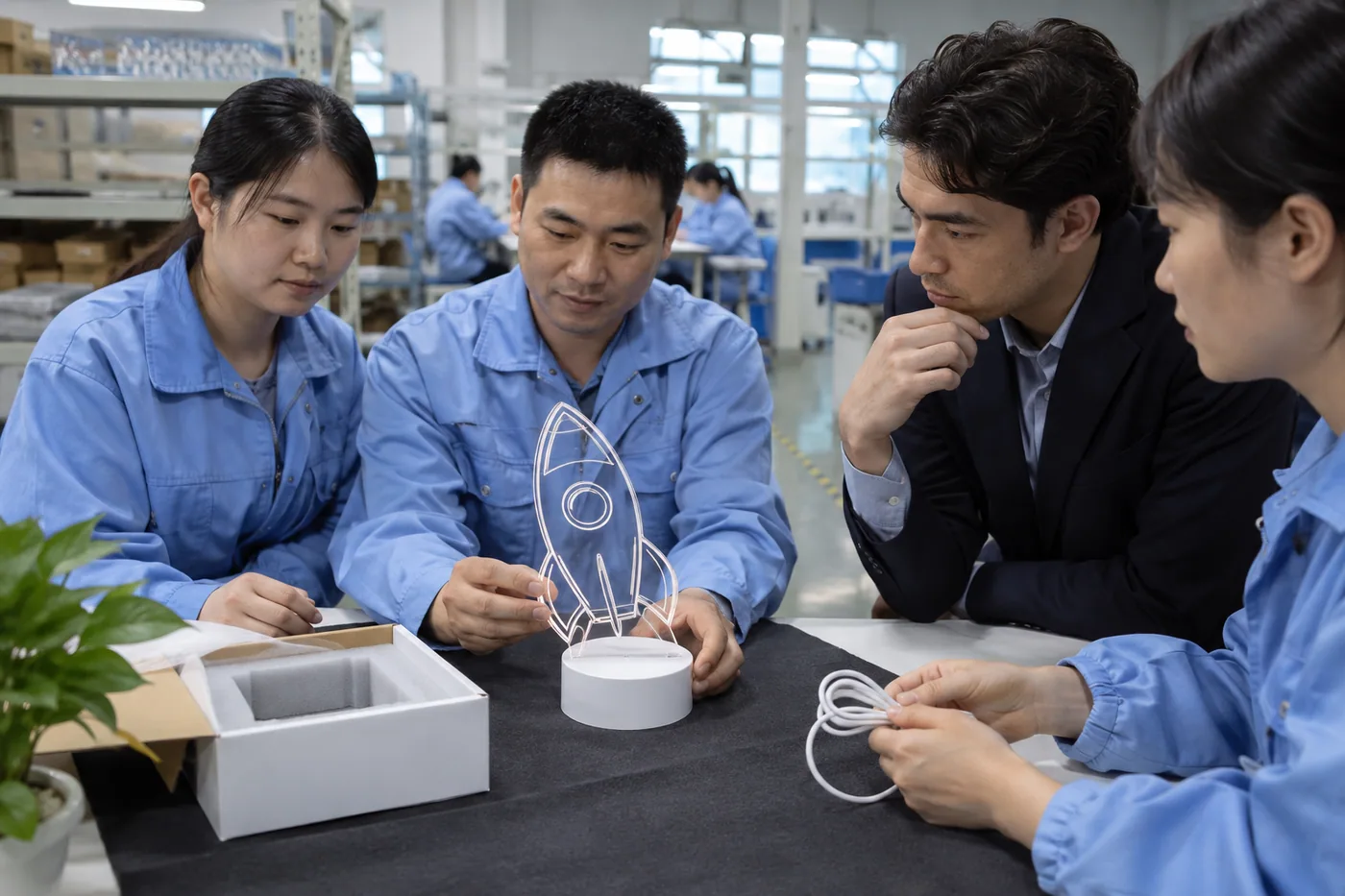
Chinese factory staff and Japan-market buyer inspect a rocket-shaped LED board and cable
Chinese Asian factory staff and a Japan-focused buyer inspect the exact base and cable version for local scope review.
03

3. Do not assume a USB LED board automatically needs PSE

PSE obligations depend on whether the electrical product falls within Japan's Electrical Appliances and Materials Safety Act designated categories. The voltage or presence of an LED does not by itself answer the scope question; review the complete base, power unit, cable, and any supplied adapter.

METI's English guide describes a process for businesses importing covered electrical appliances: business notification, technical conformity, self-inspection, and PSE marking; specified products also require conformity assessment. It notes that only eligible Japan-established businesses may conduct import-business notification, with rules for foreign companies. For a USB-powered board, determine whether the supplied components are separately regulated and whether the retail set changes the analysis. Do not promise 'no PSE required' or add the PSE mark without a product-specific decision.

Give a Japanese reviewer a schematic or factual product description, rated input, connector, power source, battery type if any, optional adapter details, and the exact items packed. A cable photographed in a listing may be a consumer-provided accessory rather than a supplied part; verify before review. Ask the supplier for factual component data and sample identity. Do not ask a supplier to issue a legal classification it is not qualified to make.

The PSE act concerns designated electrical appliances and materials. A USB port or LED alone does not determine whether the complete board, supplied adapter, or another component is a regulated product.

  • List every powered component and what is included in the retail pack.
  • Check the current METI designated-product schedule.
  • Keep formal test and self-inspection evidence distinct from factory observations.
04

4. Check the foreign direct-seller rules if there is no local importer

Since 25 December 2025, Japan's amended product-safety framework allows specified overseas businesses directly selling designated products to Japanese consumers to be regulated as specified importers, including notification, conformity, and domestic-responsible-person requirements when applicable.

The new route is relevant to cross-border ecommerce brands that use an online platform and ship directly without an established Japanese importer. It is not a universal obligation on all foreign sellers or all products: the product must fall within a covered designated category. Map the commercial flow from listing owner to seller, fulfilment provider, customs importer, consumer, and return address. Confirm with METI or local advisers which entity is the specified importer under the actual transaction design.

If the product is covered, the foreign operator may need to notify and appoint a qualifying domestic responsible person for product-safety measures. METI provides detailed guidance and states certain eligibility requirements, including a Japan-based person with Japanese-language capability. A marketplace fulfillment arrangement should not be assumed to supply the required representative. Ask for written service scope, authority to communicate, record access, complaint routing, and emergency coverage before launch.

METI's foreign-operator change is limited to specified importers and products covered by the four relevant product-safety laws. Screen the designated-product list rather than assuming every cross-border parcel is covered.

  • Map seller, marketplace, importer, and fulfilment roles.
  • Determine designated-product status before appointing a representative.
  • Verify the representative's qualifications and contracted responsibilities.
05

5. Build a Japan evidence file for the exact listing and sample

A defensible Japan file links the product, age and use presentation, power configuration, supplier, label version, and sales route to the applicable regulatory screen. Retain the evidence reviewed and the local conclusion; a generic factory statement is not a scope determination.

The file should include dated product photos, an approved sample reference, model and base revision, cable or battery description, included accessories, user instructions, age grading, Japanese package proof, listing claims, seller identity, and destination/fulfilment route. If a local adviser says a category is not in scope, record the precise question and rationale rather than saving only a one-word email. If a component is added, a listing changes age, or sales shift from a local distributor to direct fulfilment, review whether that conclusion still applies.

Coordinate factory and local tasks. The supplier can confirm board specifications, sample details, and records it actually maintains. A factory test or pre-shipment inspection can help verify agreed observations, but it cannot create a METI notification, establish legal classification, or authorize a mark. The Japanese importer or foreign operator and its adviser own those obligations. Store current official source links and have a named owner recheck them before each substantial product or route change.

For an overseas seller that is within scope, METI describes a domestic responsible person and notification process. Verify requirements and select a qualified representative before activating the sales route.

  • Save the exact listing and packaging version reviewed.
  • Tie any conclusion to a specific model and sales flow.
  • Reopen scope review after age, power, accessory, seller, or route changes.
06

6. Questions to ask a supplier when preparing a Japan project

Ask the manufacturer for verifiable product facts that a Japanese reviewer needs: board and base configuration, power ratings, battery details, included accessories, intended instructions, manufacturing site, sample version, and any existing test records with their actual scope.

A concise request should specify the Japan destination, channel, proposed age and use, board shape, power option, pack contents, and required return format. Request a labeled sample or photo set that matches the quoted SKU and identify if a component is optional. Ask how a change in base or cable is communicated and who can provide a dated response. Avoid asking for an unsupported certificate or an unqualified answer that a product is 'Japan approved.'

Then share the returned facts with the importer or Japanese adviser. If the legal reviewer needs a test, let the appropriate lab define the method and sample. Set clear gates: classification, marking decision, package approval, supplier sample signoff, production release, and listing review. LumDigi can coordinate configuration questions and B2B project information, while the Japanese entity or cross-border seller remains responsible for product-safety and import obligations.

A Japanese consumer-facing age statement should match design, packaging, instructions, and listing. Have a native-language product-safety professional review text and meaning rather than translating only the headline.

  • Request objective technical and configuration records, not broad assurances.
  • Keep optional components separate from the quoted packed set.
  • Use written release gates for the Japanese market.
07

7. Japan launch checklist for retailers and cross-border sellers

Before launch, confirm under-three toy scope, electrical-product scope, designated-product status, seller/importer route, local responsible-person needs, Japanese labels and instructions, and consistency between listing and the final packed board.

Have a local owner answer: Is the item a toy intended for under-three use? Is any electrical component in a designated PSE category? Is the complete product among the designated PS-mark products for an overseas direct seller? Which entity files notices or keeps records? What Japanese warnings and instructions are needed? What sample and test evidence must support the conclusion? Record the official source, review date, answer, owner, and open points before accepting a large purchase order.

At final review, compare the production sample, box, insert, marketplace images, age claim, power description, and return contact. Verify no unauthorized mark appears. Save a version-controlled approval and recheck if a new sale channel bypasses the Japanese importer. If any answer is uncertain, do not use this article as legal advice; request current METI guidance or professional review. This risk-based screen helps buyers prepare the correct sourcing conversation without pretending a generic article can certify their product.

Keep records for every optional power configuration. A buyer-provided USB supply and a supplied adapter can create different review questions; confirm the actual shipped pack.

  • Get an affirmative scope decision for each applicable law.
  • Validate the actual production item and Japanese offer together.
  • Do not publish marks or claims before approval by the responsible operator.
08

8. Conclusion: Japan requires a scope-first market plan

For Japan, assess the under-three toy rule, electrical-product list, and overseas direct-seller framework separately. Only then select the applicable label, notification, or local-representative steps for the exact board and channel.

The most common planning error is to see a child-oriented illuminated product and assume one mark applies to every component and selling route. METI's current guidance provides separate product and operator tests. Use the actual age, design, power parts, seller, and import flow to reach a local conclusion, then preserve the evidence and update it when facts change.

For a LumDigi Japan inquiry, share the market channel, intended age, product and power configuration, package contents, and local compliance questions. We can help confirm supplier-controlled specifications and sample details. The Japanese importer, overseas direct seller, qualified adviser, and relevant authorities determine classification, conformity, notification, marking, and consumer instructions.

This article is a scope-screening guide, not legal advice. Consult current Japanese regulations, METI, and qualified local advisers for the exact board and sales route.

  • Screen before you mark.
  • Separate toy scope from electrical scope.
  • Recheck the seller route and product version at launch.
BUYER QUESTIONS

Frequently asked questions

Does Japan's new under-three toy rule automatically apply to every LED drawing board?

No. METI describes the scope as toys designed for play and intended for children under 36 months. Review the actual design, age, claims, and use; a qualified Japanese adviser should assess the product.

Does every USB-powered LED drawing board need a PSE mark?

Do not infer that from USB power or LEDs alone. PSE obligations depend on designated-product scope and the exact components supplied. Check the current METI list and obtain a product-specific Japanese assessment.

When do Japan's overseas direct-seller rules matter?

They can apply to specified overseas businesses that directly sell products covered by the relevant designated-product laws to Japanese consumers without a domestic importer. Confirm both the product and commercial-flow scope with METI or local counsel.

What should a seller ask its LED board factory for Japan?

Request the exact model and base version, power and battery details, pack contents, age/use brief, sample reference, manufacturing site, and existing test-record scope. The seller and local adviser make the Japanese legal and marking decisions.

EDITORIAL IMAGE NOTES

Image planning for this topic

These notes document the role and intended context of the two visuals used in this guide.

Image 1

Show a buyer decision context for Japan Product Safety Scope for Cross-Border LED Drawing Board Sellers.

Placement
hero
Caption
A Japan-market product team reviews intended age, power design, and sales route for an LED drawing board.
ALT text
Japanese ecommerce manager reviews a shaped LED board, base and age-use plan
View AI image direction

Photorealistic documentary photograph for a LumDigi B2B article about Japan Product Safety Scope for Cross-Border LED Drawing Board Sellers. Use case: photorealistic-natural. Asset type: editorial blog photograph. Scene: a Japanese ecommerce product manager examines a shaped acrylic LED drawing board, its low-voltage base, cable, and an age/use planning sheet with all writing blurred. This is a market-scope conversation, not an approval or certification. Clean modern office, soft daylight, accurate product materials, editorial documentary photo, landscape 3:2. No PSE or PSC marks, no METI logos, no readable text, no certificate, no overlay, no watermark. Real acrylic texture, candid commercial setting, landscape composition, no readable logos, no certificates, no text overlay, no watermark.

Image 2

Show practical factory or shipment-review context for Japan Product Safety Scope for Cross-Border LED Drawing Board Sellers.

Placement
after-key-considerations
Caption
Chinese Asian factory staff and a Japan-focused buyer inspect the exact base and cable version for local scope review.
ALT text
Chinese factory staff and Japan-market buyer inspect a rocket-shaped LED board and cable
View AI image direction

Photorealistic documentary photograph for a LumDigi B2B article about Japan Product Safety Scope for Cross-Border LED Drawing Board Sellers. Use case: photorealistic-natural. Asset type: editorial blog photograph. Scene: Chinese Asian factory product staff and an overseas Japan-market buyer inspect a rocket-shaped acrylic LED board base, cable and package sample on a clean table. All factory staff visible are Chinese/Asian adults. Candid documentary photo, natural light and realistic product details, landscape 3:2. No readable labels, no official marks, no logos, no certificate, no safety claim, no text overlay, no watermark. Real acrylic texture, candid commercial setting, landscape composition, no readable logos, no certificates, no text overlay, no watermark.

CONCLUSION

Turn the article into a practical sourcing brief

Use the checkpoints above to document the product, evidence, packaging, and approval decisions relevant to your market. A clear brief helps suppliers respond to the same commercial question and gives your team a traceable basis for the next step.

OFFICIAL RESOURCES

Useful external references

Email Us