
Cargo Insurance and Damage Claim Evidence for LED Drawing Boards
The direct answer is to confirm cargo cover and evidence responsibilities before dispatch, then preserve condition records if a loss occurs, while avoiding assuming a freight quote or Incoterms® label automatically provides adequate insurance or a successful claim.
1. Separate cargo risk from product warranty questions
Transit damage, product performance, and a supplier warranty are different issues; identify the event, route, affected packages, and responsible contract before choosing a claims path.
A carton crushed during handling, a board missing from a box, and a light that does not operate can raise different questions. The first may involve carrier handling or cargo cover, the second may be a count discrepancy, and the third may require product troubleshooting or quality review. Do not label every post-arrival issue a factory defect or assume a warranty covers transport. Record what happened, where, when, and which parties had custody so the buyer can contact the right provider.
Before shipping, read the sales contract, trade term, carrier service, cargo policy, and claims instructions. Identify who arranges insurance, who is named as insured or beneficiary, which value basis applies, the route, any deductible, exclusions, notice deadlines, and required documents. The ICC notes that Incoterms® 2020 differentiates insurance obligations under CIF and CIP. That rule-level obligation does not establish that the actual coverage is adequate for the order. Ask the insurer or broker to explain the specific policy.
Include in the review who has an insurable interest at each stage and whether the policy is arranged for the full route. Ask about storage, consolidation, transshipment, and delay exclusions if they could apply. The correct answer comes from the actual policy, not a generic shipping description.
- Classify the event before assigning cause.
- Read the contract, transport terms, carrier conditions, and policy.
- Name the claim contact and notice timeline before dispatch.
2. Review cargo cover before the goods move
Confirm the insured goods, route, transport mode, valuation basis, covered parties, exclusions, deductible, and claim process in the actual insurance document.
A buyer should request the policy or certificate that applies to the shipment, not rely on the word “insured” in a quote. Check that the shipment description and values match the goods, that the route and modes are covered, and that transshipment or storage is addressed where relevant. Ask whether the cover applies to all cartons, samples, pallets, and destination handling, and whether the buyer must notify the insurer before dispatch. A small difference in names or shipment dates can complicate evidence later.
A shaped acrylic board package may combine a delicate panel, base, markers, insert, and retail presentation. Provide an accurate cargo description and ask the insurer how those facts are treated. Do not infer the policy’s exclusions or promise that a particular type of damage is covered. The insurer or broker explains coverage. Keep a copy of the policy, certificate, invoice basis, packing list, booking, and contact route with the purchase file.
If a policy covers only a named value or currency, compare it to the commercial records and ask how freight or other charges are treated. A broker can explain valuation and any underinsurance concerns. Do not calculate a claim amount from an online template without checking policy terms.
- Match insured description and amount to the real order.
- Check route, mode, parties, deductible, and notice process.
- Get written explanation of exclusions and conditions.

3. Create a useful pre-shipment condition record
A dated record of product identity, packed sample, carton condition, marks, quantities, and inspection scope makes the shipment’s starting condition easier to understand.
Before release, link the purchase order to the approved product configuration and carton type. Capture the board shape, base, accessories, retail pack, outer carton, shipping mark, and quantity presented. If a buyer requests a pre-shipment inspection, define the sample selection, checks, evidence, and disposition process in writing. Record observations without claiming that a visual review proves transport performance or service life. The inspection report should show what was actually inspected and what was outside the scope.
Photographs are more useful when they show scale, package identity, and timing. Take overall and close views of carton faces and closures, then connect them to carton numbers or SKU data. Keep original image files and the report’s date. If the shipping carton is palletized later, capture the final pallet arrangement separately. The record does not guarantee a claim outcome, but it can help distinguish pre-existing damage, packing condition, and the condition observed at handover.
A pre-shipment inspection should identify the sample scope and lot reference. Capture both lit and unlit condition only if those observations are in the inspection plan. A photo may document appearance, but it does not prove every package or transit event.
- Identify order, SKU, carton, and inspection scope.
- Capture date-stamped condition and package identifiers.
- Preserve original files and report limitations.
4. Document arrival condition before unpacking
At receipt, record the delivery time, vehicle or container reference where available, carton count, visible damage, seals, and any exception noted to the carrier.
Warehouse staff should photograph the delivery before moving or opening cartons where safe and practical. Capture all sides of damaged packages, labels, seals, wet areas, punctures, crushing, and pallet condition. Note carton counts against the delivery paperwork and record any shortage or visible exception on the carrier’s receipt according to local procedure. Do not discard the packaging or repack the product before the buyer understands what evidence the carrier or insurer requires.
If a parcel or container arrives with no obvious damage, still retain the delivery record and take a count. Concealed damage may be discovered later when acrylic panels are unpacked. Record the time of discovery, who opened the package, which layer was damaged, the affected SKU and lot if known, and the product condition. Follow the carrier’s and policy’s notice rules quickly; deadlines vary by contract and jurisdiction, so use the actual documents rather than a generic online timeframe.
Warehouse teams should know whom to call before signing a delivery receipt with no comment. Carrier procedures vary, so give staff a written escalation contact and instruct them to preserve the package until a decision is received.
- Photograph before unloading or repacking when feasible.
- Record count, exceptions, seals, and package identifiers.
- Keep packaging for review and follow the actual notice requirements.
5. Assemble a traceable claim evidence pack
A claim file is clearer when it links the policy, sales record, transport document, invoice, packing list, delivery exception, photos, inspection notes, and affected-unit count.
Create a timeline from shipment release through arrival and discovery. Include the purchase order, invoice, packing list, bill of lading or air waybill, freight booking, insurance certificate, delivery receipt, warehouse count, and inspection records. Label each photo with date, location, carton ID, and SKU. Separate observed facts from explanations offered by the carrier, supplier, or warehouse. If the cause is not known, say so. An evidence index prevents conflicting file names and makes it easier for the insurer to request a missing document.
For acrylic drawing boards, count affected cartons and units, identify the panel and base configurations, and photograph the retail pack and inner protection. Do not dispose of damaged goods or alter the contents without checking the insurer’s instructions. Retain samples or packaging if requested. If products remain usable, quarantined, reworked, or scrapped, document who authorized that disposition. The insurer determines what evidence and remedy the policy requires; the supplier can provide product or packing facts when asked.
Keep a claim register with notice date, carrier reference, insurer reference, affected quantity, current location, and next required action. This prevents a claim file from fragmenting across purchasing, warehouse, and finance inboxes.
- Build a dated event timeline.
- Index documents and photos by carton and SKU.
- Preserve affected product and packaging until instructions arrive.
6. Coordinate insurer, carrier, forwarder, and supplier
Notify each responsible party with the same order and shipment references while keeping each party’s role and decision authority clear.
Send a concise incident notice with the policy number, booking, arrival date, affected carton IDs, visible condition, photos, and current storage location. Ask the insurer what evidence or survey it requires and ask the carrier how to register a damage or shortage report. Inform the supplier when product facts or packaging records may be relevant, but do not describe a transport event as a confirmed manufacturing defect before investigation. Keep one owner coordinating updates and one shared record of deadlines and responses.
When several buyers share a consolidated shipment, make sure the affected quantities are mapped to the right purchase lines and cartons. If only one variant is damaged, do not spread the finding across the entire assortment. A factual update should state knowns, unknowns, actions taken, and next requested evidence. This limits duplicate messages and preserves a clean record. Avoid promising a reimbursement, replacement, or insurance settlement; the responsible contract party and insurer decide under their terms.
Supplier cooperation is most useful when the buyer provides specific facts and requests a named record, such as packing photos or the approved carton specification. Avoid asking a supplier to determine insurer liability or accept a cause that has not been investigated.
- Use one incident reference across all contacts.
- Keep each party's role and response deadline visible.
- Distinguish confirmed observations from suspected cause.
7. Feed findings into the next packaging review
After resolution, use documented damage patterns to review carton protection, handling, and route assumptions without treating one incident as proof of a universal defect.
Compare damage location with the package’s inner supports, panel contact points, carton orientation, pallet or parcel handling, and route. Ask whether the order used the approved pack and whether the carrier’s service matched the plan. If the evidence suggests a recurring issue, define a scoped packaging evaluation using the actual packed product and buyer requirements. Do not claim an improvement based only on a visual redesign; record what changed, how it was checked, and what conditions the check covered.
A supplier discussion can include the sample, packaging drawings, inspection photos, carton measurements, incident count, and affected lot information. The buyer can request factory testing or shipment inspection observations for a revised pack, while a formal transport simulation should use an agreed method and qualified provider when required. Keep insurance and prevention in different files: the first addresses financial coverage and claim process, the second addresses packaging and handling decisions.
After closure, note the outcome and evidence used, but do not generalize beyond the incident. A single event may reveal a specific weak point or a handling issue; more data may be needed before changing the full product range.
- Compare observed damage to actual pack and route evidence.
- Scope any re-evaluation to a defined product and test method.
- Track corrective action separately from insurance settlement.
8. Prepare the next shipment's risk handover
Before the next order, confirm policy evidence, named contacts, package data, inspection checkpoints, claims notice route, and the records the warehouse must preserve.
A simple shipment-risk sheet can list the order, product versions, carton types, named trade term, route, carrier, policy, covered value, contact names, required photos, exception procedure, and storage instructions for damaged packages. Review it with procurement, logistics, warehouse, and finance so the person receiving cartons knows what to record. If a policy is not ready, raise it before dispatch and document the buyer’s decision. Do not rely on memory or a previous shipment’s certificate.
For a LumDigi order, send the destination, shape and accessory mix, packaging reference, and inspection request. LumDigi can confirm the product and packing facts for the named configuration and can coordinate supplier-side records. The buyer should obtain coverage and claims instructions from its insurer or broker. Use the inquiry page to request an order-specific data handover.
For a new route or distributor, review whether the same policy and receiving workflow still apply. The buyer may need updated contacts, warehouse training, or coverage terms before repeating the shipment.
- Confirm current policy and contacts for every shipment.
- Brief warehouse staff on what to photograph and retain.
- Record the final risk decision with the order documents.
Frequently asked questions
Does an Incoterms® rule automatically insure an LED drawing board shipment?
No. Insurance obligations vary by rule, including CIF and CIP, but the actual policy scope, route, parties, exclusions, and value must be checked separately.
What should I photograph when cartons arrive damaged?
Record delivery context, carton sides, marks, seals, pallet condition, visible damage, and affected SKU before unpacking or repacking where feasible. Keep original files and follow the carrier and insurer instructions.
Should I discard damaged cartons after unpacking?
Keep the product and packaging until the carrier or insurer confirms what evidence or survey is required. Record any storage or disposition decision.
Is transit damage automatically a factory defect?
No. Determine the event and custody chain from evidence. Transit, packaging, product, and warranty questions may involve different parties and review processes.
Image planning for this topic
These notes document the role and intended context of the two visuals used in this guide.
Show a buyer decision context for Cargo Insurance and Damage Claim Evidence for LED Drawing Boards.
- Placement
- hero
- Caption
- Configuration-specific evidence supports a clearer B2B buying decision.
- ALT text
- LED drawing board cargo insurance B2B buyer review
View AI image direction
Photorealistic documentary photograph for a LumDigi B2B article about Cargo Insurance and Damage Claim Evidence for LED Drawing Boards. An export logistics manager reviews a cargo policy folder, shipment photos and a packed acrylic LED drawing board carton before dispatch, a clipboard and policy pages have no readable text, realistic tabletop documentary photography. Real acrylic texture, candid commercial setting, landscape composition, no readable logos, no certificates, no text overlay, no watermark.
Show practical factory or shipment-review context for Cargo Insurance and Damage Claim Evidence for LED Drawing Boards.
- Placement
- after-key-considerations
- Caption
- Factory observations should be recorded against the agreed configuration and defined scope.
- ALT text
- LED drawing board cargo insurance Chinese factory review
View AI image direction
Photorealistic documentary photograph for a LumDigi B2B article about Cargo Insurance and Damage Claim Evidence for LED Drawing Boards. At a buyer warehouse receiving dock, two Asian receiving staff photograph a visibly dented outer carton beside an intact shaped LED drawing board retail pack, recording package condition before opening, objective evidence-focused commercial photo. Real acrylic texture, candid commercial setting, landscape composition, no readable logos, no certificates, no text overlay, no watermark.
Turn the article into a practical sourcing brief
Use the checkpoints above to document the product, evidence, packaging, and approval decisions relevant to your market. A clear brief helps suppliers respond to the same commercial question and gives your team a traceable basis for the next step.
Useful external references
- International Chamber of Commerce: Incoterms® 2020
ICC explains differences in insurance obligations under CIF and CIP rules.
- U.S. International Trade Administration: Common Export Documents
Official overview of shipping and commercial records relevant to a shipment file.
- GS1 Product Image Standard
Primary guidance for consistent product-image identification and digital assets.

LED Drawing Board Freight Protection Guide: Reducing Transit Damage Risk
A practical B2B guide for buyers preparing retail-ready orders for international transport who need to identify packaging and shipment questions that reduce avoidable transit risk for acrylic panels, bases, accessories, and printed retail packs.
Read article
LED Drawing Board Pre-Shipment Inspection Guide for B2B Orders
A practical B2B guide for importers and distributors who need to prepare a factual inspection request around agreed product identity, visible condition, operation and packing observations.
Read article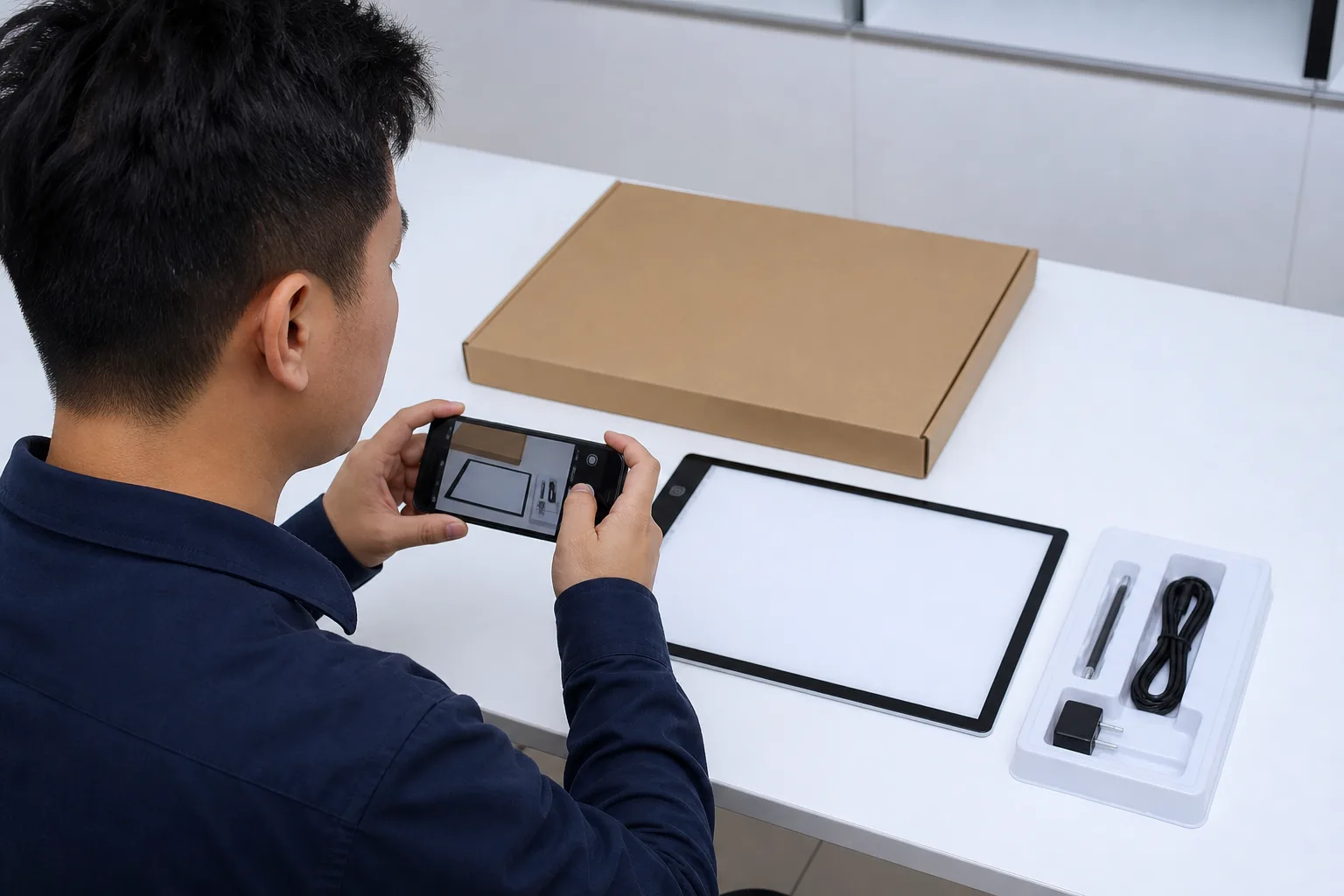
LED Drawing Board Warranty Claim Documentation Guide for B2B Buyers
A practical buyer guide for distributors, retailers, importers, and private-label support teams who need to use a configuration-specific claim record to distinguish an observed issue from the commercial or technical decision that follows.
Read article
CPSC eFiling for LED Drawing Board Imports: A 2026 Buyer Workflow
A B2B buying guide for U.S. importers of record, private-label brands, compliance teams, and customs brokers who need to determine whether a product is subject to CPSC certification, assign the responsible filing parties, and reconcile certificate data before the shipment entry workflow.
Read article