
Recall Readiness and Lot Traceability for LED Drawing Board Importers
The direct answer is to build a product- and lot-linked escalation process that quickly gathers facts, preserves records, and sends potential reporting questions to qualified safety and legal owners, while avoiding discovering that complaint, lot, retailer, and distribution records cannot identify affected configurations when a credible safety concern is reported.
1. Treat readiness as routine governance, not a prediction of failure
A recall-readiness plan prepares a company to gather accurate product and distribution facts; it does not suggest that a particular board has a known defect or that an incident will occur.
A consumer-product importer should decide in advance who receives complaints, who evaluates potential safety information, who preserves samples and records, and who contacts counsel or regulators. The process should distinguish a normal usability question from a possible injury, hazard, noncompliance, or recurring failure. CPSC says manufacturers, importers, distributors, and retailers have reporting responsibilities for certain information; whether a particular situation triggers a duty requires prompt fact-specific legal and product-safety review. Do not wait for a final root-cause conclusion before escalating a concern to the responsible team.
For an LED drawing board, a useful response record identifies the shape, SKU, base, power method, accessories, packaging version, and production or shipment lot if available. Preserve the original customer wording, images, purchase channel, purchase date, and affected unit rather than paraphrasing them into an assumed cause. Do not state that a product is safe or defective based on one incomplete email. A disciplined intake lets qualified staff ask the next relevant questions without making premature admissions or dismissals.
Keep the response plan accessible to customer service, quality, sourcing, and leadership—not only in a compliance folder.
The U.S. CPSC page is general business guidance. Consult current statutes, regulations, agency direction, and counsel when deciding how a specific report must be handled.
- Name the escalation owner and backup.
- Separate observed facts from suspected cause.
- Escalate potential safety issues promptly for qualified review.
2. Build traceability around product configuration and lots
Traceability is useful when records connect each consumer-facing SKU to its approved configuration, production reference, shipment, and downstream distribution records.
Define identifiers that the business can actually maintain: supplier part number, buyer SKU, shape, revision, production date range or lot reference, carton marks, purchase order, shipment, and sales channel. A small supplier may not use the same enterprise lot system as a large retailer, so agree an identifier and mapping before order release. Keep product and pack versions separate when marker sets, power arrangements, or labeling change. Make sure the identifier appears consistently in commercial records, inspection notes, carton lists, and retailer data where practical.
Traceability should allow the importer to answer three questions: what version was made, where and when it moved, and which customers or channels received it? A link between supplier lot and purchase order is not useful if the retailer's data cannot identify the consumer SKU. Test the lookup process with a tabletop exercise using one sample SKU, not a live incident. Measure how long the team takes to assemble the record and identify gaps. This is an internal readiness exercise, not a claim that a complete recall can always be executed in a fixed number of hours.
Record system limitations honestly and prioritize the handoffs that can be improved before the next order.
Complaint channels should be monitored during weekends and holidays if a product has active retail distribution. Name a backup decision-maker and confirm the contact route periodically.
- Map supplier, buyer, carton, shipment, and retail identifiers.
- Record version changes and effective lots.
- Exercise a sample lookup and document gaps.

3. Design an incident intake form that preserves useful facts
The intake form should capture what was reported, which product was involved, when and where it was bought, and what evidence is available—without leading the customer or diagnosing the cause.
A first-response form can record contact information with appropriate privacy controls, product name and shape, pack identifiers, purchase channel and date, incident date, a neutral description of what happened, injury or property impact if reported, photographs, retained sample status, and whether the product is still in use. Ask the customer to preserve the item and packaging if safe, and route urgent safety matters according to counsel-approved instructions. Customer-service staff should avoid asking for speculative conclusions such as whether a battery was 'overheated' unless qualified investigators need that specific observation.
Create a severity triage rubric approved by product-safety counsel. A potential injury, fire, choking concern, or repeated electrical symptom should route quickly to a designated decision-maker. Routine questions about marker cleanup can follow ordinary support. Keep the original report and date, follow up for missing facts, and log all communications. If the case involves personal data, follow the company's privacy rules and share only necessary information with the factory or external experts. The purpose is accurate, consistent intake—not discouraging complaints or promising a remedy before investigation.
An after-sales workflow can help a distributor provide respectful support while retaining a separate channel for safety escalation.
Retain a physical sample only under a documented storage and chain-of-custody approach. Label it with source, receipt date, and condition before inspection.
- Use neutral, non-leading questions.
- Route possible injury or hazard reports to a named expert.
- Protect personal information and preserve original evidence.
4. Understand the CPSC reporting question and escalate early
U.S. businesses should promptly send potential Section 15(b) reporting questions to qualified safety and legal owners because CPSC reporting duties can arise before a company has completed a full investigation.
CPSC's business guidance explains that manufacturers, importers, distributors, and retailers may have a duty to report certain information about a product that could contain a defect creating a substantial product hazard, create an unreasonable risk of serious injury or death, or violate an applicable rule or standard. The agency says businesses should report immediately when they obtain information that reasonably supports a reportable concern. The exact legal standard, timing, and application require counsel who knows the product and facts. A company should not wait until it has a complete failure analysis if the available information already warrants escalation.
The intake owner should preserve the first date the company received information and the chronology of later events. CPSC may request complaint, claim, distribution, design-change, and product information. Create a decision memo that records what was known, who reviewed it, what additional facts were sought, and when the reporting question was escalated. Never use the supplier's lack of confirmation as a reason to close a concern automatically. A regulator report or voluntary corrective action is a serious decision; this article does not decide that one is necessary for any specific board.
Have counsel establish a time-sensitive reporting protocol and emergency contact list before product launch.
When products have different battery or marker sets, maintain separate identifiers in customer service scripts so staff do not apply the wrong troubleshooting advice.
- Record first knowledge and event chronology.
- Send potential reportability questions to counsel promptly.
- Preserve all relevant complaints, samples, and distribution facts.
5. Coordinate factory information without turning inspection into an investigation
Supplier records and factory observations can help identify product versions and production facts, but a buyer should use a controlled evidence request and preserve independent investigation responsibilities.
A targeted supplier request can ask for the approved specification, relevant production dates, material or component changes, inspection records under the agreed plan, shipment list, and availability of retained samples. State the incident facts neutrally and protect customer data. Ask the supplier to preserve records and not alter potentially relevant samples while the buyer's safety owner decides next steps. Do not ask factory staff to make legal conclusions or conduct an unstructured teardown that may destroy evidence. If technical testing is needed, coordinate a qualified laboratory and chain-of-custody requirements.
Factory testing and pre-shipment inspection are preventive quality activities with defined scope. They may show whether sampled units powered on or whether cartons matched an approved configuration; they do not prove that no safety issue exists across all sold units. Keep any records with sample identity, date, method, operator, and lot. If the buyer later needs a cause analysis, use a written protocol that specifies preservation, photographs, non-destructive observations, expert roles, and approval before destructive testing. Separate the ordinary inspection file from any privileged legal investigation as counsel directs.
A factual supplier relationship is more productive when responsibilities and evidence boundaries are clear.
Inventory reconciliation may be limited by reseller data. State the last reporting date and known gaps rather than labeling a partial export a complete distribution list.
- Request records tied to SKU and production period.
- Preserve samples and chain-of-custody information.
- Do not equate a passed sample inspection with incident closure.
6. Reconcile inventory, shipments, and downstream channels
A useful traceability file can identify what remains in the factory, in transit, in the importer's warehouse, with distributors, at retail, and potentially with consumers.
Set up inventory fields that support the business's sales model: purchase order, supplier lot, carton range, shipment bill, warehouse receipt, transfer to distributor, retailer, and quantities by status. Use consistent product identifiers so the team can distinguish a heart-shaped rechargeable model from a USB cloud board or a later packaging revision. Reconcile shipped quantity, samples, damaged goods, returns, and remaining inventory. Where data comes from a retailer, record the date and limitations of the report. A line-level ledger can reveal whether a target lot can be distinguished from other goods without assuming perfect data.
For online sellers, preserve listing IDs, images, marketplace order exports, and date ranges, while following retention and privacy rules. For wholesale channels, maintain current contact details and a process to request confirmation from downstream accounts if counsel decides that is appropriate. Tabletop exercises often reveal missing reseller records or inconsistent carton labels. Fix the process before a real issue; do not overpromise traceability if systems only support purchase-order-level mapping.
A recall or corrective action decision belongs to responsible company leadership with expert advice; the data file supports that decision but does not dictate it.
A retailer notification should use wording approved by the responsible legal and product-safety owners. Do not ask service agents to improvise hazard conclusions.
- Map quantity and location by product revision.
- Retain channel identifiers and contact routes.
- Document data coverage and known limitations.
7. Run a practical tabletop exercise before peak season
A short tabletop scenario tests whether staff can find the product version, escalate the concern, preserve evidence, and reconcile stock without making unsupported safety claims.
Choose a fictional but plausible scenario, such as a customer report of a damaged cable or a missing small accessory. Do not use an actual allegation or invent a historical incident in public marketing. Ask the team to identify who receives the report, which questions are asked, where the specification and lot map reside, who contacts counsel, how the supplier is engaged, and how inventory is traced. Stop at decision gates; the goal is to test process and communication, not simulate a regulator's conclusion.
After the exercise, record time to locate each file, unclear ownership, inaccessible shared folders, missing distribution fields, and inconsistent product naming. Assign corrective actions with an owner and date. Repeat the exercise after a system migration, major product change, or channel expansion. Ready.gov recommends business preparedness planning that includes communications, IT support, recovery, and continuity; a product incident workflow can fit within that wider plan while remaining specific to consumer-product responsibilities.
Keep the exercise record internal and factual. A drill is not proof that the company has completed a regulatory recall or guarantees a future response outcome.
Preserve design and engineering changes because they can help explain whether affected products share a relevant feature. Store both the change request and approval.
- Use a clearly fictional scenario.
- Test contact lists, data access, and role handoffs.
- Track corrective actions and repeat after meaningful changes.
8. Conclusion: build a traceable response before one is needed
Importers should connect complaints, product revisions, lots, shipments, and channels so qualified decision-makers can evaluate a potential concern using complete and timely facts.
Recall readiness is not a prediction and not a substitute for product safety controls. It is a governance capability: capture facts, preserve records, identify affected configurations, escalate potential reporting issues, and communicate through approved channels. CPSC's official guidance should be reviewed with counsel, and the company should define a product-specific process before placing goods on the market. Honest scope, dated records, and clear responsibilities are more valuable than claiming an untested system is comprehensive.
For a LumDigi sourcing project, agree how the selected board, pack, sample, and shipment references will be identified. Share any buyer-required lot fields or incident contact workflow in the inquiry. LumDigi can coordinate supplier-held product and shipment facts; the importer and brand own their product-safety and legal decisions.
Test data access with authorized staff and protect commercially sensitive and personal information during a response.
- Link the sold SKU to supplier and shipment records.
- Escalate time-sensitive concerns through counsel-approved paths.
- Test and improve the process without overstating its reach.
Frequently asked questions
What records help an importer trace an LED drawing board?
Maintain buyer and supplier SKUs, product revision, production or lot references, carton and shipment records, warehouse movements, downstream accounts, complaints, and change notices. State known gaps and test the lookup process.
When should a product complaint be reported to CPSC?
CPSC's Section 15(b) guidance describes reportable circumstances and emphasizes prompt reporting. The business should immediately escalate potential concerns to qualified product-safety counsel rather than wait for a complete investigation.
Does a passed pre-shipment inspection prove a product is safe?
No. An inspection supports only the agreed scope, sample, method, and time. It does not prove every unit or all potential safety requirements, and it does not eliminate post-market reporting duties.
Should the supplier or importer own the recall decision?
The responsible manufacturer, importer, brand, or other business must determine its legal duties with qualified advice. The supplier can provide factual manufacturing and shipment records but should not be assigned an unsupported legal conclusion.
Image planning for this topic
These notes document the role and intended context of the two visuals used in this guide.
Show a buyer decision context for Recall Readiness and Lot Traceability for LED Drawing Board Importers.
- Placement
- hero
- Caption
- A product team links the approved board configuration to lot and distribution records.
- ALT text
- LED drawing board recall traceability B2B buyer review
View AI image direction
Photorealistic documentary photograph for a LumDigi B2B article about Recall Readiness and Lot Traceability for LED Drawing Board Importers. Photorealistic documentary photograph of a U.S. importer product-safety manager and Chinese Asian supplier contact reviewing a shaped LED acrylic drawing board beside blank lot-tracking records, calm office setting, no injury or defective product depicted, no readable text, no government logos, no certificate, no watermark, landscape. Real acrylic texture, candid commercial setting, landscape composition, no readable logos, no certificates, no text overlay, no watermark.
Show practical factory or shipment-review context for Recall Readiness and Lot Traceability for LED Drawing Board Importers.
- Placement
- after-key-considerations
- Caption
- Warehouse staff verify carton and SKU identifiers for an orderly buyer-side traceability review.
- ALT text
- LED drawing board recall traceability Chinese factory review
View AI image direction
Photorealistic documentary photograph for a LumDigi B2B article about Recall Readiness and Lot Traceability for LED Drawing Board Importers. Photorealistic warehouse documentary scene with Asian Chinese quality staff checking neutral cartons of different shaped LED acrylic drawing boards against a blank shipment list, visible generic colored carton markers without letters or numbers, orderly pallets, no recall tape, no distressed people, realistic natural industrial light, no logos or watermark, landscape. Real acrylic texture, candid commercial setting, landscape composition, no readable logos, no certificates, no text overlay, no watermark.
Turn the article into a practical sourcing brief
Use the checkpoints above to document the product, evidence, packaging, and approval decisions relevant to your market. A clear brief helps suppliers respond to the same commercial question and gives your team a traceable basis for the next step.
Useful external references
- CPSC: Duty to report—rights and responsibilities of businesses
Official CPSC explanation of reporting responsibilities for manufacturers, importers, distributors, and retailers; consult counsel for a specific event and timeline.
- CPSC: Required report information
Official list of information CPSC may request in a report, including product identity, complaints, distribution, and design changes.
- GS1 Product Image Standard
Primary guidance for consistent product-image identification and digital assets.

LED Drawing Board After-Sales Triage Guide for Distributors
A B2B buying guide for distributors, retailers, and customer-service teams who need to triage customer questions using product identity, observed condition, packed contents, and buyer-owned support records.
Read article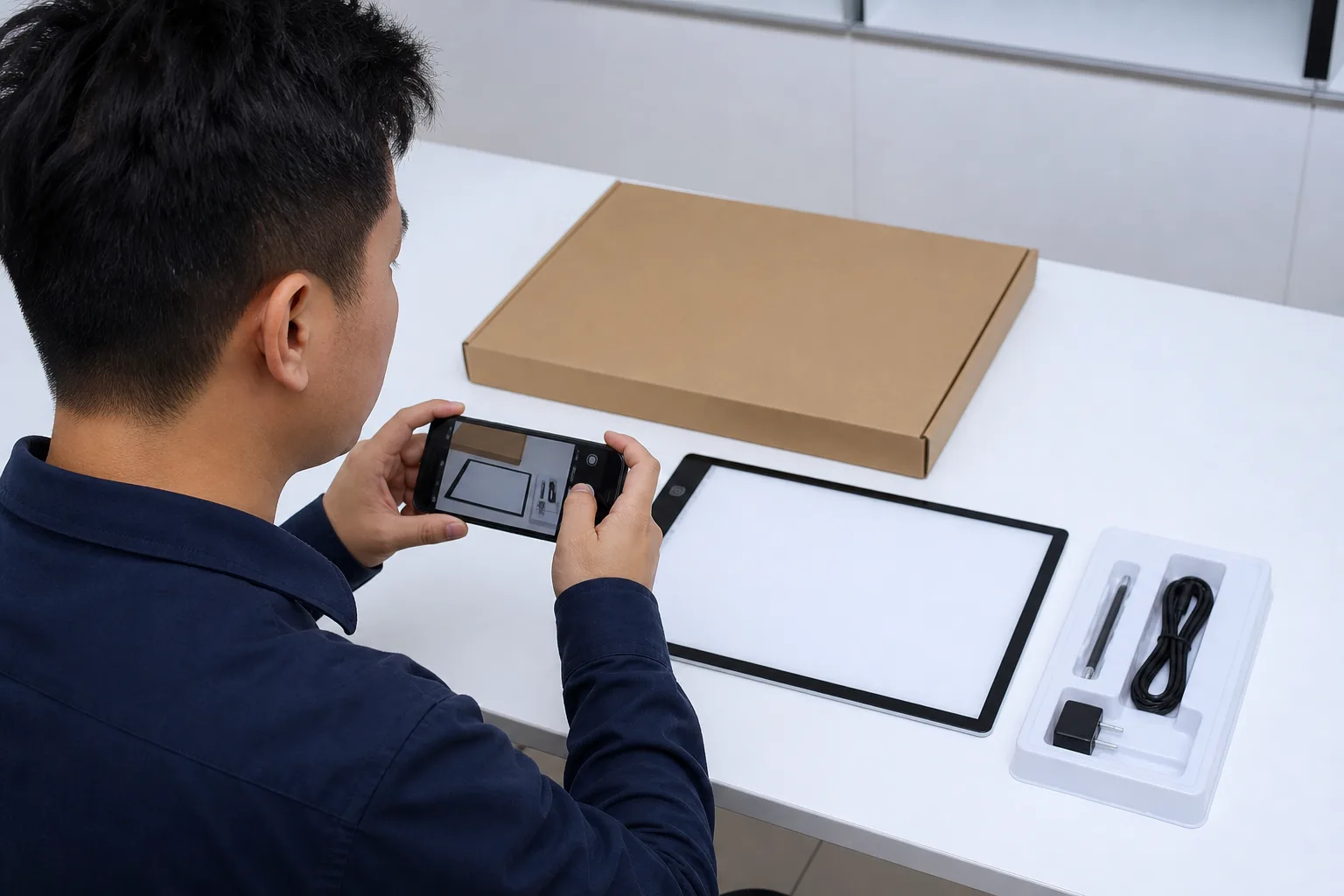
LED Drawing Board Warranty Claim Documentation Guide for B2B Buyers
A practical buyer guide for distributors, retailers, importers, and private-label support teams who need to use a configuration-specific claim record to distinguish an observed issue from the commercial or technical decision that follows.
Read article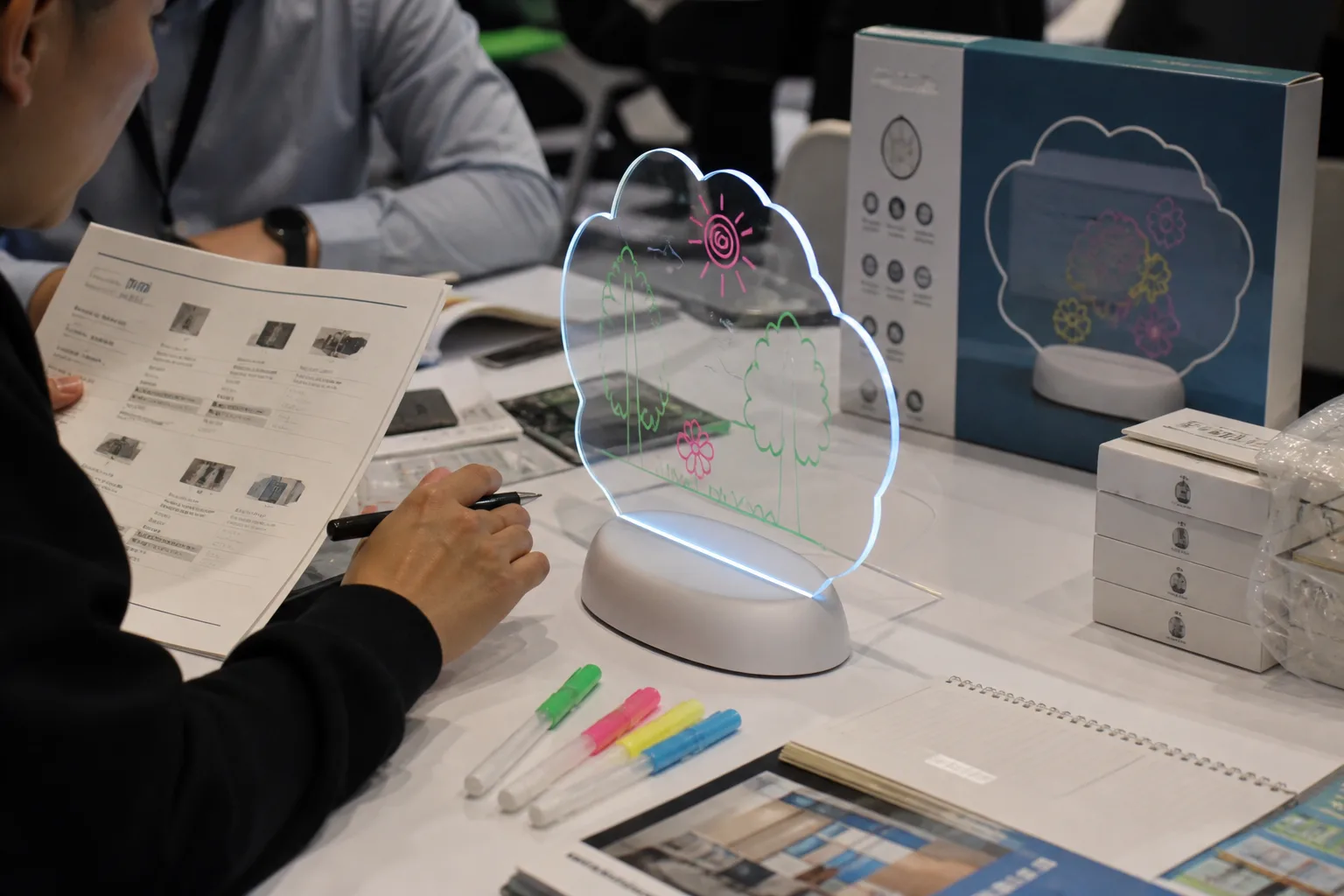
LED Drawing Board Shipment Document Review Guide
A practical B2B guide for importers, distributors and private-label teams who need to make a controlled sourcing decision using the approved board, pack, sample and evidence.
Read article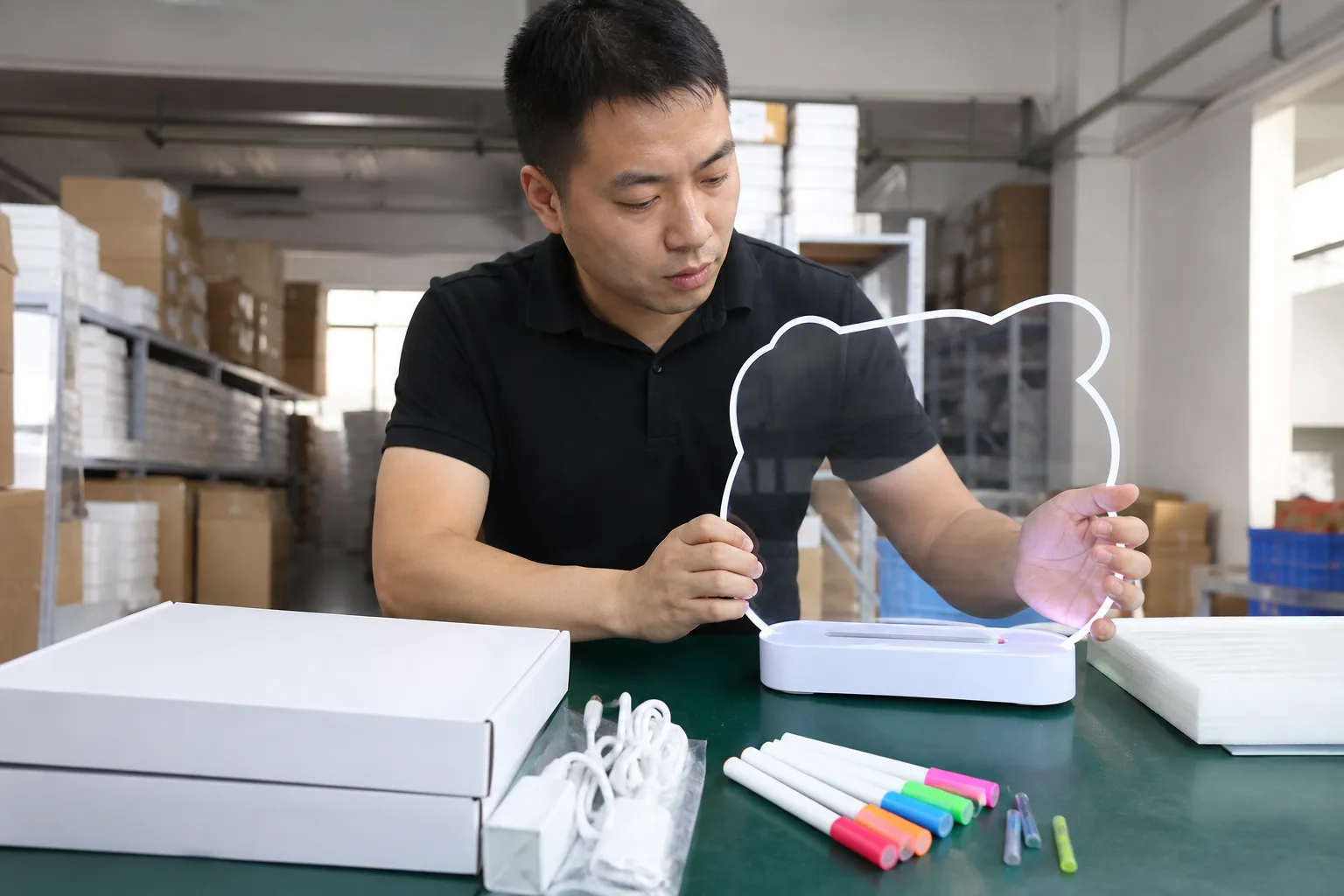
LED Drawing Board Buyer Acceptance Criteria Guide
A practical B2B guide for importers, quality teams and private-label buyers who need to define buyer acceptance criteria for the exact LED drawing board configuration before sample and shipment review.
Read article