
Supply Continuity Planning for LED Drawing Board Importers and Distributors
The direct answer is to define critical assortment, inventory exposure, supplier dependencies, approved alternatives, and escalation triggers without assuming another factory can reproduce the item immediately, while avoiding treating a catalogue photo or second supplier quote as a ready substitute despite differences in shape, materials, power, tooling, packaging, and approval evidence.
1. Define continuity around customer-critical products
A practical continuity plan identifies which LED board products matter most, what interruption would affect them, and what actions the buyer can control before an event.
Start with the assortment, not a generic supplier-risk score. Identify the shapes and packs that are essential to a retailer's range, seasonal program, private-label listing, or replenishment plan. Record sales role, available stock, open purchase orders, promised launch windows, and how easily customers can accept a substitute. A cloud board, heart board, and character silhouette may share a base but not the same artwork, mold, packaging, or consumer appeal. Do not assume that a second supplier quote means the alternate is ready for sale.
Then map dependencies: acrylic material, base components, LED parts, cables, markers, retail packaging, approved artwork, tooling, freight route, and the people who release samples or payments. The purpose is not to claim that every dependency has a backup. It is to show where a disruption could create a bottleneck and who will evaluate options. Ready.gov's business preparedness resources emphasize communication, IT support, recovery, continuity planning, and exercises; sourcing can make those principles product-specific.
Set the plan's scope, owner, review date, and the conditions that trigger a review, such as a new market, a sole-source component, or a major seasonal commitment.
A continuity plan should be proportionate to the size and importance of the product program. A small distributor may use a controlled spreadsheet and clear contacts; a large importer may need systems integration and formal exercises.
- Rank product lines by customer and revenue impact.
- Map material, tooling, packing, freight, and approval dependencies.
- Name owners and trigger events for plan review.
2. Quantify exposure without hiding uncertainty in a buffer
Inventory decisions should use lead-time history, demand variability, service goals, cash limits, and storage risk rather than a universal safety-stock number.
Build a scenario for each critical SKU: average demand, peak demand, current sellable inventory, goods in transit, open orders, and the date at which a replenishment decision must be made. Separate actual lead-time observations from a supplier's estimate for a future order. Consider seasonal demand, port or route variability, inspection time, and the buyer's own receiving process. An LED board may have components or printed packaging that take a different path from a standard finished sample. A buffer can reduce some disruption exposure but also ties up cash and may leave the buyer with obsolete colors, artwork, or seasonal stock.
Test more than one scenario, such as a delayed shipment, material substitution request, or retailer forecast increase. State which assumptions are uncertain and who can approve a purchase change. Avoid converting a rough scenario into a delivery guarantee. The best stock policy balances service impact against holding cost and product obsolescence; it should be reviewed when demand or manufacturing facts change. If a lead-time estimate is unavailable, keep it as an open risk instead of inventing a buffer number that sounds precise.
Link reorder triggers to the SKU and supplier's confirmed capacity discussion, but do not presume capacity is reserved until the commercial agreement says so.
When demand forecasts change, share the assumptions and approval dates with the supplier. A forecast is not the same as a confirmed purchase order or reserved production capacity.
- Separate observed lead times from forecast assumptions.
- Model delayed, normal, and higher-demand cases.
- Document the cash and obsolescence trade-off for any buffer.

3. Treat an alternate supplier as a qualification project
A second source is a viable continuity option only after the buyer verifies the product, process, commercial terms, and evidence needed to approve that source.
A substitute drawing board may differ in panel material, dimensions, edge treatment, base fit, light appearance, power arrangement, included markers, packaging, labels, or tooling ownership. Request a configuration comparison and a representative sample. Inspect it against a controlled specification, then decide which tests and market documentation need repetition. If a board is sold under a private label, confirm ownership and authorization of the artwork and shape. The buyer should not assume the alternate can copy another factory's proprietary tooling or drawings.
Use a qualification checklist that separates functional fit, appearance, packaging, safety and compliance evidence, capacity, quality controls, minimum order, payment terms, and logistics. Ask what is demonstrated and what remains unverified. Factory testing and a sample review can establish scoped observations, but neither proves that a new source will perform exactly like the old one across future lots. Approve a controlled trial only if it meets the buyer's acceptance criteria, and document when the alternate may be used.
A prequalified alternate is more credible than an emergency search started after the primary supplier has stopped responding.
Do not double count the same inventory across a distributor and retailer report. Record the source, as-of date, and whether quantities are sellable, reserved, damaged, or in transit.
- Compare part and pack differences line by line.
- Repeat product-specific approvals as the buyer requires.
- Define a written release gate for alternate-source use.
4. Agree how a disruption will be communicated
A communication protocol should specify the information a supplier provides, the buyer's escalation path, and the next update time—without demanding a speculative recovery date.
In the purchase-order workflow, identify who contacts whom if a material shortage, production interruption, tooling issue, or shipment delay may affect an order. Request the known facts: affected SKU and quantity, last confirmed production stage, immediate containment, options being evaluated, buyer decision needed, and next update time. Distinguish confirmed information from a working estimate. If the supplier has no verified recovery date, ask for a time to update rather than a guessed date that may mislead retailers.
The buyer should prepare its own customer-service language and decision tree: protect confirmed orders, evaluate whether a substitute is acceptable, allocate available inventory consistently, and notify channels based on contractual obligations. Document approvals to change a shape, pack, or ship mode. Keep the factory's response and the buyer's customer communication aligned; an internal note should not promise what has not been confirmed. For public safety issues, route communication through the product-safety plan rather than ordinary schedule updates.
A short incident log helps teams avoid conflicting statements across sales, sourcing, and logistics.
If an alternate board changes the retail pack or included markers, assess listing content, barcode, warehouse dimensions, and customer expectations as well as physical fit.
- Request facts, impacted orders, containment, and next update time.
- Label estimates as estimates and approvals as approvals.
- Keep retailer communication consistent with confirmed facts.
5. Protect product data and tooling continuity
Continuity planning should establish who controls the approved drawings, artwork, molds, product files, and customer data, and what contractual rights apply if a relationship changes.
For shaped acrylic boards, tooling and design files may determine whether an alternate source is technically and legally available. Inventory the assets by owner, physical location, revision, maintenance status, and contract rights. Confirm whether a mold is supplier-owned, buyer-owned, licensed, or subject to a project agreement. Do not assume payment for a custom tool automatically gives unrestricted transfer rights. Ask counsel to review access, confidentiality, IP, and exit provisions before a crisis. Keep approved artwork, dimensions, color references, and pack specifications in a buyer-controlled repository.
Digital continuity matters too. Store order specifications, inspection criteria, product photos, BOM revisions where shared, and supplier contacts in a secure, backed-up system with access controls. Record the document source and date. A backup file that nobody can interpret or that contains obsolete data is not a useful recovery asset. Test that a designated colleague can locate the current product release pack without depending on one person's inbox. Protect sensitive supplier and customer data while ensuring authorized business continuity staff can access what they need.
Use a controlled handover plan for any approved change of factory, not an informal forwarding of screenshots.
An approved sample should be preserved or documented with photos and revision identifiers so a later alternate can be compared fairly.
- Record tooling rights and asset location in writing.
- Maintain buyer-accessible current product release records.
- Test backup access and handover with authorized staff.
6. Use inspection and shipment records as decision inputs
Quality and shipment records help establish what was checked and what moved, but the buyer should not present them as proof that a future order or interruption will be risk-free.
Before production, agree the reference sample, key product attributes, packaging, quantity, and inspection scope. The factory may document defined checks such as appearance, operation, accessories, and carton identity. The buyer should review the report for sample identity, date, observed result, and deviations. A pass under a particular inspection plan does not promise zero defects, full future capacity, or an on-time arrival. Keep inspection records accessible so a replacement order can be compared with the approved configuration.
For shipment continuity, save the packing list, carton identifiers, booking details, release approvals, and any route-specific documentation. The buyer's forwarder can report schedule changes; the supplier may report production readiness. These are different data sources and should not be blended into one unsupported delivery statement. If a shipment is split, reconcile quantities by lot and destination. During a disruption, use those records to decide what stock can still serve customers and what needs a new approval.
A clear record is useful because it supports a decision; it cannot remove external events outside either party's control.
A supplier's business-continuity statement should identify its scope. Avoid assuming that a written plan guarantees backup equipment, materials, or recovery timing.
- Define inspection scope and acceptance conditions in advance.
- Store shipment facts by order, lot, and destination.
- Avoid turning an inspection record into a delivery guarantee.
7. Rehearse a disruption response and improve the plan
A brief tabletop exercise can test contact paths, stock visibility, alternate approval, and retailer communication before a real interruption makes those gaps costly.
Choose a scenario such as a delayed container, a component no longer available, or an artwork revision discovered after production approval. Ask the team to locate open orders, assess inventory by SKU, identify who can authorize a substitute, and prepare a factual update for customers. Note how long each step takes and where data is missing. Ready.gov recommends training and exercises as part of preparedness; adapt that principle to the supply-chain risks and business size rather than copying an emergency plan wholesale.
After the exercise, assign owners for improvements: maintain a second contact, clarify artwork approval, improve inventory reports, request supplier notice of a component change, or pre-review a qualified alternative. Set a review cadence based on product and channel changes. Do not claim the plan guarantees continuity. Its value is that the team can make a better-informed decision and communicate known facts more consistently when normal assumptions fail.
An exercise should be short, repeatable, and tied to action items the business can actually complete.
A communication cadence can be agreed in the event of a disruption, but each update should distinguish fact, estimate, and decision still pending.
- Use one plausible, non-catastrophic scenario.
- Test data retrieval, decision rights, and customer messaging.
- Close actions and rerun after a material change.
8. Continuity checklist for the next buying cycle
Before committing to seasonal or high-volume demand, confirm the critical SKUs, stock and open orders, supplier dependencies, order triggers, change rules, contacts, and customer communication plan.
A buyer checklist should include: product and revision; current and in-transit quantities; expected demand range; supplier and critical component dependencies; verified production status; alternate-source qualification state; tooling and artwork rights; packaging and inspection references; freight contact; customer allocation rules; and escalation owners. Identify which decisions need legal or technical approval and which are commercial. Keep the document short enough that the team can update it, and make the date and owner visible. A generic risk spreadsheet with stale values does not create resilience.
Review the plan when a shape, power configuration, supplier, retail channel, market, or seasonal commitment changes. Confirm no buyer message describes a substitute as identical unless it has been compared and approved. If no viable alternate exists, record that fact and decide how to manage exposure through inventory, launch timing, customer allocation, or assortment scope. Make no lead-time, stock, or capacity guarantee based solely on this article; obtain project-specific confirmation in the commercial process.
Send LumDigi your target market, SKU direction, planned order window, and continuity questions to discuss factual product options and the information the buyer should confirm next.
Review the buyer's insurance, contractual remedies, and inventory financing with its own advisers; a supplier sourcing discussion is not insurance or legal advice.
- Keep assumptions separate from supplier-confirmed facts.
- Qualify substitutes before representing them as replacements.
- Review continuity records at the start of each buying cycle.
Frequently asked questions
Does having a second supplier guarantee LED board availability?
No. A second supplier is useful only if the product, tooling rights, capacity, quality, documentation, and commercial terms have been assessed. Even a qualified source cannot guarantee against every disruption.
Should a buyer stockpile extra shaped drawing boards?
There is no universal buffer. Buyers should model demand variability, lead-time history, service goals, cash, storage, and seasonal obsolescence by SKU, then document the chosen risk trade-off.
Can an alternate factory copy an approved custom shape?
Do not assume that. Tooling ownership, design rights, files, and technical differences must be checked under the applicable agreements. Obtain legal advice and a new sample approval where needed.
What should I send LumDigi to discuss continuity?
Share the market, critical shapes and packs, order window, approximate demand scenario, power and customization needs, current risks, and any alternate-source requirements. LumDigi can discuss supplier-controlled options without promising unverified availability.
Image planning for this topic
These notes document the role and intended context of the two visuals used in this guide.
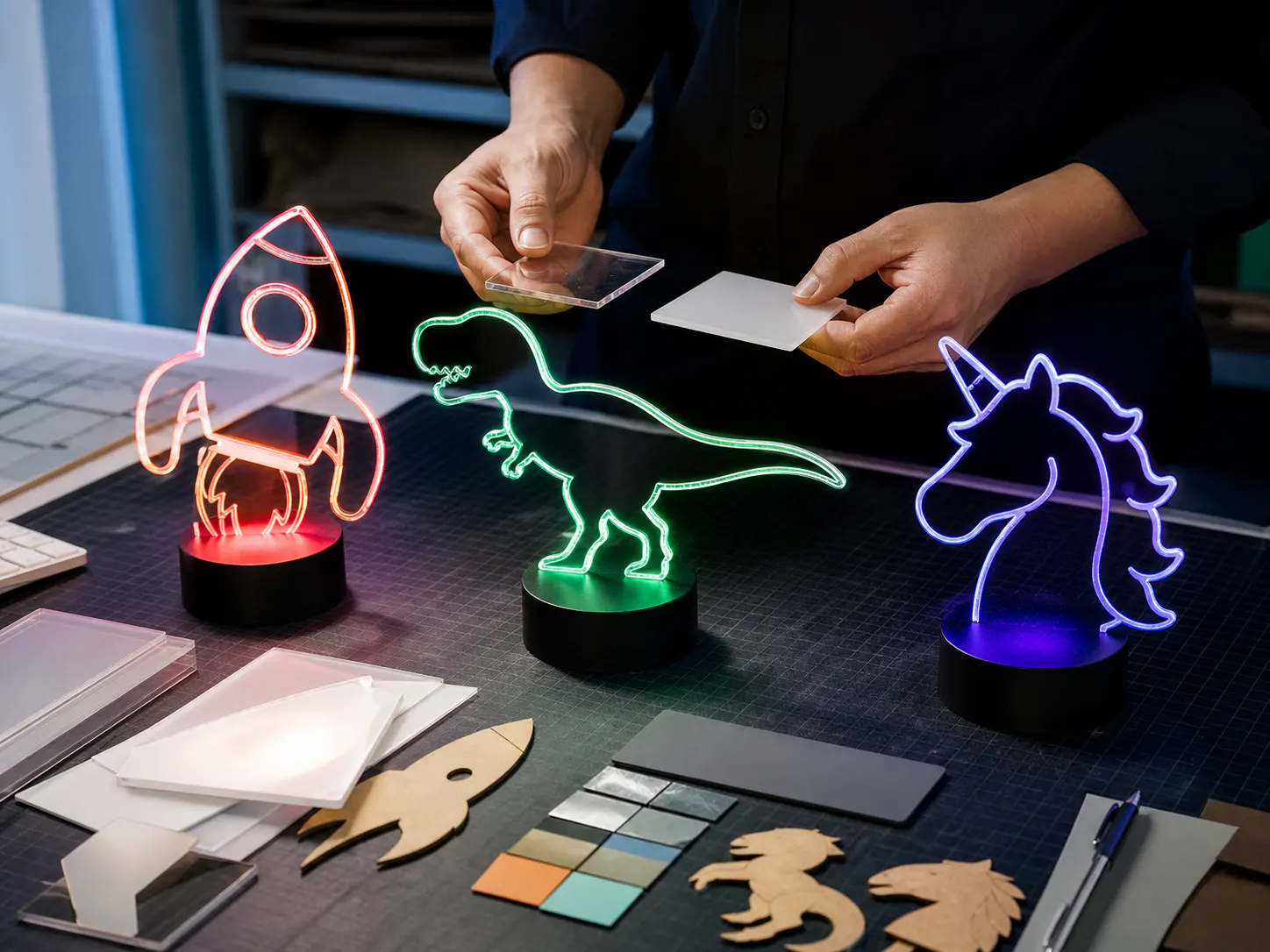
Show a buyer decision context for Supply Continuity Planning for LED Drawing Board Importers and Distributors.
- Placement
- hero
- Caption
- A buyer maps critical LED board SKUs, dependencies, and response owners before a disruption.
- ALT text
- LED drawing board supply continuity plan B2B buyer review
View AI image direction
Photorealistic documentary photograph for a LumDigi B2B article about Supply Continuity Planning for LED Drawing Board Importers and Distributors. Photorealistic documentary photograph of an international sourcing team and Chinese Asian supplier coordinator mapping a small assortment of distinct shaped LED acrylic drawing boards, blank inventory cards and a simple unmarked dependency diagram on a planning-room wall, no readable text, natural office light, credible business setting, no crisis imagery, no logos, no watermark, landscape. Real acrylic texture, candid commercial setting, landscape composition, no readable logos, no certificates, no text overlay, no watermark.
Show practical factory or shipment-review context for Supply Continuity Planning for LED Drawing Board Importers and Distributors.
- Placement
- after-key-considerations
- Caption
- Sourcing staff compare an alternate board sample against the approved product revision.
- ALT text
- LED drawing board supply continuity plan Chinese factory review
View AI image direction
Photorealistic documentary photograph for a LumDigi B2B article about Supply Continuity Planning for LED Drawing Board Importers and Distributors. Photorealistic documentary close-up of an Asian Chinese factory engineer and overseas buyer comparing an alternate cloud-shaped acrylic LED drawing board sample with an approved sample, checking base, cable, edge finish and package contents on a clean table, blank labels, no certificates or logos, natural light, authentic product details, landscape. Real acrylic texture, candid commercial setting, landscape composition, no readable logos, no certificates, no text overlay, no watermark.
Turn the article into a practical sourcing brief
Use the checkpoints above to document the product, evidence, packaging, and approval decisions relevant to your market. A clear brief helps suppliers respond to the same commercial question and gives your team a traceable basis for the next step.
Useful external references
- Ready.gov: Ready Business
U.S. government business preparedness guidance covering communications, IT support, recovery, continuity plans, training, and exercises.
- Ready.gov: Business continuity plan
A planning template for organizing business continuity and recovery information; adapt it to the buyer's own supply-chain risks and operating model.
- GS1 Product Image Standard
Primary guidance for consistent product-image identification and digital assets.
LED Drawing Board Demand Forecast Guide for Distributors and Retail Buyers
A practical B2B guide for distributors and category managers who need to prepare a controlled forecast conversation around defined SKUs, channels and buyer-owned assumptions.
Read article
A Supplier Performance Scorecard for LED Drawing Board Buyers
A B2B buying guide for importers, distributors, procurement managers, and quality teams who need to define a small set of product-relevant supplier measures with clear data sources, denominators, review periods, and action thresholds.
Read article
How to Compare LED Drawing Board Suppliers Beyond Price
A B2B supplier evaluation guide for importers and procurement managers: compare suppliers through complete scope, evidence quality, communication, samples, and controlled commercial terms.
Read article
LED Drawing Board Import Order Handover Guide: From Approval to Shipment
A practical B2B guide for importers and sourcing teams who need to create an order handover record linking the approved sample, quotation, packing and shipment questions.
Read article