Singapore CGSR vs CPSR: Which Safety Route Should LED Drawing Board Importers Check?
The direct answer is to screen the complete board set and supplied power components against CGSR and CPSR independently, while avoiding assuming every USB-powered LED product needs a Safety Mark or that CGSR removes product-safety duties.
1. Compare frameworks without assuming a product outcome
Singapore's CGSR is a general consumer-goods framework, while CPSR controls specified categories and related Safety Mark processes. Check the actual board, accessories, and sales configuration against each scope; LED or USB alone does not classify a product.
Define the retail set first. It may contain an acrylic board, LED base, USB cable, batteries, marker pens, and perhaps a separate adapter. The complete presentation matters for general consumer review, while an individual powered component may raise a controlled-goods question. Build one configuration sheet with included items before asking a local service to map the rules.
CPSO identifies toys among general consumer goods and describes CPSR as covering specified controlled categories. That does not mean the board automatically needs a Safety Mark. The importer and local adviser must test product facts against current official definitions. Do not ask for a blanket Singapore certificate or use another item's mark as a reference. Record the source version, route considered, and basis for the outcome.
CPSO describes suppliers broadly, including importers, distributors, and retailers. Identify the Singapore legal entity placing the goods on the market before assigning tasks.
A CGSR review should identify requirements applicable to goods made available in Singapore. Establish category and use, then ask which standards or evidence support the offer. Record the analysis at SKU level because a new base, accessory, or marketed age can change what a reviewer should consider.
Ask the Singapore adviser to identify the specific standard or controlled-goods category considered, along with the facts that led to the conclusion. If the response is conditional on the product being sold without an adapter, capture that condition in the approved SKU definition and make sure the ecommerce page and purchase order do not later add one.
- List the board and every power accessory separately.
- Screen CGSR and CPSR as distinct questions.
- Keep the local importer's written scope conclusion with the SKU file.
2. What CGSR means for a toy or children's product
CGSR is the general consumer-goods route relevant to many products, including toys. Singapore suppliers should ensure applicable goods meet prescribed safety requirements before offering them to consumers.
The practical question is not simply whether a certificate exists; it is which safety requirements apply to the exact item and what evidence supports the offer. Identify toy status if relevant, intended user, foreseeable use, included accessories, instructions, and standards. The Singapore supplier should consult competent local guidance and retain appropriate evidence. A catalogue or factory statement alone is not a complete compliance file.
A supplier response is useful when specific: sample identity, dimensions, power method, accessories, available reports and their scope, and package revision. Ask whether a report concerns the whole board, a component, or just a material. Keep a gap list if testing or documentation remains open. Do not convert a preliminary factory check into a claim that CGSR has been satisfied.
CGSR requirements should be checked against current applicable standards and official guidance. Product category alone does not provide the complete evidence list.
CPSR's controlled-goods list is not a broad label for every electronic product. Compare component function and ratings with current category definitions. If scope is uncertain, seek CPSO or competent local guidance rather than making a binary decision from a search snippet.
A supplier can support the decision with a structured response sheet, but should not fill legal gaps with guesses. Let the importer decide whether additional testing is needed. Save the final scope email, linked product photos, and applicable records in the same file so the next buyer or retailer can follow the reasoning.
- Confirm local category and applicable requirements.
- Request evidence tied to the actual model and set.
- Avoid generic certification claims as a substitute for review.
3. When to investigate CPSR and Safety Mark requirements
CPSR applies to controlled goods in specified categories and can involve testing, registration, and a Safety Mark. Check the official list for the board or each supplied component rather than infer coverage from LED lighting or USB input.
Review every powered item. Is an AC adapter packed in the box? Does the base connect to mains power or receive low-voltage USB? Are batteries included? Is a power source sold separately? These facts help an authorized Singapore reviewer find relevant categories but do not resolve legal scope by themselves. The current CPSO guidance and regulations control.
A common sourcing error is requiring a mark without knowing whether the board or only an adapter is controlled—or assuming no review is needed because the item uses USB. Keep each item, rating, connector, optional component, and retail arrangement explicit. Do not reproduce a Safety Mark until the responsible Singapore party confirms exact product authorization.
CPSR scope is category-specific. Confirm whether an adapter or another item is included, separately sold, or outside the retail pack being reviewed.
The supplier handoff should distinguish USB input from a supplied AC adapter. Ask whether the cable is passive, included, and paired with a separate supply. Those facts let the importer screen the actual arrangement; they do not prove an exemption or remove general safety duties.
- Capture input ratings, adapter status, batteries, and pack contents.
- Check official controlled-product definitions for each relevant item.
- Use a Singapore responsible party to confirm any marking decision.
4. Request a sample that matches the compliance question
A sample helps only when it is tied to the intended SKU and evidence. Identify the shape, base, power, accessories, packaging, and revision so the reviewer knows exactly what is being assessed.
Request a documented sample and photograph contents when opened. Record whether adapter or batteries are included or buyer-supplied. Ask the factory to identify differences between sample and quoted production version. If laboratory work is required, let the importer and lab agree on the specimen and method before dispatch. A convenient sample that omits an actual power item can leave the central question unanswered.
Factory testing and shipment inspection are separate from Singapore conformity assessment. Factory checks may document agreed observations such as illumination or contents if actually performed; they do not establish scope or authorize a mark. Keep method, result, identity, and date. The local responsible business decides what evidence is adequate and whether formal laboratory work is required.
If laboratory evidence is requested, confirm model, sample, standard, and report scope with the Singapore responsible party and laboratory.
Select a representative sample after the SKU is frozen. Photograph the package, lay out contents, record identifiers, and retain the sample. If tests are contemplated, the local body should decide sample quantity and variants before dispatch so the lab receives the right product.
- Mark the sample with configuration and revision.
- Agree laboratory sample and method with the responsible reviewer.
- Never describe a visual inspection as a regulatory test.
5. Make listings, packaging, and power claims match
The listing, package, instructions, and shipped contents should agree. Clear language about power, accessories, age, and intended use supports an accurate Singapore offer and consistent safety review.
Review every image and line of copy against a saleable sample. A glowing board beside a charger may imply the charger is included; a lifestyle photo can make a prop look like a packed accessory. State the actual power method, included cable or adapter, marker count, and approved age information. Do not show a Safety Mark absent product-specific authorization.
Keep final artwork, instructions, local notes, approved photos, supplier specification, and production version together. During pre-shipment inspection, compare the package and set with that file. If a buyer changes the power supply or listing, reopen scope and content review. Change control matters especially in private label, where brand claims and local importer responsibilities intersect.
A factory operation check records agreed observations; it cannot replace independent conformity assessment if a rule requires one.
Online images may imply components that are not included. Review crops, feature labels, and unboxing photos beside the physical package. Keep a record of which image is approved for each model and remove old images when the power supply or bundle changes.
- Use approved product images and a contents list.
- Describe included power items accurately.
- Recheck scope after component or channel changes.
6. Build a procurement file retailers can understand
A buyer-ready file helps explain the product, controls, and evidence. Separate supplier facts, laboratory evidence, local legal conclusions, and open tasks rather than collapsing them into one unsupported approval statement.
Include importer and supplier contacts, product identifiers, product description, destination channel, components, packaging revision, sample photographs, available reports with scope, and the source/date for each regulatory decision. Track who reviewed each item and which questions remain open. If a retailer requests a certificate, ask which regulation, category, and model it seeks to verify.
Keep the file manageable with a version table and current official links. A product change, new adapter, age statement, or seller can change the questions. Set review triggers before launch and repeat orders. LumDigi can provide factual configuration and B2B sample details when available; the Singapore supplier remains accountable for local obligations.
A changed charger, cable, battery, or description may alter scope. Treat changes as a review trigger.
A concise dossier improves retailer onboarding: importer contact, SKU, product description, component list, sample version, scope record, test documents, and artwork. Include source date and owner; do not call a folder certified if it contains only factory checks and supplier declarations.
- Separate supplier evidence from local conclusions.
- Tie each report to a named model and scope.
- Assign an owner and refresh date to outstanding questions.
7. Singapore importer checklist
Check general CGSR requirements, separately screen possible controlled goods under CPSR, and then decide which reports, registrations, labels, or marks apply. Use current CPSO guidance and local advice for the exact case.
A practical sequence is: identify importer and seller; list board and accessories; determine intended-use presentation; review CGSR; check current CPSR categories for board and supplied power components; obtain local assessment; request model-specific evidence; approve package and listing; and set change control. If an answer is unknown, keep it as a launch blocker instead of replacing it with a presumption.
Use separate release gates for product acceptance and legal-market acceptance. A factory sample can pass appearance review while the controlled-goods question remains open. A technical report also does not prove the printed description matches the pack. Recheck official sources before repeat orders if rules, components, or channels change.
Use the exact claims approved for the sale channel and ensure the sample and listing agree.
Use change-control triggers for the base, battery compartment, cable, adapter, material, package, or factory. The importer can then decide whether scope or evidence should be revisited instead of relying on an undefined supplier promise to report changes.
- Do not conflate general and controlled-goods duties.
- Resolve scope before using marks or claims.
- Review the exact product and power configuration before release.
Conclusion: choose the Singapore route from product facts
CGSR and CPSR answer different questions. Screen the general consumer product and exact powered components separately, then document the evidence and any controlled-goods decision that truly applies.
Avoid both extremes: assuming all LED products need a Safety Mark or assuming low-voltage products need no review. Use the actual board, pack, power source, market presentation, and current CPSO scope. Give the importer time to resolve uncertainty before artwork or inventory is committed.
For a LumDigi Singapore inquiry, send the intended channel, board configuration, included power items, package direction, and local question. We can confirm factual supplier-side configuration and sample references. The Singapore supplier and adviser determine legal duties, testing, registration, and marking.
This guide is not legal advice. Consult current CPSO material and Singapore counsel or a competent product-safety specialist.
At launch, identify who may approve a Safety Mark claim, what record proves authorization, and which team checks the product page. Factory inspection can satisfy a quality checklist without closing the legal task, so keep statuses separate.
- Map before marking.
- Keep product acceptance separate from market acceptance.
- Use current official scope and a product-specific review.
Frequently asked questions
Is every LED drawing board covered by CPSR?
Do not assume so. CPSR applies to specified controlled goods. Check the current official list against the exact board and supplied power components with the Singapore responsible party.
Does USB power automatically mean a Safety Mark is unnecessary?
No. USB alone does not decide scope. Confirm the board, adapter, battery arrangement, and retail set against current controlled-product rules.
Are toys covered by CGSR?
CPSO lists toys among general consumer goods. The importer should determine applicable standards and evidence for the actual product and intended presentation.
What should a supplier provide?
Request exact configuration, sample and pack details, power ratings, available reports with scope, and revision records. The local supplier makes legal and marking decisions.
Image planning for this topic
These notes document the role and intended context of the two visuals used in this guide.
Show a buyer decision context for Singapore CGSR vs CPSR: Which Safety Route Should LED Drawing Board Importers Check?.
- Placement
- hero
- Caption
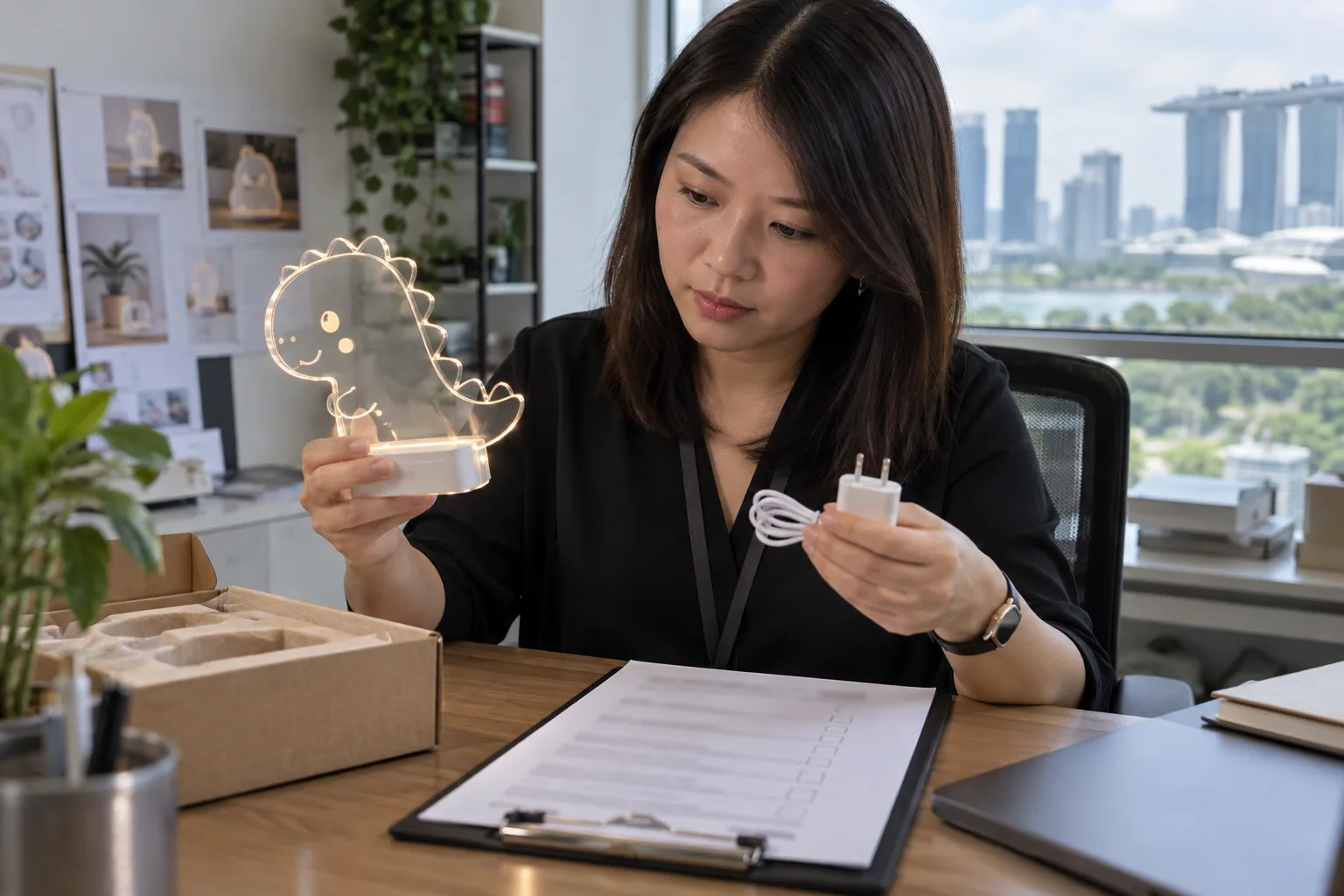
- A Singapore buyer maps an LED board set and included power items before local scope review.
- ALT text
- Singapore importer reviewing an LED drawing board and power configuration
View AI image direction
Photorealistic documentary photograph for a LumDigi B2B article about Singapore CGSR vs CPSR: Which Safety Route Should LED Drawing Board Importers Check?. Photorealistic editorial business photograph in a Singapore consumer-products office: adult Singaporean product manager reviews a shaped acrylic LED board and separate USB power accessory beside a clean checklist with writing blurred. Natural light, realistic acrylic, landscape 3:2. No logos, Safety Mark, readable text, watermark, or text overlay. Real acrylic texture, candid commercial setting, landscape composition, no readable logos, no certificates, no text overlay, no watermark.
Show practical factory or shipment-review context for Singapore CGSR vs CPSR: Which Safety Route Should LED Drawing Board Importers Check?.
- Placement
- after-key-considerations
- Caption
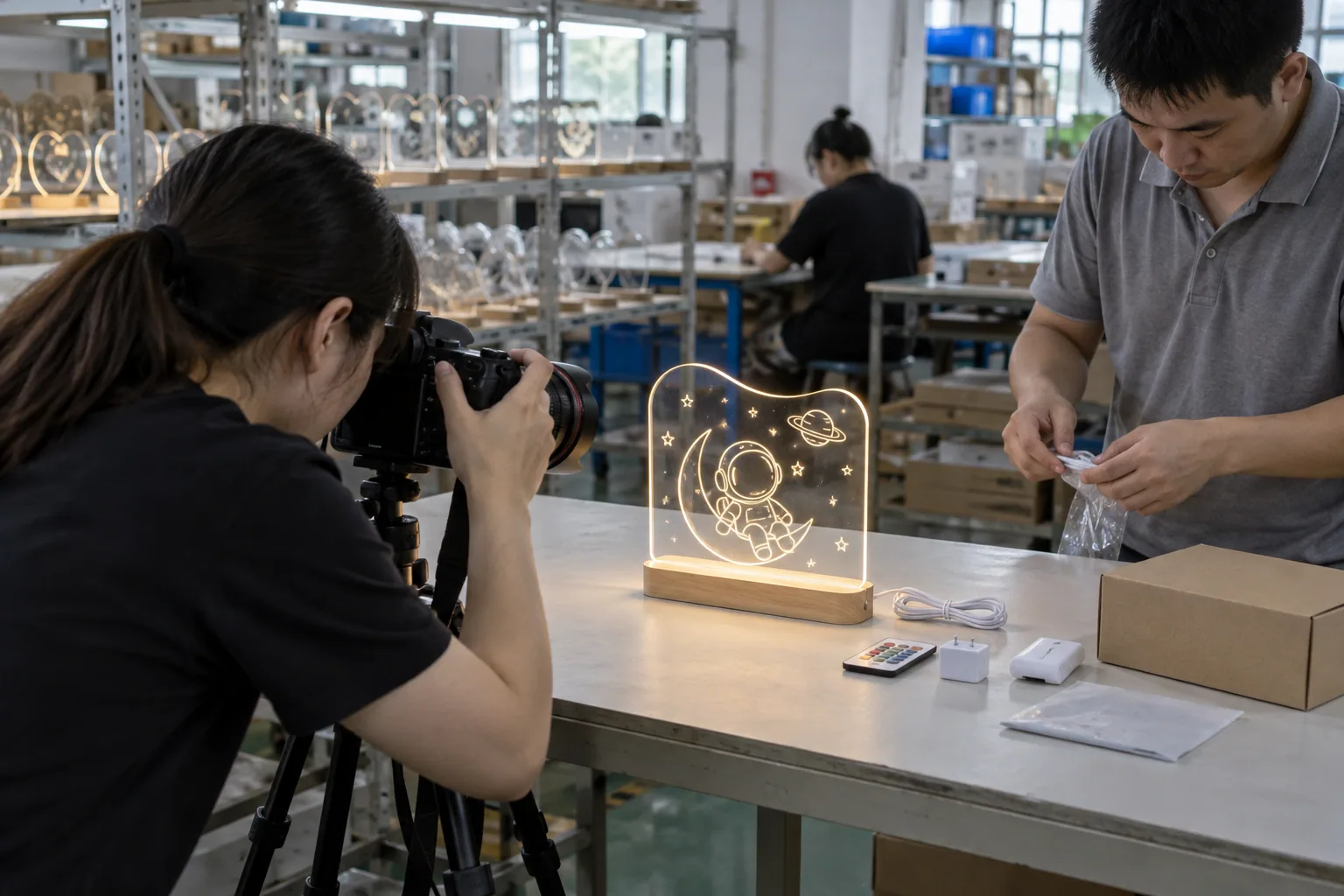
- Chinese factory staff document the sample configuration requested by a Singapore importer.
- ALT text
- Chinese factory staff recording an LED board sample configuration for export review
View AI image direction
Photorealistic documentary photograph for a LumDigi B2B article about Singapore CGSR vs CPSR: Which Safety Route Should LED Drawing Board Importers Check?. Photorealistic documentary photograph in a Chinese factory sample area: Chinese/Asian adult staff record a shaped LED board model, USB cable and accessories on an unbranded table, candid practical work, realistic surfaces, landscape 3:2. No readable records, logos, test claims, certification marks, watermark, or overlay. Real acrylic texture, candid commercial setting, landscape composition, no readable logos, no certificates, no text overlay, no watermark.
Turn the article into a practical sourcing brief
Use the checkpoints above to document the product, evidence, packaging, and approval decisions relevant to your market. A clear brief helps suppliers respond to the same commercial question and gives your team a traceable basis for the next step.
Useful external references
- CPSO: Overview of CGSR
Official Singapore guidance on general consumer-goods safety and suppliers' obligations.
- Singapore Statutes: Consumer Goods Safety Requirements Regulations
Primary regulations for the general consumer-goods safety framework; confirm the current consolidated text.
- CPSO: Overview of the CPSR
Official CPSO explanation of controlled goods, testing, registration, and Safety Mark requirements; verify the exact category.

LED Drawing Board Power Option Decision Guide for Importers
A practical LumDigi guide for importers, sourcing teams, and product managers who need to select a power approach only after the target configuration, market questions, user context, and technical-review responsibilities are clear.
Read article
LED Drawing Board Import Documentation Questions B2B Buyers Should Ask
A practical B2B guide for importers and commercial buyers preparing destination-market review who need to ask clearer product, supplier, and document questions while leaving legal, regulatory, testing, and market decisions to appropriately qualified parties.
Read article
Great Britain vs Northern Ireland: LED Drawing Board Importer Requirements Compared
A B2B buying guide for UK importers, retailers, marketplace sellers, and distributors selling into GB and NI who need to map each UK destination to its actual product marking, economic-operator, label, and technical-documentation route before approving packaging or sales listings.
Read article
LED Drawing Board Retail Demo Setup Guide
A B2B buying guide for specialty stores, gift retailers, and distributors who need to set up a documented demonstration using the approved board, power arrangement, markers, cleaning direction, and staff handover.
Read article