
Identify the product, producer role, and countries of sale
For equipment within WEEE scope, determine the responsible producer and applicable national obligations in each EU country of sale. Plan registration, reporting, financing or collection arrangements, required marking, and product data together. A crossed-out bin symbol or a CE file does not by itself establish that these country-specific obligations are complete.
1. Confirm the equipment and WEEE scope
WEEE concerns waste electrical and electronic equipment within its scope. Start with the actual electrical function and supplied configuration, then ask the responsible national reviewer which category and obligations apply.
Describe the board, base, power method, controls, accessories, intended use, and whether components are sold together or separately. A reusable drawing surface can still include an electrical function that needs scope review. Do not infer an exemption because the product is small, USB powered, or marketed as a toy. Use the current directive and relevant national rules with qualified advice where interpretation is needed.
The Commission WEEE resource provides the legislative context. Keep the scope conclusion with the model and revision reviewed. If the brand later sells a base, accessory, or replacement product independently, ask whether that changes the equipment or reporting treatment. Product category, dimensions, and national guidance should be checked for the actual offer rather than borrowed from a competitor's listing.
Use the RGB Message LED Fluorescent Board as an identified product reference and confirm its actual offered components before requesting reporting data. A display name or shape does not determine the national equipment category. Ask the relevant scheme or adviser which product facts and measurements it needs for the specific sales arrangement and country of placement on the market.
- Describe the electrical function and full offer.
- Check current national scope and category guidance.
- Retain the reviewed model and assumptions.
2. Identify the responsible producer in each sales model
The responsible WEEE producer can depend on branding, import, establishment, and sales arrangements. Allocate the role from current national rules, not from a general supplier promise to handle compliance.
Map who manufactures, brands, imports, places equipment on the national market, and sells at a distance. A private-label brand and its distributor may have different roles under different arrangements. Ask the relevant national authority, scheme, or qualified adviser to confirm who must register and which representative arrangements apply. Commercial terms can allocate work and cost, but they should not be assumed to rewrite statutory roles.
Write the agreed responsibilities into a practical task matrix: registration owner, data provider, reporting contact, label approver, financing or collection arrangement, and retailer evidence contact. The factory can provide product facts and support the data file, but should not be described as the national producer unless the actual legal arrangement supports that statement. Keep responsibilities clear when adding a new distributor or marketplace channel.
A contract should make operational responsibilities concrete: which company supplies data, who files reports, who pays scheme charges, and who responds to national register requests. Have qualified advisers confirm statutory roles rather than relying solely on the contract labels. If the brand changes distributors, review whether the legal or reporting arrangement changes and ensure the records remain accessible to the responsible business.
- Map branding, import, establishment, and distance sales.
- Confirm legal role with national guidance.
- Assign operational tasks and evidence owners.
3. Plan registration by country rather than by the EU as a whole
Your Europe explains that relevant businesses register with national authorities where they sell equipment. Do not assume a registration or scheme membership in one country completes obligations throughout the EU.
A European launch needs country-level ownership
Build a country matrix before opening new sales channels. For each destination, identify the national register, producer role, category, reporting system, required identifiers, scheme or individual arrangements, language, and responsible contact. The Your Europe WEEE responsibilities page links businesses toward the national framework. Verify current details directly because procedures and role interpretations can vary.
Separate countries where stock is already placed on the market from future expansion. A distributor inquiry is not proof that registration is complete. Ask the responsible business what must happen before sales and what ongoing tasks follow. Keep application status and actual registration evidence distinct. Do not describe a draft form, local adviser appointment, or paid invoice as completed registration unless the relevant confirmation has been obtained.
A marketplace request for a producer identifier should be checked against the applicable country, company, product category, and actual registration evidence. Uploading a number into a platform field does not itself create a valid registration. Keep the provider confirmation and the details that explain its relevance. The responsible business should verify any representation it makes to retailers or marketplaces about completed national obligations.
- Maintain a destination-by-destination matrix.
- Confirm required steps before sales begin.
- Retain actual national registration evidence.
4. Define the product data needed for reporting
The producer or scheme needs consistent data for the equipment categories and quantities reported. Ask which product weights, units, components, and exclusions apply under the relevant national method.
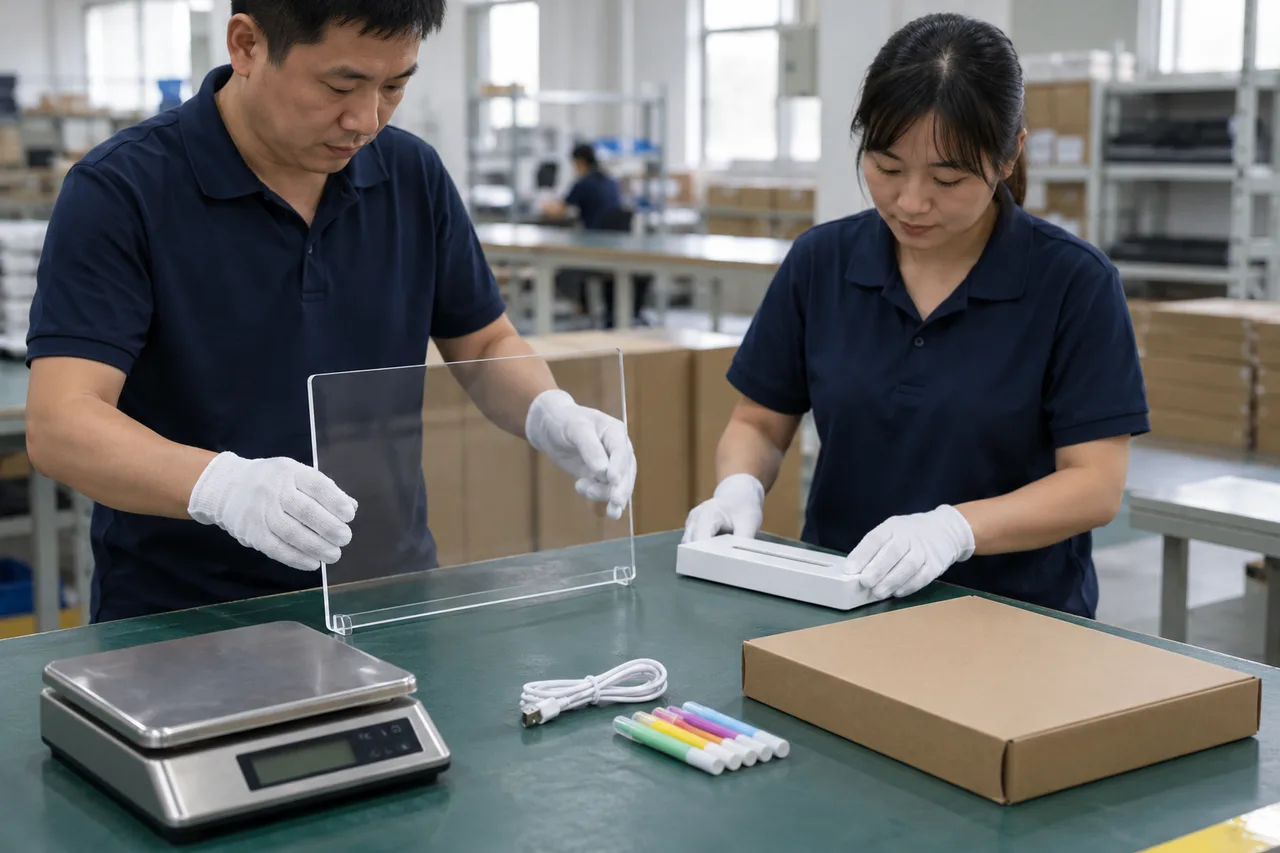
Do not assume the carton gross weight is the reportable equipment weight. Ask the national scheme or reviewer how to treat packaging, batteries, accessories, and separately supplied items. Have the factory provide measured data for the actual configuration using a defined method and units. Record model, revision, measurement date, and what was included. A buyer-created estimate should be labeled as such until suitable data is available.
Connect the product data to the sales system. When a SKU represents multiple shapes or power versions, determine whether the reporting system can distinguish them appropriately. Reconcile units sold or placed on the market with the relevant channel records and national rules. The retailer data handover guide can support data ownership, while the WEEE file specifies the particular reporting fields and calculation method.
Define measurement inclusions before collecting weights. The producer scheme may distinguish equipment, batteries, packaging, or accessories for different reporting purposes. Ask for the applicable method and units, then have the data provider identify exactly what was measured. Retain raw observations or records where available, and label any estimate clearly so it is not later treated as a measured value for another configuration.
- Confirm reporting categories and weight definitions.
- Measure the actual released configuration.
- Connect product data to national sales records.
5. Approve marking and identification with the product file
The crossed-out wheeled-bin symbol communicates separate collection and has associated marking requirements. Use the current applicable rules for the actual equipment and permitted placement.
The official WEEE label guidance explains the symbol and related identification context. Ask the responsible reviewer which markings, producer identification, and date information are required and where they may appear. Do not assume a symbol printed only on a shipping carton meets the product's requirements. Size or function-related placement exceptions need the appropriate legal basis.
Review the physical product, base, label, retail pack, and insert together. The artwork approver should use an authorized accurate symbol and confirm legibility and permanence where required. Keep the final proof and product reference. A symbol is part of the information plan, not evidence that registration, reporting, financing, or collection arrangements are complete. Avoid adding broad recycling claims beside it without separate substantiation.
The marking review should include the actual base or product surface and the proposed print method. A symbol that is legible on a large digital proof may be unclear after production. Ask the responsible reviewer about placement and required identification, then inspect a physical sample. Record any permitted alternative location with its legal basis rather than assuming the retail carton is always an acceptable substitute.
- Check actual marking and placement requirements.
- Retain the final product and pack proof.
- Keep the symbol distinct from completion of producer tasks.
6. Coordinate WEEE with batteries, packaging, and RoHS
One board set can raise several different producer and product obligations. WEEE should be tracked alongside other applicable rules without treating one registration or declaration as a substitute for another.
If a battery is included, ask the responsible reviewer about the relevant battery obligations. Paper and plastic packaging can have their own national producer-responsibility arrangements. RoHS concerns a different set of product substance questions. Use one controlled product configuration across these files so the component and weight data are consistent, then let each responsible workstream determine its own requirements.
The RoHS evidence guide and conditional battery guide provide related procurement questions. They do not establish that every model includes a battery or that one EU compliance statement completes national producer responsibility. Keep scope, reporting, evidence, and owners visible for each actual item in the offer.
Keep packaging and battery data connected but identifiable. A single gross carton weight cannot automatically populate several different reporting systems. A controlled component map can reduce duplicate data collection while preserving each scheme's definitions. The responsible product owner should confirm which figures are reused and which need separate calculation or measurement for the actual country and product category.
- Use a consistent product and component map.
- Track each applicable responsibility separately.
- Confirm which entity owns each national obligation.
7. Maintain registration and data after launch
Producer responsibility continues through reporting and relevant waste-management arrangements. A one-time pack approval does not keep sales data, national registrations, or contact details current.
Set a calendar from the actual national and scheme instructions. Assign who collects sales data, checks product weights, submits reports, retains evidence, and handles regulator or retailer requests. Update the file when a model, accessory, battery arrangement, legal entity, country, or distribution channel changes. Keep periods with no activity or returned goods subject to the relevant reporting rules rather than making assumptions.
Factory and shipment inspection can verify model, contents, labels, and measurement references under an agreed plan. They do not independently establish that national reports were filed. Retain receipts or confirmations from the responsible systems where available and distinguish them from draft submissions. A practical producer file should let the next employee identify what is registered, where the product is sold, and what task is due next.
If sales expand to another EU country, add that country to the matrix before stock is offered through the new channel. Ask who becomes responsible and what registration or representative arrangements apply. Do not infer that a nearby country accepts the same producer record. The purpose is to establish the correct local process early enough that commercial launch dates do not outrun the required preparation.
- Assign reporting and evidence-retention owners.
- Refresh product data after relevant changes.
- Retain actual registration and filing confirmations.
| Planning field | Question |
|---|---|
| Country | Where is equipment placed on the market? |
| Role | Which entity is the responsible producer? |
| Data | Which category, units, and weight method apply? |
| Ongoing task | Which reporting and waste arrangements must continue? |
8. Conclusion: connect sales geography with product data
A useful WEEE plan links the equipment, responsible producer, country of sale, national registration, marking, reporting data, and continuing tasks. Treat it as an operating responsibility alongside the product file.
The buyer can improve launch readiness by asking these questions before stock arrives. Product weights, model mappings, label placement, and legal-role allocation are easier to resolve while packaging and sales systems are still being prepared. Keep source dates and national advice in the file, and revisit them when a market or commercial arrangement changes. An electrical product's retail readiness includes more than a test report or familiar symbol.
For LumDigi, share the intended EU countries, sales model, brand arrangement, board and power version, and product-data fields your producer scheme requires. We can identify available factual specifications and packing references. The responsible national producers and qualified advisers should confirm scope, registration, reporting, and waste responsibilities for the actual offer.
Review the data file when the product is discontinued as well as when it launches. The responsible producer may still have reporting, record-retention, or waste-management tasks under the applicable national framework. Confirm those tasks with the scheme or adviser. A closed purchase order or empty warehouse does not by itself explain which continuing responsibilities remain for products already placed on the market.
- Plan by country and actual sales arrangement.
- Maintain consistent model and measurement data.
- Keep ongoing responsibility owners visible.
Frequently asked questions
Does one WEEE registration cover all EU countries?
Do not assume that. Your Europe explains national registration and reporting responsibilities, and the actual producer role and procedure need country-specific review. Build a destination matrix and confirm requirements with the relevant register, scheme, or qualified adviser before starting the applicable sales activity.
Does the crossed-out bin symbol prove WEEE registration is complete?
No. Marking and national producer responsibilities are related but distinct tasks. Confirm the symbol's required use and placement, then retain actual registration and reporting evidence and the relevant financing or collection arrangements for each country and responsible entity.
What should the factory provide for WEEE reporting?
Ask for product identity, configuration, dimensions and weights measured under the method your national scheme specifies, component and battery information where applicable, and packing references. The responsible producer should define the data needed and connect it to actual national sales and reporting records.
Image planning for this topic
These notes document the role and intended context of the two visuals used in this guide.
Show country and producer-role planning
- Placement
- hero
- Caption
- Illustrative AI-generated photograph: a buyer maps EU sales countries and product records for an electrical board.
- ALT text
- Asian importer reviewing a country planning sheet beside an acrylic LED drawing board
View AI image direction
Use case: photorealistic-natural. Asset type: editorial image for a LumDigi B2B LED drawing board article. Adult Asian importer at an office table reviews a blurred country matrix on a laptop beside a transparent LED acrylic drawing board, plain folders, and an unmarked scale. No recycling labels, government seals, legal approval, or readable figures. Landscape 3:2, real acrylic textures, modest natural light, candid professional photography. If workers appear, they are Chinese/Asian adults. No invented logos, certification marks, readable documents, numerical test results, watermark, or text overlay. Show an illustrative procurement or sample-review scene, not proof of an actual test or shipment.
Show preparation of product-weight data
- Placement
- after-second-section
- Caption
- Illustrative AI-generated photograph: Chinese staff prepare the board and separate components for a documented product-data review.
- ALT text
- Chinese factory staff arranging an LED board and separate components beside a product scale
View AI image direction
Use case: photorealistic-natural. Asset type: editorial image for a LumDigi B2B LED drawing board article. Adult Chinese factory staff place an unpowered acrylic LED board set and separately arranged base, cable, markers, and plain packaging beside a digital scale with unreadable display. Candid data-preparation scene, no claimed weight result or certification mark. Landscape 3:2, real acrylic textures, modest natural light, candid professional photography. If workers appear, they are Chinese/Asian adults. No invented logos, certification marks, readable documents, numerical test results, watermark, or text overlay. Show an illustrative procurement or sample-review scene, not proof of an actual test or shipment.
Turn the article into a practical sourcing brief
Use the checkpoints above to document the product, evidence, packaging, and approval decisions relevant to your market. A clear brief helps suppliers respond to the same commercial question and gives your team a traceable basis for the next step.
Useful external references
- Your Europe: WEEE responsibilities
Official EU business guidance on national registration, reporting, and waste responsibilities.
- Your Europe: WEEE label
Official explanation of the crossed-out wheeled-bin marking and related product information.
- European Commission: WEEE
Official legislative and policy resources for electrical and electronic waste.

RoHS Evidence for LED Drawing Board Electronics: An EU Importer’s Component-to-Product Guide
An evidence-management guide for EU buyers reviewing an illuminated product without confusing a component declaration with the complete product file.
Read article
EU Battery Regulation for LED Drawing Boards: A Conditional Importer Guide
A configuration-first guide to EU battery obligations for board versions that actually include or incorporate a battery, with evidence and change-control checks for importers.
Read article
LED Drawing Board Retailer Data Handover Guide
A B2B buying guide for retail operations teams, distributors, and ecommerce sellers who need to build a retailer data pack from the approved SKU, pack, image files, dimensions, and identifier references.
Read article
Laser-Engraved vs Surface-Printed Acrylic Artwork: A Custom LED Board Buying Guide
A customization guide for brands choosing a permanent graphic method without confusing a sample effect with a guaranteed finished-product result.
Read article