
Get care approval for the finished board and exact cleaner
Use the finished-board manufacturer's approved care method. Do not treat alcohol as a single interchangeable ingredient or transfer a sheet supplier's advice to every coated, printed, stressed, or assembled panel. Identify the cleaner and concentration, obtain product-specific guidance, and route suspected haze or crazing to a qualified material reviewer before making a cause claim.
1. Ask a more precise question than can acrylic use alcohol
The useful question identifies the finished model, acrylic grade and finish, cleaner formulation, intended use, and approved method. Alcohol is a broad description rather than a complete cleaning specification.
A cleaning product can contain a named alcohol plus water, fragrance, surfactant, dye, or other ingredients. Different concentrations and contact conditions can matter. The board can also contain a surface coating, print, adhesive, base plastic, controls, and electronics. Ask the finished-product manufacturer which care method is approved for those parts together. A statement about bare PMMA sheet is helpful context, but it is not permission to clean an assembled board in any way.
The PLEXIGLAS technical care note distinguishes routine cleaning from its specific discussion of isopropanol for disinfection of that brand material. That nuance is a reason to verify product-specific guidance. It does not support either a universal ban on every alcohol or universal approval of alcohol-based wipes for every LED board.
Record the cleaner's actual product name, manufacturer, available ingredient information, and instructions rather than calling it a disinfectant wipe or alcohol spray. Those descriptions can conceal materially different formulations. If the intended sales market uses several local cleaning products, ask which are supported and how the care instruction will describe an acceptable choice. The supplier and relevant technical reviewers should approve the method for the finished model.
- Identify product, surface, cleaner, and method.
- Ask about the complete assembled model.
- Retain the actual manufacturer guidance used for approval.
2. Identify every surface the cleaner can reach
A finished board may combine acrylic, coatings, printed artwork, base plastics, adhesives, and electrical parts. Care review should consider each exposed material and the interfaces between them.
Make a simple surface map from the physical sample. Mark the drawing face, opposite face, cut perimeter, engraved or printed features, base slot, controls, connector, and any applied label. Ask which parts can be wiped and which must remain dry. If the panel is removable, confirm whether the supplied instructions permit removal for care. Never infer that a removable-looking part should be disassembled by the consumer without manufacturer guidance.
A cleaner approved for the drawing face may affect a print or base material differently. Likewise, a cloth can carry cleaner to a panel edge or slot even when the user intends only to clean the center. Ask the supplier for clear application instructions and review how a normal customer would follow them. Include the actual supplied cloth or cleaning item where relevant instead of qualifying an idealized laboratory surface alone.
Use a specific model reference such as the Cloud LED Fluorescent Board when requesting care information. Confirm whether the sample includes printing, coatings, labels, or a removable panel that affects the instructions. Product photos alone may not show every surface treatment. A model-level request helps prevent a general acrylic-care paragraph from being copied onto a set with different exposed materials and electrical interfaces.
- Map exposed materials and interfaces.
- Confirm what can be wiped and what must stay dry.
- Review realistic application, not only the center of bare sheet.
3. Describe surface changes before naming a cause
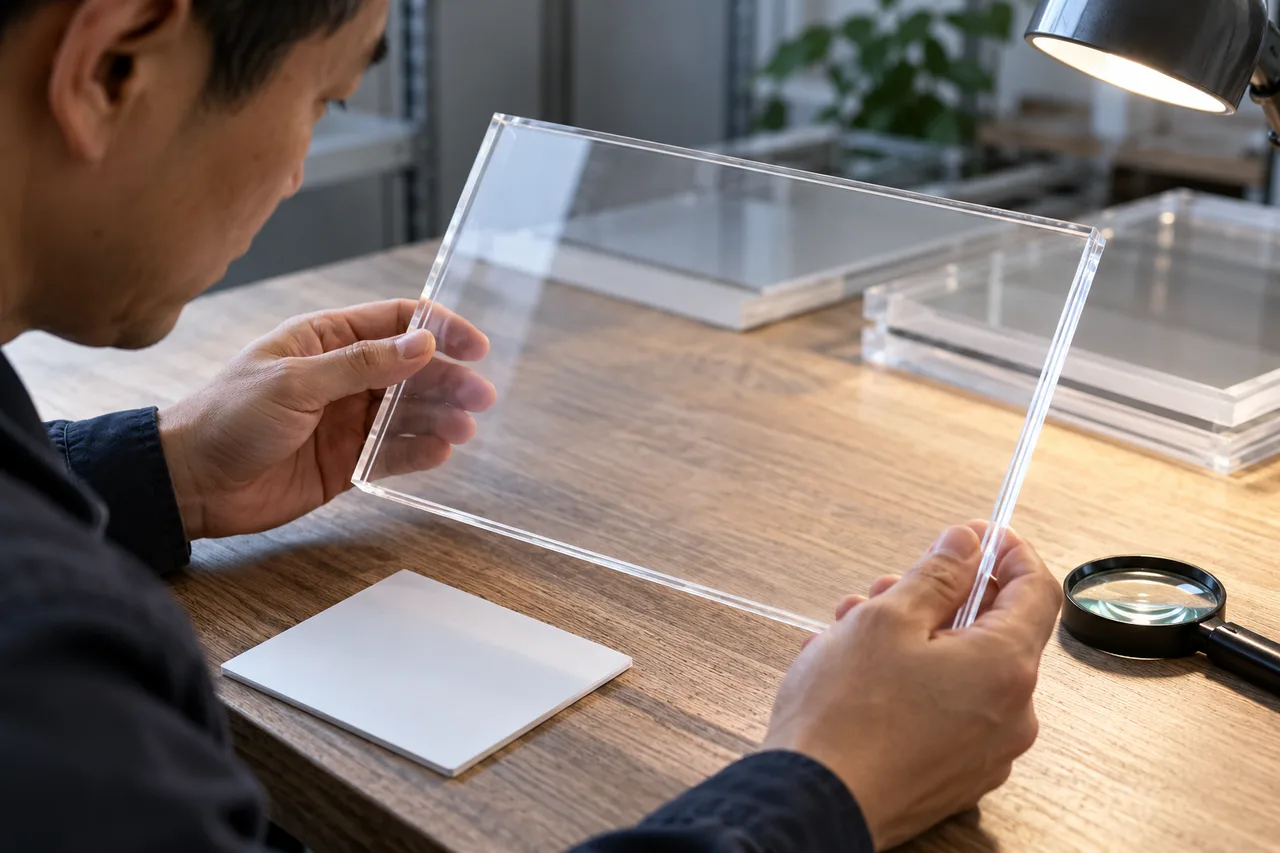
Haze, retained ink, scratches, and fine cracks are different observations. Photographs and a use history can support investigation, but a buyer should not assign a material-failure cause from one image.
Keep observation, hypothesis, and conclusion distinct
Record what is visible under ordinary and angled light, where it appears, and whether it changes after the approved care method. Keep the original panel and avoid repeated cleaning that could alter evidence. Ask when the change first appeared, which products were used, whether the protective film was removed, and how the panel was handled or stored. Preserve a factual timeline with the sample or order reference.
The ACRYLITE finishing guidance discusses processing and incompatible-cleaner concerns at finished edges. This supports asking about fabrication and surface history during an investigation. It does not establish that a particular customer's panel has chemical stress cracking or that cleaner exposure is the sole cause. A qualified technical reviewer should assess the physical evidence and the actual material.
An illustrative support case could report a cloudy patch after wiping, but that description should lead to questions rather than an immediate diagnosis. Ask for photographs before and after any approved follow-up, identify the location relative to an edge or printed feature, and preserve the care product. The example demonstrates an investigation method; it does not describe a verified LumDigi defect or a customer's experience.
- Describe location and visible condition objectively.
- Preserve the unit and care history.
- Ask a qualified reviewer to assess suspected material damage.
4. Agree a product-specific care review
Any cleaner-compatibility review should be designed with the manufacturer or a qualified provider for the actual finished surface. The buyer should define its intended cleaning routine and evidence needs.
State the intended setting, user, frequency, likely soil or marker residue, and proposed cleaner. Ask the supplier whether the routine is supported and what review is appropriate. A retailer resetting a demonstration unit may have a different routine from a consumer drawing occasionally at home. Do not choose a harsh chemical or long exposure simply to accelerate a test without technical justification; that can create results unrelated to the intended use.
A review record should identify the panel and component revisions, cleaner product and composition information available, dilution if applicable, cloth, application, contact conditions, observations, and decision owner. Keep before-and-after images and untouched references where the provider recommends them. If numerical acceptance criteria are required, have the responsible technical party define them. The article proposes a procurement process and does not supply a universal solvent test method.
A technically designed compatibility review may need several specimens or conditions, but procurement should not select concentrations or exposure times without the responsible provider. Ask the provider to explain what conclusion the method can support. Keep a proposed routine, a laboratory procedure, and a consumer instruction as distinct records so a demanding experimental exposure is not accidentally published as the recommended way to clean the board.
- Describe the actual intended care routine.
- Use a technically agreed review method.
- Document cleaner identity and the finished product revision.
5. Write instructions that a customer can follow
Care copy should name the approved method, explain relevant limits, and match the supplied model. Vague phrases such as clean with a household cleaner can invite inconsistent and unsupported use.
Have a person unfamiliar with the product follow the draft care instructions on an approved sample. Observe whether the cloth is too wet, whether liquid can enter the base, and whether the reader knows which cleaner or alternative is permitted. Review the result with the manufacturer before finalizing wording. A clear instruction can reduce ambiguity without claiming that the product withstands every cleaner or that cleaning disinfects the board.
Keep the care statement consistent across the retail pack, insert, website, marketplace listing, support scripts, and replacement-marker information. If a health-related disinfection claim is proposed, it needs its own appropriate review and evidence; ordinary removal of visible soil does not establish that claim. The maintenance guide can remain a general user resource, while the model's approved instructions provide the controlling product-specific method.
Include the cleaning sequence in a usability review of the insert. Ask a new reader which face they would wipe, how much liquid they would use, and what they would do with the base. Their interpretation can reveal ambiguous wording before launch. Have the manufacturer review any proposed change to the instructions, especially when an illustration could imply immersion or spraying directly into an electrical part.
- Use concrete approved care language.
- Check whether a new reader can follow it.
- Review any disinfection claim separately.
6. Collect useful evidence when cleaning is questioned
A support record should identify the product, surface, cleaner, use sequence, observations, and available photos. Ask neutral questions without assuming the customer caused damage or the product is defective.
Request the model, order or lot reference where available, photograph of the whole board, close views of the affected area, and the cleaner's name and label. Ask whether the symptom appeared before or after a particular step and whether other cleaners were tried. Preserve the customer's wording separately from the technical team's interpretation. That approach gives the supplier a clearer investigation basis and keeps commercial remedies from being confused with a root-cause conclusion.
Use the claim-documentation guide to connect photos and product identity to the support case. The manufacturer may need to examine the physical sample or consult the sheet, coating, ink, or base supplier. A refund or replacement decision can be made under the applicable commercial policy while the technical investigation remains open; record each decision with its own scope and owner.
Keep the complaint timeline factual even when a commercial resolution is urgent. A customer may have used more than one cleaner or inherited the board without its insert, and the exact sequence may be uncertain. Record unknowns as unknowns. The support team can apply the relevant sales policy while the technical team considers whether additional evidence is needed to understand the surface change.
- Ask neutral, specific care-history questions.
- Retain full and close-up product views.
- Keep support remedies and root-cause findings documented separately.
7. Review cleaner and surface substitutions before release
A changed coating, print process, sheet grade, cleaning item, or care statement can require a fresh compatibility review. Supplier change control should connect these items to the product file.
A purchasing team may replace a cloth or cleaning accessory for cost or availability while treating it as a minor pack change. Ask whether its material, additive, or instructions affect the approved care method. Similarly, a new sheet source or finishing process should be disclosed before production. Request a factual description of the change and route it to the relevant technical reviewer instead of relying on visual similarity.
Factory testing can check that the released panel, print, cloth, and instructions are the agreed versions. Shipment inspection can observe condition and verify package contents under an agreed plan. Neither step establishes long-term cleaner resistance without an appropriate method and evidence. Keep the retained sample, care approval, and change history available for the next reorder so a previously approved method is not applied to an unreviewed surface.
Review the supply of the cleaning accessory as carefully as the written method. A different cloth can have a different texture or treatment, and a premoistened item can contain an unreviewed liquid. Ask for the actual specification and any proposed changes. If no cleaner is supplied, make the approved user method clear without implying that every common household product is suitable.
- Require notice of material and care-item changes.
- Reconcile pack contents with the approved method.
- Refresh approval when the finished surface changes.
8. Conclusion: qualify care for the actual finished model
The right cleaning answer comes from the actual material, surface treatment, assembly, and cleaner under a defined method. Use careful evidence and clear instructions rather than broad rules based on one ingredient name.
A useful buyer file connects the finished model to its approved care routine, supporting guidance, sample observations, and change triggers. This makes it easier to answer customers consistently and investigate unexpected haze or cracking. It also prevents a material supplier's advice for one application from becoming a consumer instruction for every acrylic product. The goal is accurate care information for the unit being sold.
For a LumDigi project, provide the intended application, proposed marker set, cleaning routine, and any particular cleaner requirement before sample approval. Ask which care method is supported for the offered model and whether special review is needed. If a customer reports a surface change, share clear images and factual product history so the relevant technical team can investigate without an unsupported cause assumption.
The release record should identify which product and care combination was accepted, the evidence consulted, any limitations, and the person responsible for refreshing it. When a panel source or finish changes, compare the new facts with that record. The objective is a maintained product-care decision that can be checked at reorder, not a once-written statement that becomes detached from the materials actually packed.
- Use finished-product care approval.
- Retain evidence and investigation history.
- Keep future substitutions connected to the care file.
Frequently asked questions
Is isopropanol always safe for an acrylic LED board?
Do not assume universal suitability. A material maker may provide specific guidance for its own acrylic, while a finished board can include a different grade, coating, print, adhesive, or electrical assembly. Follow the finished-product maker's approved method for the exact cleaner and model.
Does a cloudy area prove chemical damage?
No. Visible residue, smearing, scratching, haze, and fine cracking can require different investigation. Record the condition, location, cleaner identity, and use history, preserve the sample, and ask a qualified material reviewer to assess the evidence before assigning a cause.
Can an importer write its own cleaner claim after one wipe test?
One observation provides limited evidence under its stated conditions. Agree an appropriate review with the manufacturer or qualified provider, identify the finished surface and cleaner, and approve wording only within the evidence. A care claim should also match the destination's applicable consumer-information requirements.
Image planning for this topic
These notes document the role and intended context of the two visuals used in this guide.
Show a care-method review
- Placement
- hero
- Caption
- Illustrative AI-generated photograph: a buyer checks a soft cloth and an identified but unbranded cleaner beside an acrylic sample.
- ALT text
- Asian buyer reviewing acrylic board care with a soft cloth and plain cleaner bottle
View AI image direction
Use case: photorealistic-natural. Asset type: editorial image for a LumDigi B2B LED drawing board article. An adult Asian importer sits at a clean desk with a transparent cloud-shaped LED drawing board, a soft lint-free cloth, and a sealed unbranded cleaning bottle. The person reviews a blurred care sheet without spraying the electronics. Natural documentary photography. Landscape 3:2, real acrylic textures, modest natural light, candid professional photography. If workers appear, they are Chinese/Asian adults. No invented logos, certification marks, readable documents, numerical test results, watermark, or text overlay. Show an illustrative procurement or sample-review scene, not proof of an actual test or shipment.
Show surface observation
- Placement
- after-second-section
- Caption
- Illustrative AI-generated photograph: an acrylic panel is examined under angled light to document its surface condition.
- ALT text
- Chinese sample reviewer inspecting the edge and surface of a clear acrylic drawing panel
View AI image direction
Use case: photorealistic-natural. Asset type: editorial image for a LumDigi B2B LED drawing board article. Close documentary view of adult Chinese hands examining an unpowered clear acrylic drawing panel under gentle angled bench lighting, with a magnifier and a blank sample card. Real subtle surface reflections, no exaggerated broken glass, no claim about a defect cause. Landscape 3:2, real acrylic textures, modest natural light, candid professional photography. If workers appear, they are Chinese/Asian adults. No invented logos, certification marks, readable documents, numerical test results, watermark, or text overlay. Show an illustrative procurement or sample-review scene, not proof of an actual test or shipment.
Turn the article into a practical sourcing brief
Use the checkpoints above to document the product, evidence, packaging, and approval decisions relevant to your market. A clear brief helps suppliers respond to the same commercial question and gives your team a traceable basis for the next step.
Useful external references
- PLEXIGLAS: Cleaning and Disinfecting technical information
Primary care guidance that distinguishes ordinary cleaning from specific material disinfection guidance.
- ACRYLITE: Edge and surface finishing
Material maker's discussion of processing, finishes, and incompatible-cleaner concerns at processed edges.
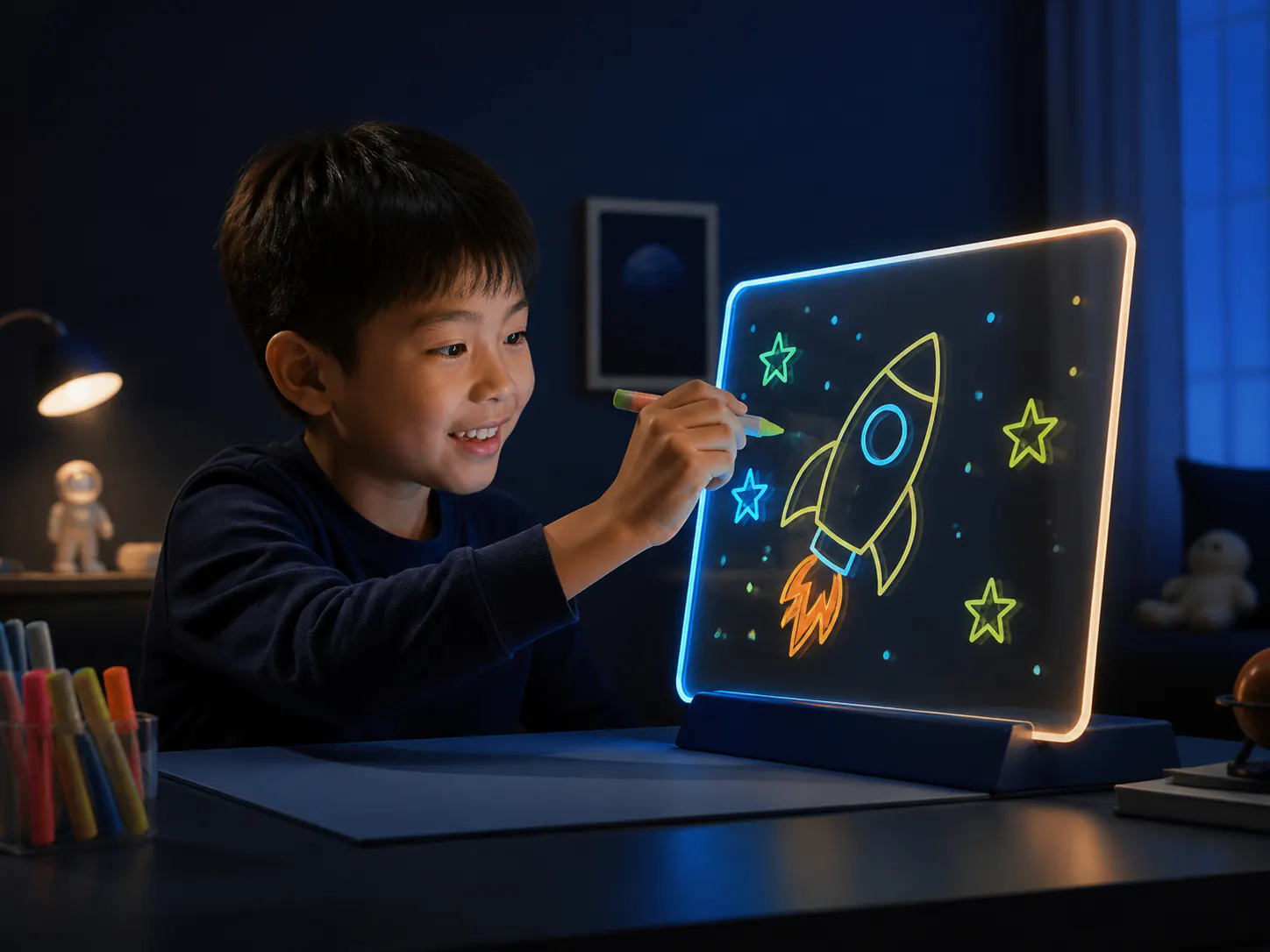
How Do I Clean and Maintain a LED Drawing Board to Extend Its Lifespan?
A practical buyer guide to LED drawing board maintenance decisions, with clear questions for product fit, specifications, proof, and everyday care.
Read article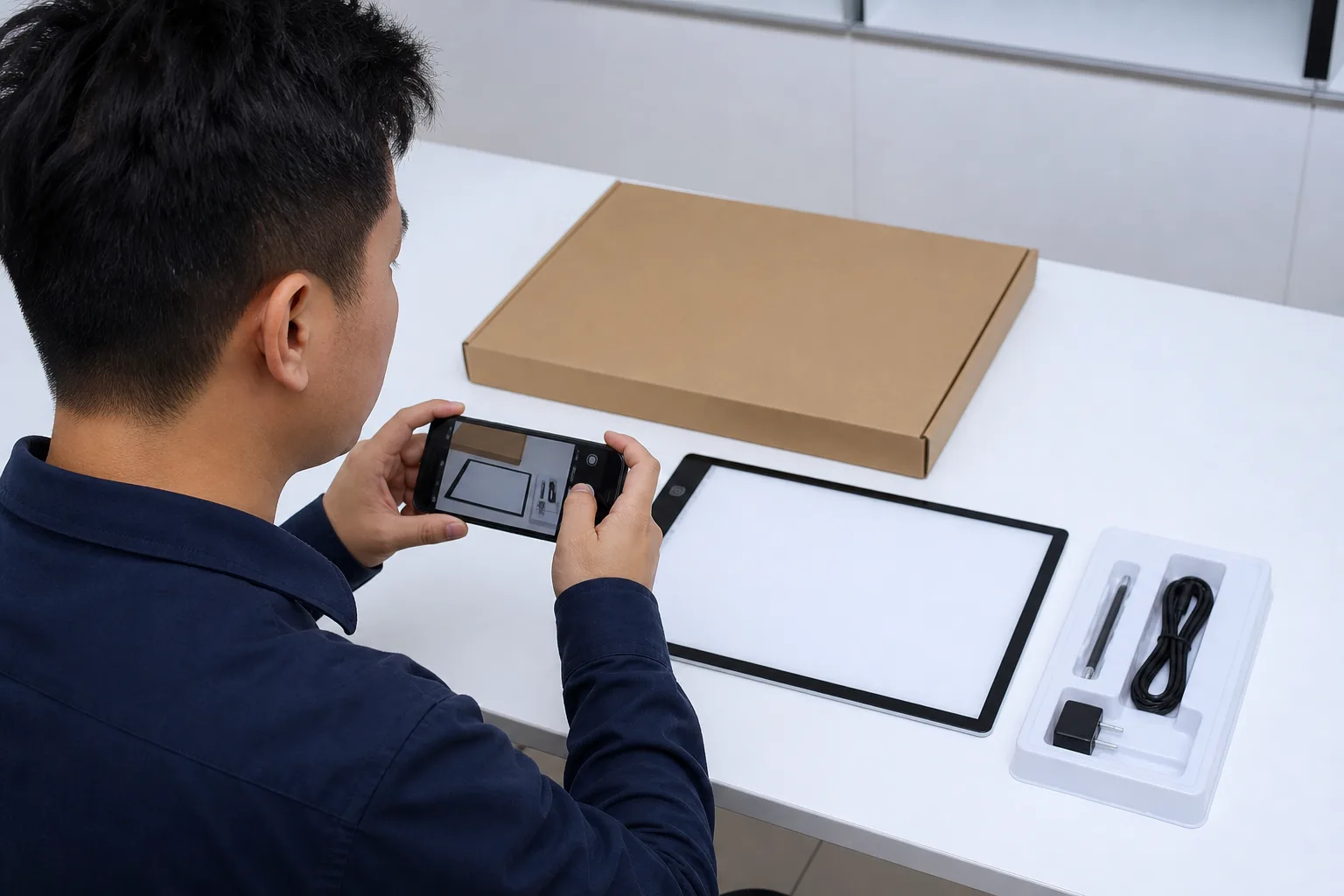
LED Drawing Board Warranty Claim Documentation Guide for B2B Buyers
A practical buyer guide for distributors, retailers, importers, and private-label support teams who need to use a configuration-specific claim record to distinguish an observed issue from the commercial or technical decision that follows.
Read article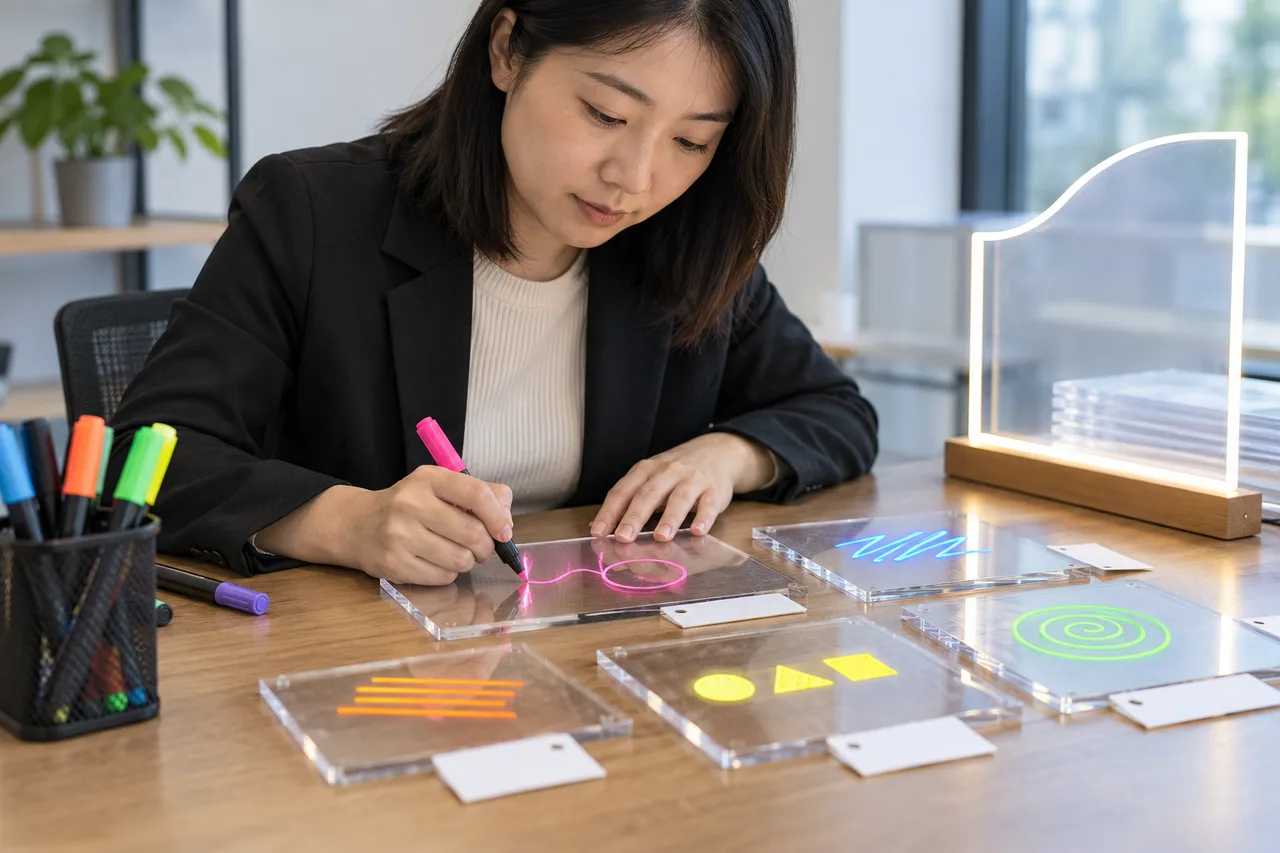
Fluorescent Marker and Acrylic Panel Compatibility: A B2B Sample Review Protocol
A sample-testing plan for buyers qualifying a specific marker formulation with a specific acrylic surface and care method.
Read article
Edge-Lit Acrylic Drawing Board vs Tracing Lightbox: Which Product Should a Buyer Source?
A category-selection guide for importers choosing between a glowing drawing surface and a backlit aid for tracing on paper.
Read article