
Canada CCPSA Incident Reporting for LED Drawing Board Importers
The direct answer is to set up a product-specific complaint intake, escalation owner, supplier notification, and Health Canada reporting decision path before products reach consumers, while avoiding treating a serious product-safety signal as an ordinary return ticket or waiting for a complete factory investigation before considering a statutory report.
1. Start with the Canadian importer's role and the exact product
Under Canada's Consumer Product Safety Act, commercial importers, manufacturers, and sellers may have incident duties. The importer should identify the product and assess the reported facts promptly; an LED drawing board is not automatically a toy or a reportable incident merely because it is child-oriented.
First record which Canadian business imported, manufactured, or sold the consumer product and which company supplied it. The Act's incident process concerns specified health or safety events, including an occurrence that resulted or may reasonably have been expected to result in death or serious adverse effects on health, a relevant defect or hazard, certain label or instruction issues, or a safety-related recall or measure. The official guide explains the tests and examples; customer-service staff should route a credible signal to a trained owner rather than decide legal applicability from a product name.
Tie the report to an identified board: shape, model or SKU, base and power configuration, marker set, packaging revision, purchase period, channel, and any visible production reference. A cloud shape and a rocket shape may share components but are not necessarily the same product record. Preserve the customer's original description and photographs, distinguish what is observed from what is suspected, and record unknowns. The importer and its Canadian adviser decide whether the facts meet the statutory definition; a factory can help identify supplier-held records but cannot make that decision for the importer.
Health Canada's guide states that section 14(2) applies to commercial sellers as well as importers and manufacturers, while the further section 14(3) report applies to manufacturers and importers. Contract roles and actual supply-chain activity should be reviewed rather than inferred from a job title.
- Identify the Canadian legal entity and its role in the supply chain.
- Capture the exact product version, report source, date, and facts known.
- Escalate possible serious risk without waiting for a complete root-cause report.
2. Separate the two-day initial report from the ten-day follow-up
Health Canada describes a two-stage process: section 14(2) information is generally due within two days after the day of awareness, while manufacturers and importers also have a section 14(3) written-report duty within ten days after the day of awareness, subject to the Act and any Health Canada direction.
The timing is not a reason to postpone intake until every detail is available. The official industry guide says an initial section 14(2) report may be required even when the business has not completed a comprehensive inspection, does not possess the product, or is still investigating. Build a clock into the complaint workflow: preserve when the first employee received the information, when the responsible team learned enough to assess it, who made the incident determination, and the reporting deadline calculated under current official guidance. Obtain legal advice for a particular event.
The subsequent section 14(3) report is not simply a duplicate of the first notice. It can require more specific information about the event, product, similar products the importer or manufacturer knows about, and whether corrective measures are necessary or proposed. Health Canada can specify a different timeframe in appropriate cases. The importer should calendar both duties independently and record submission receipts, later updates, any extension request, and the rationale for decisions. Do not turn the statutory clock into a generic 'within ten days' promise in a customer message; the starting point and applicable duty matter.
The guide explains that a report is not automatically a finding that the product poses a substantial hazard or that corrective measures are necessary. Reporting and risk conclusions are separate steps, and businesses should avoid telling customers that a report itself proves either safety or danger.
- Log awareness dates and decision owners contemporaneously.
- Track section 14(2) and 14(3) deadlines as separate tasks.
- Submit the information available and follow official instructions on later updates.

3. Build a complaint triage path for retailers and online channels
A useful Canadian workflow distinguishes routine service issues from signals requiring immediate safety review while retaining a route for uncertain cases. It should be easy for a retailer, marketplace team, or support agent to activate without making a final legal finding.
Give intake staff a short neutral question set: what happened, when and where, who used the item, which exact board and accessories were involved, whether there was an injury or medical attention, whether the item or packaging is available, and whether the same concern occurred before. Ask for relevant photographs only through approved privacy and customer-care processes. Do not ask a customer to reproduce a hazardous condition or mail a potentially unsafe device without instructions from the safety lead.
Use risk flags such as reported burns, smoke, electrical behavior, sharp breakage, choking concern, or a missing warning alleged to have caused serious harm as escalation triggers, not automatic legal conclusions. Assign one person to coordinate safety, legal, customer service, sales, and the supplier. Preserve the first report verbatim where practicable and create a factual summary separately. An LED board supplier may help confirm the sample's base or component revision and inspect returned material under an agreed plan; a supplier response should not delay a statutory decision or substitute for a qualified Canadian assessment.
A product complaint system should collect enough facts to assess a signal while limiting personal information to what is necessary. Follow the importer's privacy policy and obtain advice before moving identifiable incident material among overseas teams.
- Give retailers one contact and a clear escalation route.
- Preserve original reports and separate them from internal interpretation.
- Never make the customer reproduce a dangerous event for evidence.
4. Do not assume an overseas event is irrelevant
Health Canada's guidance indicates that a Canadian company may need to assess an event involving the same product even if it occurred outside Canada. A foreign recall or safety action can also be a fact relevant to the Canadian incident review.
A private-label importer may receive a signal first from a foreign distributor, manufacturer, retailer, social channel, or regulator. Route that information into the same intake system rather than restricting review to Canadian orders. Preserve the original market, date, product identity, and the action taken there. A report about another shape or power version should trigger a comparison, not an automatic assumption that it is either identical or unrelated. Record the basis for matching or separating configurations.
This cross-market screen is especially useful when one supplier produces the same board family for several brands. Ask whether the foreign event involves the same model, component revision, packaging, or production period; request factual supplier-held details and document any uncertainty. The Canadian importer remains responsible for applying Canadian law to the circumstances. A foreign authority decision may be informative but is not automatically the Canadian legal conclusion. Share sensitive incident data only with authorized teams, and follow privacy, confidentiality, and counsel instructions when consolidating reports across markets.
If a retailer or distributor receives a report, contract instructions should require prompt transmission to the named importer contact. A supplier agreement can facilitate information exchange, but it cannot excuse a Canadian party from duties imposed directly by law.
- Screen credible foreign reports for the same product and hazard.
- Map configurations before deciding whether a report is relevant.
- Keep Canadian legal analysis distinct from another market's decision.
5. Prepare a practical evidence file for an importer report
The importer should be able to retrieve product identity, supply and distribution records, the original event, its assessment, supplier communications, and any containment or corrective-action decision without reconstructing the case from scattered email.
Create a case folder or controlled record with a unique ID, event timeline, customer report, available images, sales and import records, SKU and revision mapping, quantity and market scope, supplier questions, and response owner. Preserve the product and retail packaging if safe and practical. If a returned sample is examined, log who received it, its condition, photographs, and the limits of the examination. Separate a visual observation from a verified test result; a single returned unit cannot establish the condition of every unit sold.
Use version control for the product specification and test record so a buyer can see which base, cable, markers, and insert correspond to the reported board. Ask the factory for the relevant production or inspection records using a specific order reference and date range. Keep the supplier's statement in its original wording and avoid converting it into a warranty that a hazard is absent. Record any decision to hold, continue, remove, repair, or recall stock with its authorized owner and supporting advice.
Record both whether the board was powered by a supplied cable or another source and which base revision was present. Those details may help the manufacturer identify the configuration without implying that a component is the cause.
- Use one case number and a dated event timeline.
- Keep original evidence, configuration records, and decisions together.
- Limit claims to the unit, method, and scope actually examined.
6. Set expectations with an LED board supplier before an issue occurs
Before placing an order, agree how the supplier will identify a model and retrieve relevant records, who receives a safety escalation, and what evidence can be shared. These commercial preparations support the importer's process but do not transfer statutory duties.
A sourcing questionnaire can request stable SKU and revision references, how production orders are identified, which inspection observations are recorded, how product or packaging changes are communicated, and which contact handles urgent complaints. Confirm the scope and retention of records in the purchase agreement or quality process. Do not assume that a supplier keeps a particular lot code, can provide consumer-level traceability, or will retain documents for the same duration as Canadian law without confirming it in writing.
Agree a practical request format: board shape and base, power option, order number, production window, issue description, photos, and requested records. The importer may ask for sample review, a focused factory investigation, or independent laboratory work depending on the concern. A routine inspection is not automatically a safety evaluation, and a factory statement is not a legal opinion. LumDigi can discuss product configuration and supplier-controlled information for a B2B project; the Canadian importer and its advisers retain the incident assessment, notification, consumer communication, and corrective-action decisions.
The official timelines are calculated from the awareness day using statutory rules. Use the government guide for weekends, holidays, and deadline calculation; this article is an operational overview, not a deadline calculator or legal opinion.
- Name a 24-hour escalation contact where your business process requires one.
- Agree what model, revision, order, and production facts can be retrieved.
- Keep reporting and legal responsibility with the Canadian business.
7. A Canadian buyer's readiness checklist
Before launch, verify that each sales channel can identify the importer, capture a safety signal, route it to the right owner, preserve product and order facts, and support a timely Health Canada assessment and any required supplier follow-up.
Test the workflow with a tabletop scenario involving a dim board, a damaged panel, and a separate hypothetical safety report so staff do not confuse quality complaints with serious incidents. Check whether customer service knows what to ask, where to record the report, and whom to contact outside business hours. Confirm that the importer can find the purchase order, SKU, packaging version, shipment, supplier contact, and inventory location. Rehearse escalation without entering fictional details into a regulator system.
Review the process whenever the product configuration, importer entity, sales channel, complaint platform, or official guidance changes. Keep the current Health Canada guide linked in the internal procedure and have counsel review the trigger language and deadline handling. For a supplier discussion, send the market, exact board version, business role, relevant order reference, and the factual question. The goal is not to promise a risk-free product; it is to make product facts and responsible decisions retrievable when they matter.
A safety-report readiness review can be included in supplier onboarding alongside sample approval and product-document review. Keep this separate from commercial quality acceptance and from any laboratory assessment required for the destination market.
- Test the intake and escalation path before launch.
- Reconcile complaints with product and distribution records.
- Recheck current official guidance and obtain Canadian legal advice for incidents.
8. Conclusion: make the Canadian reporting process operational
Canadian importers should prepare a prompt incident-intake and reporting workflow, distinguish the two statutory reporting stages, and keep product-specific evidence accessible. Use official guidance and legal advice for each real event.
The practical sequence is to identify the Canadian business role, capture the exact board and event, escalate promptly, assess section 14 criteria, track each applicable reporting deadline, and preserve subsequent supplier and corrective-action records. A clear owner and a retrievable product file make that sequence more reliable than an inbox-based response. Neither a general product category nor an incomplete sample decides whether an event is reportable.
For an upcoming LumDigi order, share the target Canadian channel, intended product configuration, packaging requirements, and the supplier records your incident-readiness process expects. We can confirm product and order facts held by the supplier. Canadian importers should consult Health Canada guidance and their qualified advisers for legal interpretation, reporting, and consumer-protection decisions.
When facts remain incomplete, document the information gap and next owner. Avoid changing an initial report into a certainty statement simply because later communications use abbreviated summaries.
- Prepare before the first complaint.
- Use supplier evidence to support, not replace, importer decisions.
- Keep the current official guide accessible to the team.
Frequently asked questions
Does every LED drawing board complaint have to be reported to Health Canada?
No. The CCPSA defines reportable incidents through specified criteria. Preserve and promptly assess the facts using Health Canada's current section 14 guidance; a routine return is not automatically a reportable incident, and a safety signal should not be dismissed as routine service.
What is the difference between the two-day and ten-day CCPSA reports?
Health Canada describes an initial section 14(2) duty generally due within two days after the awareness day and an additional section 14(3) written report for manufacturers and importers generally due within ten days. Confirm the current statutory rule and any Health Canada direction for the event.
Can a Canadian importer ignore a report from another country?
No blanket assumption is appropriate. Health Canada guidance says a Canadian company should assess a qualifying event involving the same product even when it occurred abroad. Determine product identity and Canadian reporting criteria with qualified advice.
What should a buyer ask an LED drawing board supplier before launch?
Ask how the supplier identifies product revisions and orders, who receives urgent safety questions, and what configuration, production, and inspection records can be retrieved. Confirm answers contractually; the importer remains responsible for Canadian reporting and corrective-action decisions.
Image planning for this topic
These notes document the role and intended context of the two visuals used in this guide.
Show a buyer decision context for Canada CCPSA Incident Reporting for LED Drawing Board Importers.
- Placement
- hero
- Caption
- A Canadian product team records an LED board complaint and identifies the specific model before escalation.
- ALT text
- Canadian importer reviews a clear acrylic LED drawing board and complaint intake record
View AI image direction
Photorealistic documentary photograph for a LumDigi B2B article about Canada CCPSA Incident Reporting for LED Drawing Board Importers. Use case: photorealistic-natural. Asset type: editorial blog photograph. Scene: a Canadian importer product-safety lead reviews a shaped acrylic LED drawing board, a customer complaint form with all writing blurred, and a neutral laptop in a real office. Subject: the exact product and a careful incident-intake workflow, not an accident scene. Style: credible documentary photography, natural window light, realistic acrylic and paper textures, landscape 3:2 composition. Constraints: professional, calm, no injury, no government logos, no readable personal data, no invented test result, no text overlay, no watermark. Real acrylic texture, candid commercial setting, landscape composition, no readable logos, no certificates, no text overlay, no watermark.
Show practical factory or shipment-review context for Canada CCPSA Incident Reporting for LED Drawing Board Importers.
- Placement
- after-key-considerations
- Caption
- A Chinese factory team and an overseas buyer compare a board configuration with a neutral production record during a factual investigation.
- ALT text
- Chinese factory staff and overseas buyer inspect an LED drawing board configuration sample
View AI image direction
Photorealistic documentary photograph for a LumDigi B2B article about Canada CCPSA Incident Reporting for LED Drawing Board Importers. Use case: photorealistic-natural. Asset type: editorial blog photograph. Scene: a Chinese supplier's product staff and an overseas buyer review a shaped LED fluorescent acrylic board beside a blank configuration sheet in a clean sample room. People: all visible factory employees are Chinese/Asian adults; candid and respectful. Style: documentary commercial photography, soft practical factory light, natural skin and acrylic texture, landscape 3:2. Constraints: no readable documents, no logos, no certificates, no staged safety claim, no text overlay, no watermark. Real acrylic texture, candid commercial setting, landscape composition, no readable logos, no certificates, no text overlay, no watermark.
Turn the article into a practical sourcing brief
Use the checkpoints above to document the product, evidence, packaging, and approval decisions relevant to your market. A clear brief helps suppliers respond to the same commercial question and gives your team a traceable basis for the next step.
Useful external references
- Health Canada: Industry Guide to Mandatory Reporting under CCPSA section 14
Primary federal guidance on the two reporting duties, who reports, incident assessment, timelines, and follow-up information.
- Health Canada: CCPSA Quick Reference Guide
Official overview of incident criteria and manufacturer/importer reporting responsibilities.
- Justice Laws: Canada Consumer Product Safety Act
Current statutory text for the Canadian consumer product incident duties discussed in this guide.

Recall Readiness and Lot Traceability for LED Drawing Board Importers
A practical importer workflow for complaint intake, product and lot identification, distribution records, and timely escalation of potential consumer-product concerns.
Read article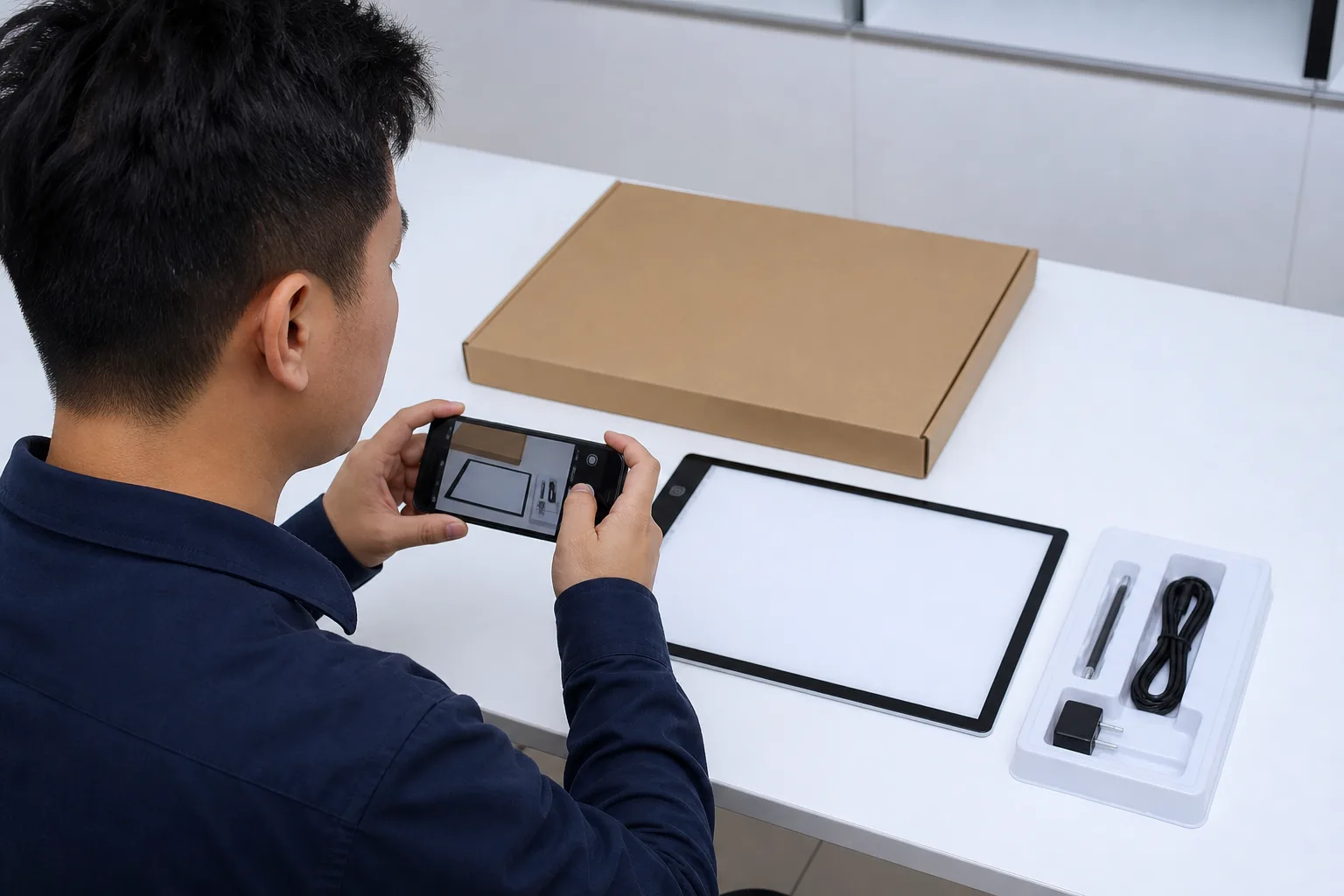
LED Drawing Board After-Sales Escalation Guide
A practical B2B guide for distributors, retailers and customer-service managers who need to escalate an after-sales issue using the exact SKU, order, observation and evidence record.
Read article
LED Drawing Board Corrective Action Response Guide
A practical B2B guide for quality managers and importers who need to document the finding, affected scope, requested action, evidence and buyer disposition.
Read articleLED Drawing Board Warranty Claim Documentation Guide for B2B Buyers
A practical buyer guide for distributors, retailers, importers, and private-label support teams who need to use a configuration-specific claim record to distinguish an observed issue from the commercial or technical decision that follows.
Read article