
Choose carton evidence from the distribution problem
ECT and burst strength describe different corrugated-board properties; box compression and transport tests answer additional questions about the finished pack. Specify the actual product, carton, inserts, closure, load, and route with a packaging professional. Do not convert one grade number into a universal damage guarantee or choose a carton without reviewing the complete packed system.
1. Define the distribution problem before selecting a grade
Carton selection begins with the product, packed weight, route, handling, stacking, and acceptable condition on arrival. A familiar ECT or burst number cannot replace that distribution brief.
An acrylic panel may be sensitive to edge impact, surface rubbing, bending, or movement inside its retail pack. The base, markers, cable, and other parts may create additional contact points. Describe the complete set, individual and master-carton arrangement, expected handling, storage, palletization, and whether the pack travels through parcel or consolidated freight. Ask a packaging professional to identify relevant hazards and the information needed to choose material and design.
Keep the desired outcome concrete. Does the buyer need the retail gift box to arrive saleable, the acrylic surface to remain protected, and every accessory to stay in place? Define product damage and package-condition criteria before testing. These buyer-defined requirements give meaning to later results. Avoid assuming that a thicker-looking carton or an impressive grade stamp automatically solves the particular damage mechanism.
A shipment brief can use a model such as the Dinosaur LED Fluorescent Board, its base and accessories, and the proposed retail pack as a concrete starting point. Confirm actual dimensions, weight, and packing configuration rather than borrowing figures from another shape. The qualified packaging provider needs the product that will really travel and the conditions the buyer expects it to withstand.
- Describe the actual product and shipping route.
- Identify panel and accessory contact risks.
- Agree arrival-condition criteria before choosing tests.
2. Understand ECT as an edgewise board property
An edge-crush test evaluates corrugated board under a defined edgewise loading method. It is one material property and should be stated with the applicable method, units, sampling, and conditioning.
The FEFCO method list identifies edgewise crush resistance separately from other board and package tests. Ask the carton supplier what method and units its quoted grade uses and whether the result represents the actual supplied construction. A number without those details can be difficult to compare across quotes. Keep board construction, flute arrangement, paper references, and applicable tolerances in the specification where the supplier can substantiate them.
ECT information can support a packaging engineer's design decisions, but it does not alone measure the complete box's performance with openings, creases, joints, contents, humidity exposure, or closure. Do not relabel ECT as maximum stacking load. If stacking matters, the professional should consider the box design and relevant compression evidence in addition to board properties. Preserve the relationship between the tested board and the finished carton version.
Ask whether the quoted ECT value is a declared minimum, a result from a particular sample, or part of a customer specification. Those meanings can differ. Record the relevant sampling and acceptance arrangement in the carton purchase file. A grade stamp should not be read as a complete test report, and the supplier should explain which records it can provide for the actual board construction delivered.
- Ask for method, units, and supplied construction.
- Keep ECT separate from complete-box capacity.
- Confirm sampling and conditioning with the provider.

3. Understand burst strength as a different board test
Burst strength measures resistance under its specified pressure-based method. It is not the same quantity as ECT and should not be converted through an assumed universal equivalence.
Different loading methods answer different questions
FEFCO lists bursting strength as its own test method, reflecting a different loading situation from edgewise crush. A supplier may quote a burst-based grade because of a customer specification or distribution requirement. Ask what that grade means, what construction is supplied, and whether the buyer's particular route requires it. Do not compare an ECT value directly with a burst value as if the larger number identifies the stronger carton in every sense.
If two quotations use different grade systems, ask the packaging suppliers or qualified professional to produce a comparable specification and explain the design basis. The answer may require material details or additional testing rather than a conversion table. A board can perform differently under compression, puncture, water exposure, and other loads, so a single property should not be marketed as proof of total transit protection.
If a retailer requires a burst-based grade, share the exact requirement and its current version with the converter. The packaging professional can then decide how to meet it alongside the product's other needs. Avoid replacing it with an ECT value simply because another carton supplier uses a different system. Any proposed alternative should be reviewed and accepted by the party that owns the requirement.
- Keep burst and ECT quantities distinct.
- Ask why a grade is required for the route.
- Request comparable evidence rather than a shortcut conversion.
4. Review box design, inserts, closure, and stacking
The finished package is a system. Dimensions, flute orientation, folds, joints, openings, insert support, product position, and tape can affect performance even when the board grade is unchanged.
Prepare a packaging drawing or controlled photo set showing how the acrylic panel, base, markers, and power items sit inside. Identify protective films, separation layers, inserts, voids, and any contact with sharp edges or heavy accessories. Confirm the packing sequence and actual carton dimensions. Ask the professional to review whether the design controls the identified damage risks rather than using additional material without a clear purpose.
For palletized freight, review stack pattern, overhang, restraint, and load arrangement with the relevant provider. For parcel distribution, review the consumer pack and any outer shipper as they will actually travel. A retail box packed inside a master carton does not represent the same distribution system when shipped individually. Keep each configuration separate in the validation plan and in the palletization records.
Observe the product when the packed sample is opened after normal preparation. Check whether accessories can rub the acrylic, whether shaped tips bear load, and whether the base moves into the panel. These observations can guide design questions, but they are not transport-test results. Record the exact insert and packing sequence so a revised design can be compared with the same identified product and acceptance objective.
- Document the complete packing arrangement.
- Keep retail, master, and parcel configurations distinct.
- Review closure and stacking with the design.
5. Use box compression for the question it actually answers
A box compression test concerns a finished package under defined conditions. It differs from board ECT, and a result still needs context before it is used to plan real storage or transport stacking.
FEFCO lists compression resistance for corrugated packaging separately from board-level methods. Ask the provider whether the test uses an empty carton, an actual filled pack, or another defined specimen and why. Record dimensions, construction, closure, conditioning, contents, equipment, method, and criteria. A laboratory result should not be turned into a real-world safe-stack height without considering time, environment, handling, and the application assumptions used by the packaging professional.
If the buyer has warehouse or retailer requirements, share them before testing. The test plan should address the relevant system and known constraints. Keep proposed calculations labeled as calculations and based on documented inputs. Factory observations can confirm carton identity and packing configuration, but a visual inspection of board thickness does not establish a compression result.
Environmental conditions can affect paper-based packaging, so share storage and transport assumptions with the provider. The professional should determine suitable conditioning, test methods, and interpretation. Do not apply an unexplained safety factor or calculate a stack limit from a single number found online. A transparent record of assumptions is more useful for procurement than a precise-looking load claim without a defensible method.
- Identify the exact compression specimen and conditions.
- Record the calculation or application assumptions.
- Do not infer results from visual carton inspection.
6. Select a complete-pack transport test with a qualified provider
Transport procedures can be screening tools or simulations for specified distribution environments. Choose the method from the actual route and objective, and use a representative product-and-package configuration.
The ISTA procedures overview explains different test families and purposes. A buyer should ask a qualified packaging laboratory which procedure fits the shipment and what its limitations are. A short demonstration drop is not automatically an ISTA test or certification. Follow the selected procedure through the responsible provider and retain the exact packaged-product identity and report scope.
Use the proposed production carton, inserts, closure, product, accessories, and protective materials. Define damage and package-condition criteria before the sequence begins. If the pack is changed during development, record the new version and have the provider decide what should be repeated. The drop-test planning guide supports the broader brief, while this comparison clarifies why board grades alone do not validate the whole system.
A laboratory report should identify the packaged product, carton construction, insert, closure, conditioning, selected procedure, specimen sequence, findings, and agreed criteria. Review limitations and any deviations with the provider. A pass for one pack version does not automatically cover a different panel, carton size, insert material, or transport channel. Have the responsible professional decide whether and how a changed system should be revalidated.
- Select procedure from route and objective.
- Use representative finished packaging.
- Agree damage criteria and preserve report scope.
7. Put material and system requirements into the purchase file
The purchase specification should identify carton construction, agreed properties, drawings, inserts, closure, packed contents, test evidence, and change-control requirements. Quotation should use the same version.
Ask suppliers to quote the actual carton and insert design rather than only a generic strength grade. Identify minimum quantities, artwork, manufacturing assumptions, and any tests or proofs included in the proposal. Keep material data, package test evidence, and commercial validity separate. If a lower-cost substitution is proposed, request its construction and evidence and have the professional review the effect before approval.
Shipment inspection can check carton identity, dimensions within the agreed method, pack arrangement, closure, quantity, visible condition, and available records. It cannot certify a grade from appearance or guarantee zero transport damage. Require notice before paper, flute, converter, insert, dimensions, or tape changes. Retain the approved sample and freight protection brief so later orders do not lose the original design reasoning.
Include the carton converter and insert supplier in change notification where their substitutions can affect the released pack. A board factory may receive a visually similar carton with different construction. The buyer should agree which material and dimensional records will be checked, what evidence is retained, and who approves alternatives. Keep the approved packing sample and specification accessible to both purchasing and the inspection team.
- Quote a released carton-and-insert version.
- Require evidence for proposed substitutions.
- Keep inspection claims within the agreed observations.
| Evidence | Primary question |
|---|---|
| ECT | How does the board perform under its edgewise method? |
| Burst strength | How does the board resist the specified burst method? |
| Box compression | How does the defined package resist compression? |
| Transport validation | How does the packed system perform in the selected sequence? |
8. Conclusion: specify a package, not one impressive number
ECT, burst strength, box compression, and transport validation answer different questions. Use them as part of an evidence-based packaging design for the actual LED board and distribution route.
A practical brief connects the product's damage risks with carton construction, inserts, closure, handling, and acceptance criteria. It lets suppliers quote comparable goods and gives a qualified laboratory a clear test objective. Keep results limited to the actual specimens and conditions, and revisit the design when materials or distribution change. No board-grade number should become a universal promise of undamaged delivery.
For LumDigi, share the board and accessory configuration, retail and master-pack requirements, expected shipping channels, warehouse or retailer constraints, and any required test procedure. We can confirm proposed packing facts and sample references. Work with your packaging professional or laboratory to establish appropriate properties, validation scope, and release criteria for the complete shipped system.
Damage feedback can improve the next packaging review when it identifies product, pack version, route, carton condition, internal position, and photographs. Do not assign root cause solely from a broken panel image. A qualified review can consider handling, movement, material, closure, and route evidence. Use the findings to update a specific design or test question rather than making an unsupported promise that a stronger carton eliminates all damage.
- Describe product, pack, route, and acceptance criteria.
- Use the appropriate material and system evidence.
- Control changes and retain the approved packing record.
Frequently asked questions
Can ECT be converted directly to burst strength?
Do not assume a universal conversion. They describe different board tests, and construction and method matter. Ask the carton supplier or packaging professional to establish a comparable specification and relevant evidence rather than ranking unrelated numbers from separate quotation systems.
Does a higher carton grade guarantee that acrylic panels will not break?
No. Product protection depends on the complete pack, inserts, movement control, closure, handling, and distribution environment. A stronger board property can be useful, but the actual packaged system should be reviewed and validated under an appropriate method with agreed damage criteria.
Is a factory demonstration drop an ISTA certification?
Not automatically. ISTA procedures have specified scopes and sequences. Use a qualified provider, the correct representative package, agreed criteria, and proper reporting. Describe any informal factory check accurately as an observation within its stated method rather than as a formal certification result.
Image planning for this topic
These notes document the role and intended context of the two visuals used in this guide.
Show carton and insert decisions together
- Placement
- hero
- Caption
- Illustrative AI-generated photograph: a packaging buyer compares corrugated samples with a protected acrylic board set.
- ALT text
- Asian buyer reviewing corrugated board and paper inserts for an acrylic LED drawing board carton
View AI image direction
Use case: photorealistic-natural. Asset type: editorial image for a LumDigi B2B LED drawing board article. Adult Asian packaging buyer at a sample table compares two clean corrugated board sections, a plain shipping carton, and a paper insert protecting a shaped acrylic LED board. Real flute edges and paper texture, no readable grade stamp, no numerical test result. Landscape 3:2, real acrylic textures, modest natural light, candid professional photography. If workers appear, they are Chinese/Asian adults. No invented logos, certification marks, readable documents, numerical test results, watermark, or text overlay. Show an illustrative procurement or sample-review scene, not proof of an actual test or shipment.
Show complete-pack sample preparation
- Placement
- after-second-section
- Caption
- Illustrative AI-generated photograph: Chinese packing staff prepare a closed sample carton using the proposed insert and closure.
- ALT text
- Chinese packing staff preparing a sample carton for an LED drawing board shipment review
View AI image direction
Use case: photorealistic-natural. Asset type: editorial image for a LumDigi B2B LED drawing board article. Adult Chinese factory packing staff prepare an unbranded carton with a protected clear acrylic LED board set, paper inserts, and ordinary sealing tape on a realistic packing bench. A separate fully closed sample carton sits nearby. No drop action, test certificate, grade claim, or readable label. Landscape 3:2, real acrylic textures, modest natural light, candid professional photography. If workers appear, they are Chinese/Asian adults. No invented logos, certification marks, readable documents, numerical test results, watermark, or text overlay. Show an illustrative procurement or sample-review scene, not proof of an actual test or shipment.
Turn the article into a practical sourcing brief
Use the checkpoints above to document the product, evidence, packaging, and approval decisions relevant to your market. A clear brief helps suppliers respond to the same commercial question and gives your team a traceable basis for the next step.
Useful external references
- FEFCO: testing methods and recommendations
Industry methods distinguish board bursting and edgewise crush tests from package compression and drop tests.
- ISTA: test procedures
Primary context for choosing screening or simulation procedures for the product and package combination.
- ISTA: getting started with design and testing
Guidance on package decisions, test selection, and validation planning.

LED Drawing Board Carton Drop Test Planning Guide
A B2B buying guide for importers, packaging managers, and ecommerce brands who need to define an evidence-based carton test plan for the actual packed board, accessories, cartons, and shipment context.
Read article
LED Drawing Board Freight Protection Guide: Reducing Transit Damage Risk
A practical B2B guide for buyers preparing retail-ready orders for international transport who need to identify packaging and shipment questions that reduce avoidable transit risk for acrylic panels, bases, accessories, and printed retail packs.
Read article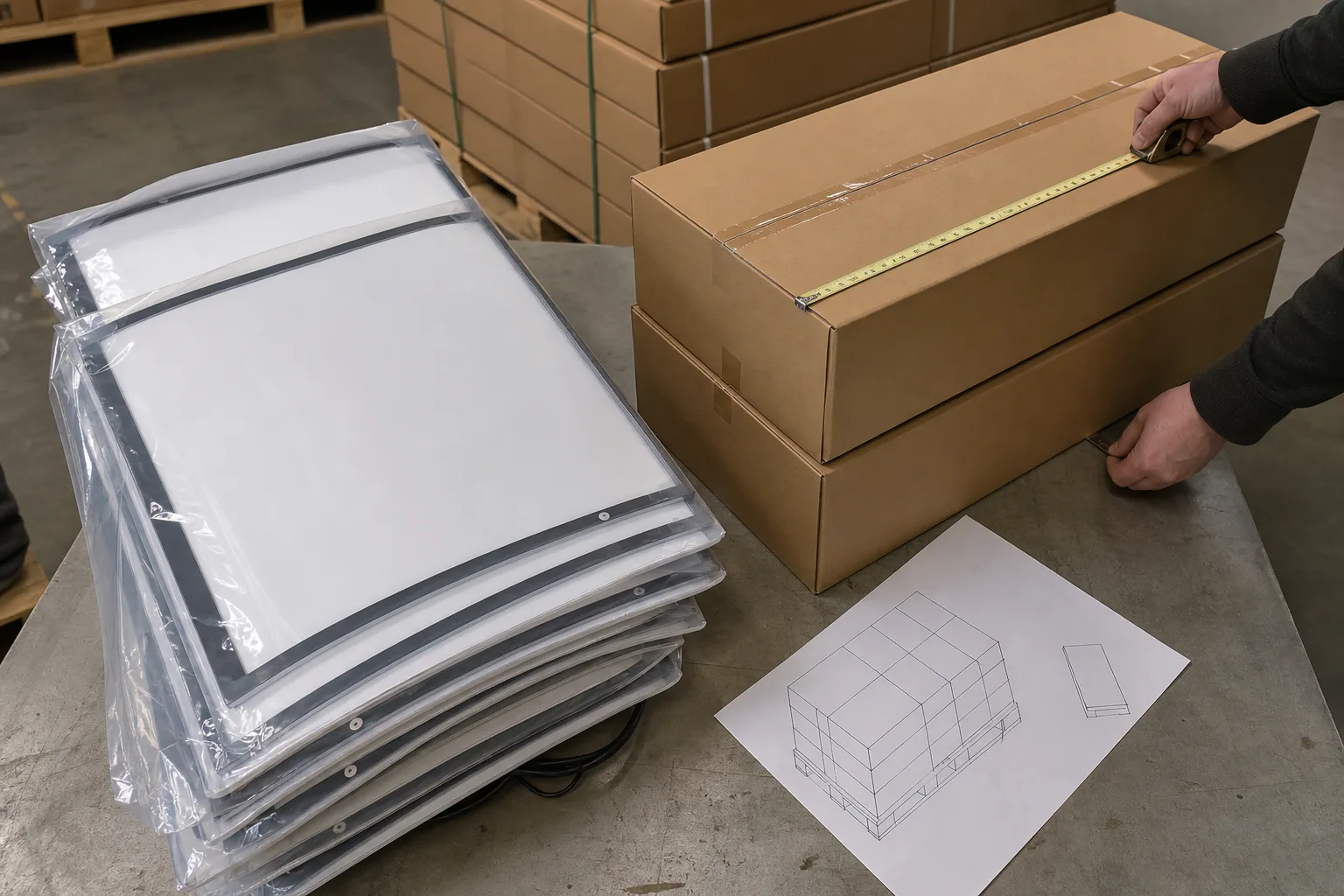
LED Drawing Board Carton and Palletization Guide for Importers
A practical B2B guide for importers, distributors, freight coordinators, and private-label operations teams who need to plan cartons and palletisation from the approved packed unit and shipment scenario, using verified measurements and packing observations rather than generic freight assumptions.
Read article
Brazil INMETRO Toy Certification: A Classification Guide for LED Drawing Boards
A B2B buying guide for Brazilian importers, toy and gift distributors, and foreign manufacturers preparing a Brazil project who need to determine the applicable INMETRO product family and certification route for the exact LED board and obtain local confirmation before importing or selling.
Read article