
EU Safety Gate Incident Response for LED Drawing Board Importers
The direct answer is to preserve product identity and evidence, escalate promptly to the responsible safety/legal team, and follow official notification and corrective-action duties for the specific risk, while avoiding treating a potential safety signal as a routine customer-service ticket, or promising a recall outcome before competent authorities and the responsible business decide next steps.
1. Separate a possible safety incident from routine after-sales
A safety signal—such as overheating, a sharp fragment, unexpected electrical behavior, or a child-accessible component concern—should be escalated immediately under the company's product-safety process, not handled only as a standard return.
Not every complaint indicates a safety risk, but customer-service staff should know how to recognize and escalate a potential signal. A missing marker, scratched panel, or preference issue may follow the ordinary warranty route; a reported injury, smoke, exposed wiring, breakage with sharp edges, or repeated failure needs prompt review by the designated safety lead. Do not ask frontline staff to make a legal risk finding. Give them a short escalation script and preserve the original report.
The responsible importer or EU operator should define who can pause sales, contact the manufacturer, consult counsel, or communicate with regulators. Record the exact product name, model, shape, power arrangement, package, market, lot or production mark, channel, date, and observed condition. Avoid speculative cause statements. A documented triage call can establish what is known, what evidence is pending, and who owns each next step.
A Safety Gate alert is an authority information system, not a self-service recall approval portal. Businesses should use the relevant Safety Business Gateway and national channels as directed by the current law and their advisers, and should not publish an incident identifier that has not been assigned.
- Escalate possible safety events immediately to the named safety owner.
- Separate safety reports from routine warranty tickets without dismissing either.
- Preserve facts and avoid conclusions before review.
2. Preserve the board, packaging, and incident information
A credible investigation starts with an identified item, complete records, and an evidence chain that preserves what the customer or channel actually reported.
Ask the recipient not to discard the board, base, cable, markers, insert, or packaging if it is safe and appropriate to retain them. Capture clear photographs of the condition before cleaning, repair, or repacking; preserve order records and communications; and note who handled the item. Do not request unnecessary sensitive information. If an injury is alleged, route the report to the designated legal and safety contacts and follow their instructions for evidence and privacy.
The supplier can help match a returned or photographed product to a model and production record. Keep original files, timestamps, seller and distributor records, and any sample or inspection references. A factory investigation should state what was examined and what it cannot establish from the available sample. Do not alter the unit or conduct an improvised destructive test before the investigation owner decides how evidence should be preserved.
A safety report should be logged even when the customer cannot provide a lot number. Capture alternate identity information such as order date, retailer, board shape, packaging photograph, and power accessory. Then document what remains unknown rather than guessing a production group.
- Record product and order identity before evidence moves.
- Store original photos, packaging, messages, and receipt details securely.
- Use the safety team's evidence-handling instructions.

3. Determine affected product scope with traceable records
Use model, component, supplier, factory, date, lot, and channel records to identify potentially affected units; do not assume one complaint represents every SKU or only one unit.
A shaped board range may share an acrylic source but use different bases, LED modules, cables, packaging, or production periods. Build a scope matrix that maps the reported item to the smallest defensible product group while leaving room to expand if evidence suggests a shared cause. Compare complaints, factory change records, inspection observations, supplier communications, order history, and distribution data. A cross-reference must be retrievable by the visible product mark or purchase record, not just by an internal buyer's memory.
The scope decision should be owned by the responsible safety and legal team. A manufacturer's preliminary analysis can provide technical evidence but should not be used as an independent decision to exclude units. Document each hypothesis, evidence source, unresolved question, and change to the affected range. If the product cannot be traced precisely, record that limitation and consider a broader scope with qualified counsel rather than making an unsupported narrow claim.
Set a severity escalation rule that sends credible injury or fire reports to a senior product-safety lead immediately, including outside normal customer-service hours. The rule should tell agents whom to contact and what not to promise.
- Map the affected SKU family and component revisions.
- Reconcile production and distribution records.
- Document why the scope is bounded or expanded.
4. Coordinate immediate controls without overpromising
Depending on the assessed risk and legal duties, the responsible business may need to stop distribution, hold inventory, remove a listing, contact downstream sellers, or take another protective measure.
This is a decision for the responsible operator and advisers, not a fixed response that fits every report. Prepare a contact list for the importer, EU responsible person, brand, distributor, marketplace, manufacturer, laboratory, insurer, and counsel. Use controlled internal instructions to pause or segregate inventory if directed. Record units in warehouse, in transit, at retailers, or sold to consumers. Do not tell a marketplace that a product is safe or unsafe before the authorized review concludes.
If a listing is paused, capture the exact URL, offer identifier, variant and time. If a notice is issued, record who approved it, market, affected models, languages, channels, and customer action requested. A removal from one marketplace may not resolve a separate distribution route. Keep the message factual, consistent, and reviewed. Do not promise replacement, refund, or remedy terms until the business has made and approved that decision.
If a sample is returned internationally, coordinate safe transport and custody with the safety investigator. Avoid asking a customer to ship a potentially hazardous item without approved instructions and a suitable channel.
- Know who can authorize a stock hold or sales pause.
- Keep a channel-by-channel distribution picture.
- Use reviewed customer and retailer communications.
5. Check notification and corrective-action duties with the right authority
The EU GPSR and other applicable product legislation can require reporting or corrective measures; the responsible operator should promptly obtain legal advice and follow the applicable official route.
The Safety Gate is the EU rapid alert system through which authorities share information about dangerous non-food products. The GPSR includes obligations related to dangerous products, accidents, corrective action, and communications with authorities and consumers. The exact duty, time, content, and responsible actor depend on the facts and applicable law. Maintain an emergency decision tree that directs the incident to the EU responsible person and counsel without delaying urgent safety actions.
Do not use an online article, supplier email, or older checklist to decide whether a notification is required. Consult the current Regulation, Commission business resources, and relevant national authorities. Preserve the report, risk assessment, affected product scope, corrective action, and communication versions. If there is uncertainty, document the question sent to counsel or authority and the response owner.
Regulatory timelines can be short and jurisdiction-specific. An internal business target should be more conservative than the legal deadline, and the safety team should verify official current reporting instructions rather than rely on this article for a deadline.
- Use current GPSR and other product-specific requirements.
- Route notification decisions to the responsible operator and counsel.
- Retain the rationale, timeline, and records of official communications.
6. Plan corrective action, recall, or market communication
A recall is one possible corrective response, not an automatic answer to every report; qualified risk assessment and authority direction should guide the specific action.
A response plan should cover consumer instructions, retailer notices, online listing updates, stock segregation, return handling, repair or replacement options if selected, and confirmation that relevant channels received the message. For a toy-like LED board, include product identifiers consumers can find on the package or base, a description of the concern without unsupported technical claims, and clear next steps. Have legal and safety reviewers approve the notice and its translations.
Track the number of units, markets, and channels contacted, plus response and recovery status. Do not publicly state a recall is complete until the responsible business has verified the required steps. Keep evidence for corrective actions and monitor new complaints after communication. If a remedy changes, update the notice consistently across retailer and direct-sales channels.
The EU market may involve multiple language and retailer teams. Maintain one approved incident fact sheet and adapt it only through controlled translation and legal review so one country's consumer notice does not conflict with another channel's message.
- Define remedy, affected products, audience, and channels.
- Use clear identifiers and reviewed translations.
- Track reach and completion rather than assuming notices were received.
7. Close the loop with supplier corrective action and buyer records
After immediate risk control, use a documented investigation and corrective-action process to reduce recurrence and update product, inspection, and supplier records.
Ask the manufacturer to investigate the reported failure against the exact sample and production records. A corrective-action report should identify the problem statement, verified evidence, root-cause method, containment, proposed corrective action, validation, owner, and due date. Avoid accepting a one-line statement that workers were retrained as proof the issue cannot recur. The importer should review evidence and decide whether factory inspection or independent testing is appropriate for the issue.
Update the product specification, supplier change log, test plan, package, instructions, customer-service triage, and retailer data as needed. Preserve the original records and mark superseded versions. If the conclusion is that no systemic issue was found, document the sample size and scope so readers do not mistake it for proof about every shipped unit. Share only approved findings with the relevant parties.
A supplier's factory inspection report may help identify a production pattern but is not an independent risk determination. If additional testing is needed, define the test question and sample selection with an appropriate qualified laboratory.
- Separate containment from verified corrective action.
- Validate the fix against an agreed method.
- Update all downstream records affected by the incident.
8. Conclusion: build readiness before a signal appears
An importer should predefine a safety escalation contact, product identity map, evidence-preservation steps, distribution record, and authority-review process before a problem is reported.
A calm response depends on records built before the incident: visible identifiers, reliable lot crosswalks, current retailer and marketplace contacts, and a supplier who can retrieve the relevant production history. Practice the workflow with a tabletop exercise, but do not confuse an exercise with a real investigation or safety assessment. Review the process as product configurations, sales channels, and EU rules change.
For LumDigi projects, the importer can provide a model and production reference when requesting supplier investigation support. We can help retrieve factory-controlled configuration and inspection information and participate in a defined corrective-action discussion. The importer, responsible person, safety professional, and authorities make legal, risk, communication, and remedy decisions.
After closure, evaluate whether the product ID, package, instruction, or retailer page would help a customer recognize the affected configuration. Improvements can be made without implying that every previous unit was unsafe.
- Prepare escalation and evidence steps.
- Maintain a usable product-to-production map.
- Review corrective action and learn from each case.
Frequently asked questions
Is every LED drawing board complaint a Safety Gate report?
No. A safety signal needs prompt triage, but the notification duty and route depend on the facts, product, responsible operator, and applicable law. Consult the current GPSR and qualified counsel.
Should an importer automatically recall a board after one complaint?
Do not decide from a general article. Preserve evidence, escalate to the safety and legal owners, assess risk and scope, and follow authority guidance and legal obligations for the specific case.
What information helps identify potentially affected production?
Product model, shape, base and accessory configuration, visible mark, production period, factory, order, shipment, and distribution records can help. Keep unknown fields explicit and let the responsible team determine scope. A marketplace order date or customer photograph can be a useful starting clue, but it is not a substitute for a controlled lot crosswalk. Preserve original records and distinguish a confirmed match from a possible match until the safety owner reviews the evidence.
Can LumDigi decide whether an EU notification is required?
No. LumDigi can help retrieve supplier-held product and factory facts. The responsible economic operator, safety adviser, counsel, and competent authorities determine legal duties and corrective actions. When requesting records, provide the product shape, base revision, shipment or purchase reference, and the observed issue without asking the factory to diagnose beyond the available evidence. Record the request time and the owner coordinating the response. This keeps supplier fact-finding useful while preserving the importer's responsibility to escalate through the correct safety and legal channels.
Image planning for this topic
These notes document the role and intended context of the two visuals used in this guide.
Show a buyer decision context for EU Safety Gate Incident Response for LED Drawing Board Importers.
- Placement
- hero
- Caption
- An EU importer begins a documented review of a product-safety signal and affected item.
- ALT text
- EU Safety Gate LED drawing board importer B2B buyer review
View AI image direction
Photorealistic documentary photograph for a LumDigi B2B article about EU Safety Gate Incident Response for LED Drawing Board Importers. A European importer product-safety manager reviews a fictionalized, blurred incident intake record beside a shaped acrylic LED drawing board, retail packaging and shipment identifiers in a meeting room; calm operational documentary photo, no injury depiction, no legible personal data or official portal claims. Real acrylic texture, candid commercial setting, landscape composition, no readable logos, no certificates, no text overlay, no watermark.
Show practical factory or shipment-review context for EU Safety Gate Incident Response for LED Drawing Board Importers.
- Placement
- after-key-considerations
- Caption
- Factory quality staff retrieve lot records for a defined product and shipment investigation.
- ALT text
- EU Safety Gate LED drawing board importer Chinese factory review
View AI image direction
Photorealistic documentary photograph for a LumDigi B2B article about EU Safety Gate Incident Response for LED Drawing Board Importers. Chinese factory quality and export staff retrieve production records for one identified shaped LED drawing board lot using a sample unit and plain carton labels, Asian team in a real document room, collaborative corrective-action meeting, no fake recall notice or readable codes. Real acrylic texture, candid commercial setting, landscape composition, no readable logos, no certificates, no text overlay, no watermark.
Turn the article into a practical sourcing brief
Use the checkpoints above to document the product, evidence, packaging, and approval decisions relevant to your market. A clear brief helps suppliers respond to the same commercial question and gives your team a traceable basis for the next step.
Useful external references
- European Commission: Safety Gate and product safety
Official overview of the Safety Gate, GPSR, and product-safety business resources.
- European Commission: Safety Gate 2025 report
Current Commission report on alerts and follow-up measures including recalls and listing removals.
- EUR-Lex: General Product Safety Regulation (EU) 2023/988
Legal text for business duties, corrective actions, accident information, and Safety Gate mechanisms.
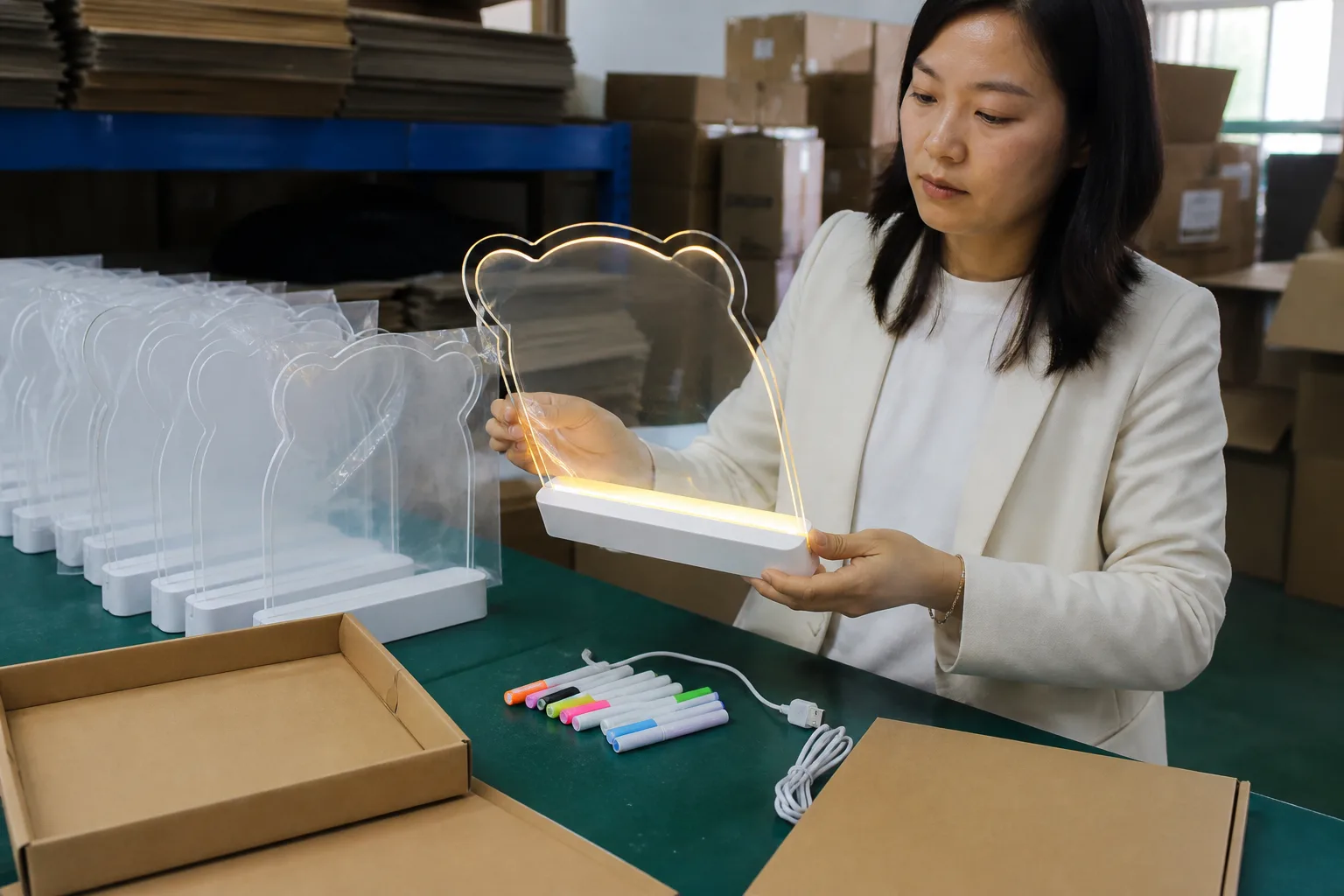
LED Drawing Board Lot Traceability Guide for Wholesale Buyers
A practical buyer guide for importers, distributors, and after-sales operations teams who need to create a buyer-owned lot traceability record that connects the approved configuration, order, pack, and factual support information.
Read article
LED Drawing Board After-Sales Triage Guide for Distributors
A B2B buying guide for distributors, retailers, and customer-service teams who need to triage customer questions using product identity, observed condition, packed contents, and buyer-owned support records.
Read article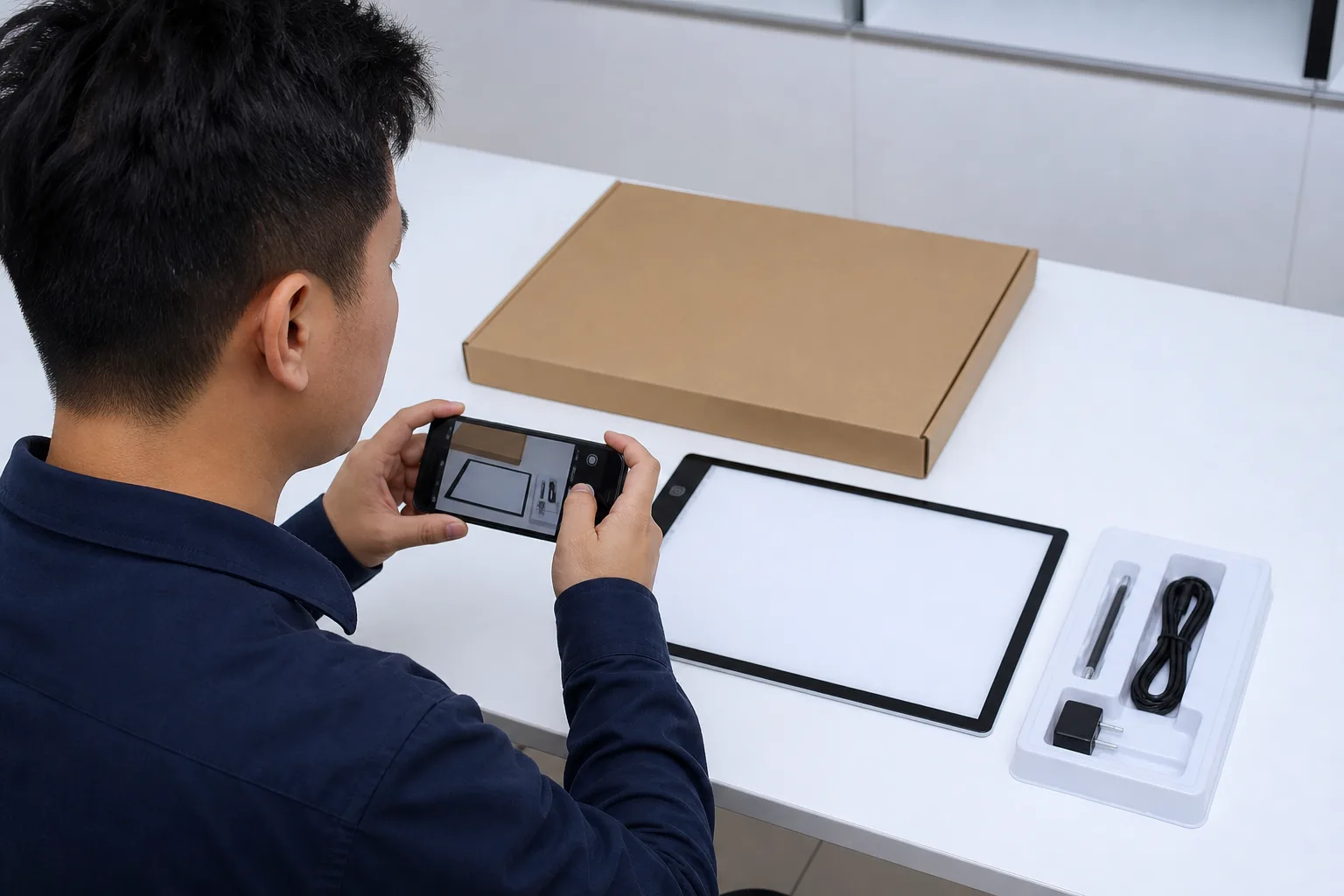
LED Drawing Board Complaint Trend Review Guide
A B2B buying guide for quality managers, distributors, and private-label teams who need to review complaint records by identified product, date, evidence, and reported condition before assigning a cause.
Read article
GPSR Online Listing Information for LED Drawing Board Sellers in the EU
A B2B buying guide for EU importers, marketplace sellers, private-label brands, and distributor ecommerce teams who need to build a visible, version-controlled online-offer checklist from the exact product identity, economic-operator information, and applicable warnings.
Read article