
GPSR Online Listing Information for LED Drawing Board Sellers in the EU
The direct answer is to build a visible, version-controlled online-offer checklist from the exact product identity, economic-operator information, and applicable warnings, while avoiding assuming that a compliant-looking package or a marketplace template alone supplies all information required for a particular online offer.
1. When should an EU online seller check GPSR listing information?
If a product offer is directed to consumers in the EU, the responsible seller should review the applicable distance-sales information requirements and align the listing with the exact product and economic-operator records.
Article 19 of Regulation (EU) 2023/988 sets information that an online or other distance-sales offer must clearly and visibly indicate. Its scope is broader than a marketplace upload checklist: the offer, product identity, responsible parties, and relevant warnings need to match the product actually made available. A shaped LED drawing board might be offered as a standalone board or a set with a base, markers, and packaging; the product picture and identifier should make that version clear.
This guide is a sourcing and content-control workflow, not a substitute for applying GPSR alongside any product-specific Union harmonisation legislation. Have the EU responsible economic operator or counsel decide which rules apply, what warnings are required, and which languages are needed in each Member State. A supplier can provide factual information and controlled images, while the seller owns the actual offer and market decision.
The regulation can apply to products made outside the EU when offers target consumers in the Union. A seller should not decide that a page is outside scope solely because it is hosted by a non-EU company. Confirm targeting and operator roles under the legal text with qualified counsel.
- Identify the exact online offer and target EU markets.
- Review GPSR together with any applicable product-specific rules.
- Assign a listing owner and a qualified compliance reviewer.
2. Map the information Article 19 asks a distance-sales offer to show
The legal text calls for manufacturer name and contact details; where the manufacturer is outside the EU, the responsible person's details; information to identify the product; and applicable warning or safety information.
Article 19 requires the online offer to clearly and visibly indicate at least: the manufacturer's name or registered trade identity and postal and electronic contact address; where the manufacturer is not established in the Union, the responsible person's name and postal and electronic address; product-identification information, including an image, type, and other identifier; and warning or safety information that must accompany or be affixed to the product, in a language consumers in the relevant Member State can easily understand. Check the current legal text for context and exceptions.
Translate this into a field map for your ecommerce platform. Do not hide core details in a PDF, an image with unreadable microtext, or a generic help page if the offer needs them visible. If one listing supports several shapes, show a clear variant selector and ensure the selected product image, model, contents, and warnings correspond to the variant. Ask your platform team how fields appear on mobile and in localized versions.
Do not use the supplier's Chinese factory address as the responsible-person address unless the legal role and location requirements actually support that use. Store the appointed operator's current legal name and contact route separately from manufacturer data and update the listing when those details change.
- Manufacturer identity and contact details.
- EU responsible-person details where required for a non-EU manufacturer.
- Product identification, image, type, model, and applicable warnings/safety information.

3. Request controlled product facts from the supplier
A listing team should request one verified data pack per sellable configuration, with a revision and source for every material fact.
A useful supplier request names the target market, channel, SKU, shape, LED base, power arrangement, marker set, retail packaging, and sample revision. Ask for front, back, side, base, connector, contents, and packaging images. Add product dimensions and product descriptions only when confirmed by the relevant specification. If a feature is unknown or varies across models, mark it for confirmation rather than lifting text from a similar listing or older catalogue.
Keep a source column for each listing field: supplier specification, approved sample, brand decision, testing record, legal review, or marketplace requirement. These are different evidence types. A photo can identify the board's shape and included components but cannot prove safety, performance, or compliance. If a supplier updates a base or accessory, ask whether it affects the model identifier, product photo, warning set, or test-file mapping before the next publication.
A product image should help distinguish the board type and model. A lifestyle photo alone may not communicate which shape or accessories are included. Use an image sequence that explains the actual offer while avoiding text or symbols that make unsupported safety claims.
- Use one data row per sellable SKU or supported variant.
- Keep supplier fact, legal conclusion, and marketing copy separate.
- Store image file names and revision dates with the product record.
4. Control warnings, instructions, and localization
Warnings shown online must be the applicable warnings for the product and market, not a generic sentence copied into every language or shape listing.
The GPSR text refers to warning and safety information that must appear on the product, packaging, or accompanying document under the GPSR or applicable harmonised legislation. The appropriate content can depend on product classification, age suitability, features, and other applicable rules. Buyers should request the current approved warning and instruction files, identify the author and reviewer, and obtain legal or specialist confirmation for target markets rather than asking marketing staff to invent a precautionary statement.
Localization needs a controlled workflow. Maintain a source-language master, approved translations, market-language versions, and a date/revision for each. A photo showing the packaging should not contradict the online text. Check that translated content remains readable on mobile and that the selected shape or bundle uses the correct image and instruction. If a product warning changes, update the offer, packaging, and downstream retailer assets through one release process.
When the same SKU is syndicated to multiple marketplaces, maintain one master record and track platform-specific rendering. A field may exist in the feed but not appear clearly to consumers. Ask the platform administrator to verify the storefront display, not just the feed validation result.
- Review the market and product-specific basis for each warning.
- Version translations and approved source copy.
- Check online, package, and instruction content together.
5. Make images and variant selectors identify the product honestly
Use images that show the selected shape, base, accessories, and package accurately; image compliance is part of a clear offer, but it is not a safety certification.
An online image is part of the consumer's view of the offer and helps identify the product. Use photography of the approved retail configuration and label secondary images by purpose: illuminated view, unlit view, included accessories, dimensions, or package. Avoid showing optional accessories as if included, a different outline as a selected shape, or a promotional rendering that conveys an unverified brightness or feature. Verify image crops on a phone and make variant selection visually clear.
For a multi-shape catalogue, use stable product identifiers in filenames and content-management fields. When a private-label brand changes packaging, update the front, back, and contents images. Retailer images should be reconciled to the approved sample, not a concept image. If a listing uses a demo video, confirm it shows the product operating in the described configuration and that any text overlays are translated and supported.
If a board is offered as an age-graded toy, other product-specific rules may apply in addition to GPSR. Use the dedicated compliance review to decide which warnings and documents are relevant; do not infer the legal classification from a product's marketing phrase alone.
- Show the actual configuration and included items.
- Tie images to SKU and packaging revisions.
- Do not imply performance or safety evidence through styling alone.
6. Use a pre-publication listing release checklist
Before a page goes live, cross-check the visible offer fields against the product record, approved packaging, supplier facts, and market review.
The release review should confirm manufacturer contact information, responsible-person details where required, product type and identifier, selected shape, images, relevant safety information, language, and any marketplace-specific field. Preview the page as a shopper, including mobile and localized versions. Compare the cart line and confirmation email so a selected shape does not revert to the wrong SKU. Save screenshots or rendered proofs internally with the date and reviewer, not as substitutes for the primary compliance record.
For a change, use a checklist that asks what changed: board shape, LED base, cable, markers, bundle, manufacturer details, responsible person, warning, language, packaging, or image. Trigger only the reviews affected by the change, but do not skip a compliance check merely because the listing slug remains the same. Require final sign-off from the appropriate business and legal owners before publishing new claims or products.
The approver should check translated versions with someone competent in the language and market. Machine translation can help draft a working version, but it should not replace review of a safety warning, responsible-person detail, or consumer-facing claim.
- Verify every required field in the rendered offer.
- Test variant selection and cart identity.
- Record approvals and route changes to the right reviewer.
7. Avoid common mistakes when adapting listings across markets
A marketplace template, prior EU product page, or supplier declaration does not automatically satisfy the exact content and language needs of every new offer.
Common errors include copying the EU responsible person's details to a product for which the relationship has changed, using an old manufacturer address, listing a family name instead of an identifiable SKU, or leaving a warning as an image that cannot be read. Another error is copying an age statement or product safety claim from a toy compliance certificate without verifying the scope. The seller should maintain a field-level source and route uncertain details to its regulatory adviser.
A second common error is treating GPSR Article 19 as the whole EU product compliance system. It is a distance-sales offer obligation within a wider safety framework and does not replace applicable toy, electrical, chemical, packaging, or other product rules. A listing may be correctly formatted yet still need product-specific compliance work. Use official Commission and EUR-Lex material as the starting point, then ask a qualified adviser about the product and sale route.
Factory inspection can confirm that a production sample visually matches a reference within the agreed inspection scope. It cannot confirm the legal accuracy of all marketplace fields. Keep the factory observation report and listing approval in separate records linked by SKU.
- Don't reuse contact or warning fields without revalidation.
- Do not treat online-offer checks as a full product conformity assessment.
- Keep a market-specific review trail.
8. Conclusion: treat every EU listing as a controlled product record
A clear EU listing starts with a verified product configuration, named manufacturer and responsible person where applicable, identifiable images and SKU, and correctly reviewed safety information.
The most sustainable workflow connects supplier facts to a controlled product record and from that record to each marketplace offer. Reuse accurate facts, not unreviewed copy. When a shape, accessory, base, package, language, responsible operator, or applicable rule changes, decide whether the page must change and preserve the approved version. That discipline helps buyers launch across retailers without conflating a marketing asset with a legal conclusion.
For a LumDigi product-data request, send the target EU countries, retailer platform, exact shape or SKU, selected accessories, and the supplier-held facts your content team needs. We can help verify product configuration, provide current images and sample details, and flag what remains to be checked by your responsible person or counsel.
Use a publication date and internal review date for each market listing. A date makes stale telephone numbers, outdated images, and changed responsible-operator relationships easier to detect during periodic content review.
- Identify the offer.
- Map each field to a reliable source.
- Review and approve the localized page before publication.
Frequently asked questions
What product information must an EU online offer display under GPSR Article 19?
The text includes manufacturer identity and contact details, EU responsible-person details when the manufacturer is outside the Union, information identifying the product including an image/type/identifier, and applicable warnings or safety information in an understandable language. Review the exact text and other applicable rules.
Does GPSR replace toy-safety requirements for a children's drawing board?
No. GPSR is a general product-safety framework and other product-specific Union legislation may apply. Have a qualified adviser determine the applicable requirements for the actual product.
Can I copy the same listing for every board shape?
Only after confirming the selected variant, image, identifier, accessories, warnings, and supplier facts match. A shared page should clearly identify each supported configuration.
What information should I request from LumDigi?
Provide target EU markets and retailer platforms plus the selected shape, base, accessories, and packaging. Request current supplier-held product facts and images; have the responsible person or counsel review legal content.
Image planning for this topic
These notes document the role and intended context of the two visuals used in this guide.
Show a buyer decision context for GPSR Online Listing Information for LED Drawing Board Sellers in the EU.
- Placement
- hero
- Caption
- An EU ecommerce team checks that product-page details match the physical board and pack.
- ALT text
- GPSR LED drawing board online listing B2B buyer review
View AI image direction
Photorealistic documentary photograph for a LumDigi B2B article about GPSR Online Listing Information for LED Drawing Board Sellers in the EU. An EU marketplace content manager reviews an intentionally blurred ecommerce page for a shaped LED acrylic drawing board on a laptop beside the physical board, retail box and a blank listing-data checklist; realistic small business office with product photographer and buyer, no visible brand or readable personal data. Real acrylic texture, candid commercial setting, landscape composition, no readable logos, no certificates, no text overlay, no watermark.
Show practical factory or shipment-review context for GPSR Online Listing Information for LED Drawing Board Sellers in the EU.
- Placement
- after-key-considerations
- Caption
- The product team photographs the exact board, base, markers, and pack for listing identification.
- ALT text
- GPSR LED drawing board online listing Chinese factory review
View AI image direction
Photorealistic documentary photograph for a LumDigi B2B article about GPSR Online Listing Information for LED Drawing Board Sellers in the EU. Chinese product team photographs the exact cloud-shaped LED board, LED base, included markers and packaging reference card to confirm a product identifier for a European retailer's online listing; three Asian staff in a clean studio area, neutral documentary photography, no legible text. Real acrylic texture, candid commercial setting, landscape composition, no readable logos, no certificates, no text overlay, no watermark.
Turn the article into a practical sourcing brief
Use the checkpoints above to document the product, evidence, packaging, and approval decisions relevant to your market. A clear brief helps suppliers respond to the same commercial question and gives your team a traceable basis for the next step.
Useful external references
- EUR-Lex: General Product Safety Regulation (EU) 2023/988
Official legal text; Article 19 covers online and other distance-sales offer information.
- European Commission: Product safety and business obligations
Commission hub for GPSR business obligations, Safety Gate, and online marketplace resources.
- European Commission: GPSR factsheet
Official overview of the GPSR and online-sales context.

EU LED Drawing Board Compliance Checklist for Toy and Gift Buyers
A B2B compliance and procurement research guide for EU toy, gift, and specialty-retail import teams: build a market-specific compliance review around the exact LED drawing-board configuration and intended product classification.
Read article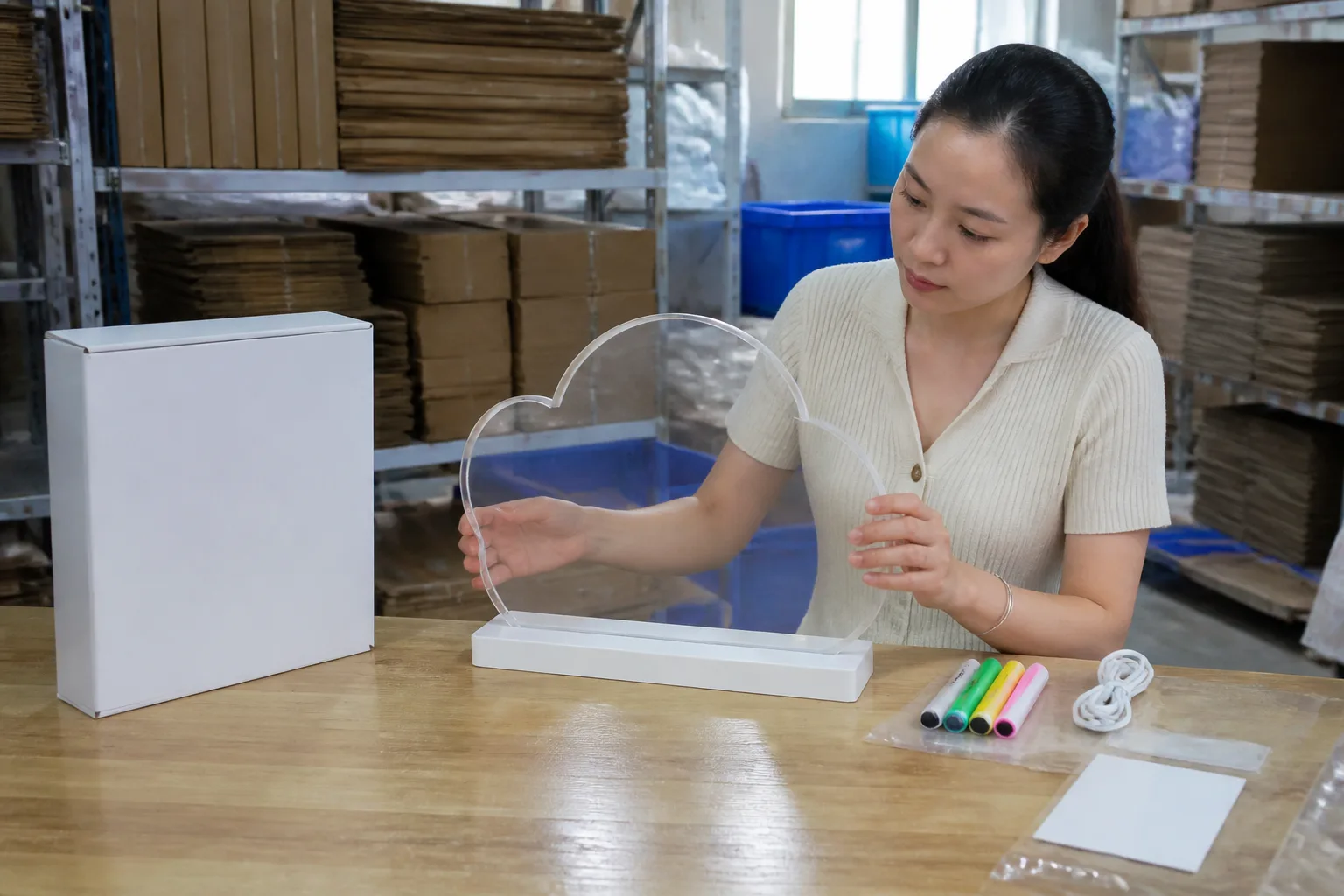
LED Drawing Board Marketplace Image Compliance Guide for Sellers
A practical buyer guide for e-commerce sellers, marketplace teams, distributors, and private-label brands who need to create a marketplace image pack from the approved SKU, product facts, packaging, and buyer-controlled channel requirements.
Read article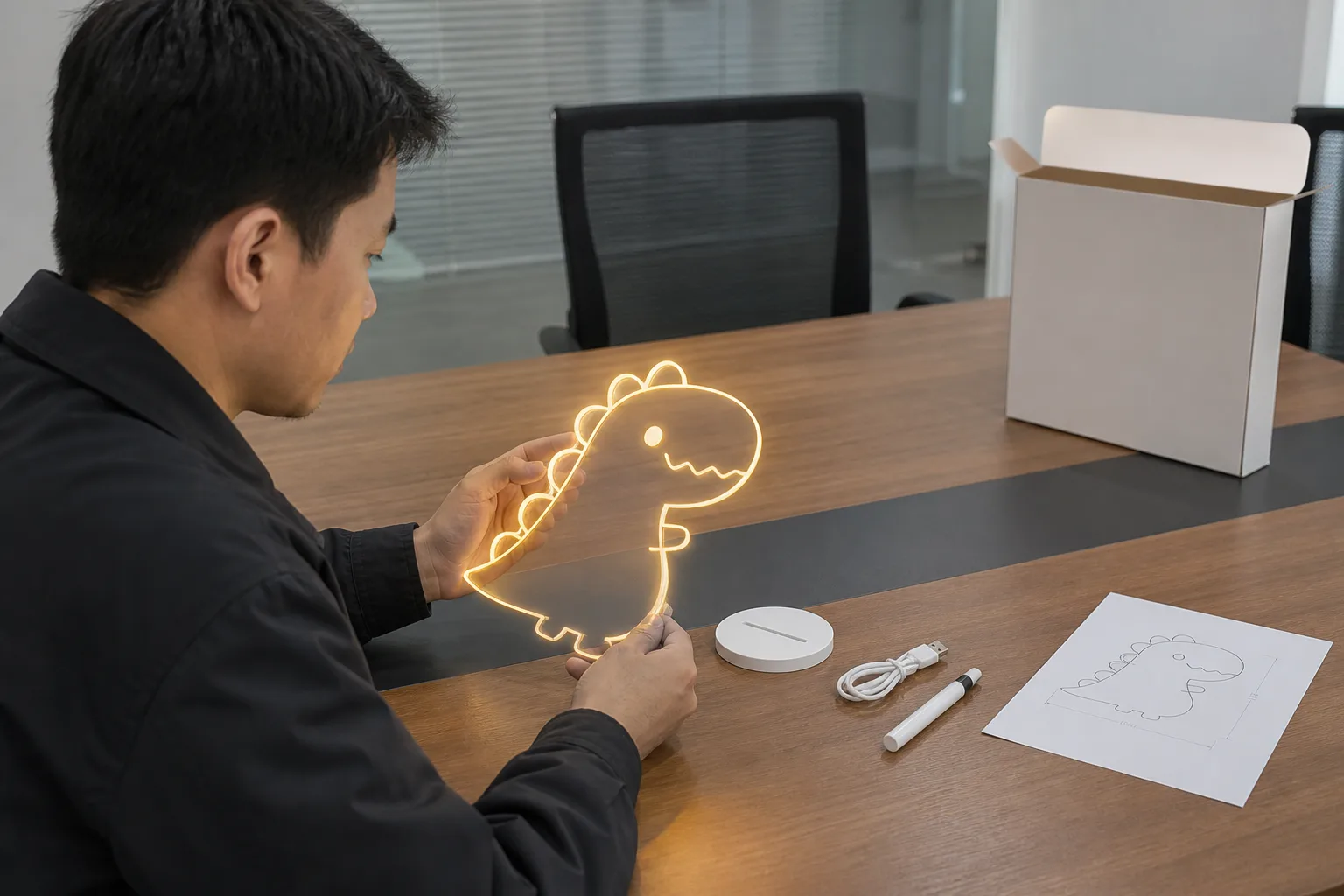
LED Drawing Board Retailer Data Sheet Guide for B2B Suppliers and Buyers
A practical buyer guide for retail buying teams, e-commerce sellers, distributors, and brand operations teams who need to create one SKU-level data sheet that connects product, pack, images, contents, and buyer-owned market information.
Read article
EU Safety Gate Incident Response for LED Drawing Board Importers
A B2B buying guide for EU importers, responsible persons, brand owners, distributors, and marketplace operators who need to preserve product identity and evidence, escalate promptly to the responsible safety/legal team, and follow official notification and corrective-action duties for the specific risk.
Read article