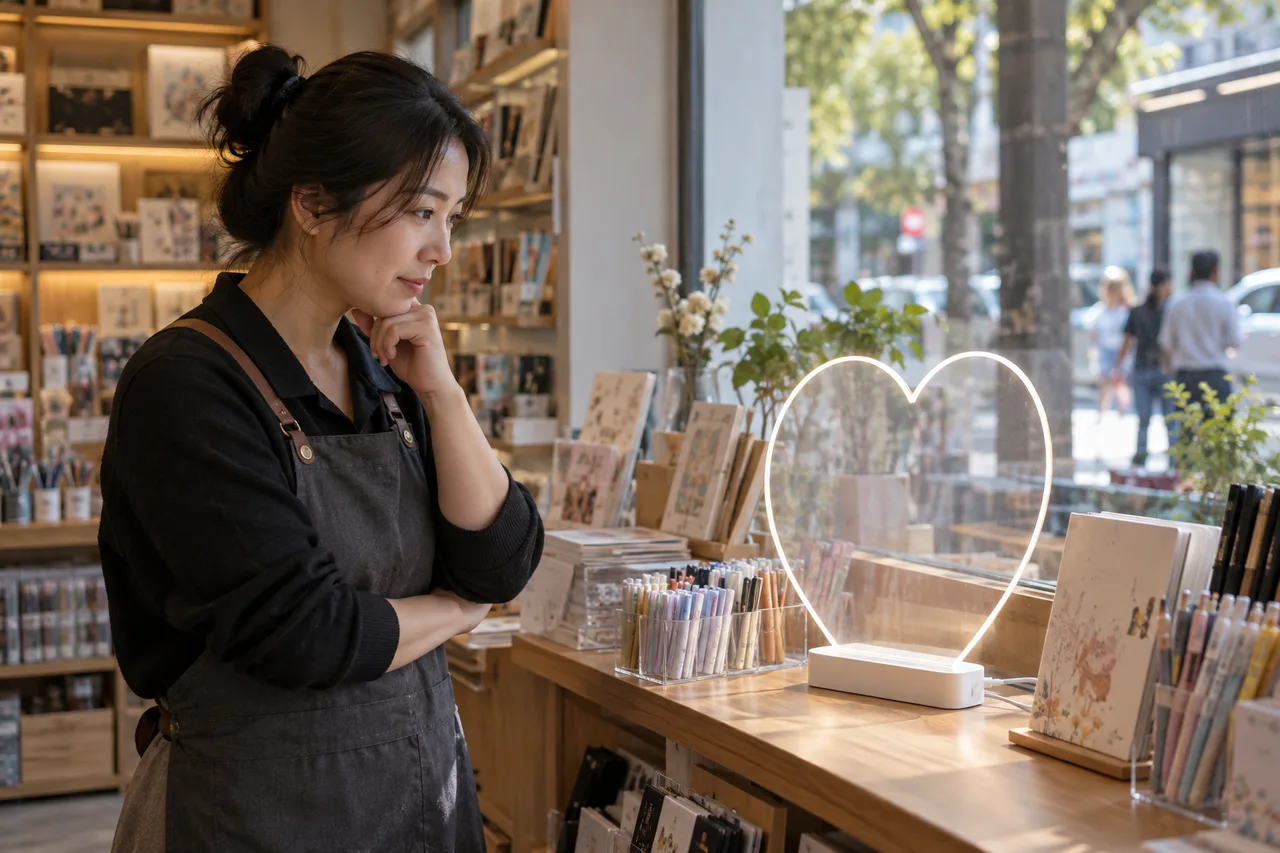
Test the actual display position before promising visibility
A transparent LED drawing board's daylight appearance depends on the product, drawing, background, reflections and viewing position. Review an identified sample in a representative approved indoor location at relevant times. A dark-room image or watt figure cannot guarantee visibility through a shop window, and an indoor drawing board is not automatically an outdoor sign.
1. Define what visible means for this retail application
Specify who should see the board, from where, at what distance and for which purpose. Recognizing a decorative silhouette, reading a message and noticing fluorescent strokes are different tasks. A useful location brief describes the actual shopper view rather than a generic demand for maximum brightness.
A retailer may want a passerby to notice a seasonal shape through glass, while an indoor customer may need to read a small activity prompt at the counter. Those tasks need different sample drawings and viewing positions. Ask the merchandising team to provide photographs of the proposed location without the product, showing glazing, existing lighting, neighbouring displays and the likely approach path. Include whether the board will be seen through one window, another transparent barrier or no glazing at all. The buyer can then request a relevant demonstration instead of interpreting a staged catalogue image as a site survey.
State whether the board is being sourced as a reusable drawing product, a decorative display item or a message display. Do not quietly change the intended category to meet a window-display idea. If the project needs weather exposure, public-sign performance or a formal illumination requirement, ask the supplier whether a suitable documented product is offered. The drawing-board versus message-board comparison can help clarify the category before a sample order. A decorative board may serve an indoor display role without meeting every requirement of a commercial sign.
- Name the viewer, task and approach path.
- Confirm that the proposed use belongs to the offered model.
2. Understand why clear acrylic still shows reflections
Transparency does not mean that every surrounding reflection disappears. The panel, shop glazing and other surfaces can place reflected images over the drawing. Assess the complete viewing path rather than assigning visibility solely to the acrylic sheet or LED source.
Assess the viewing path, not only the sheet
The ACRYLITE transmission explanation discusses surface reflection and transmission for that maker's materials. It supports asking how light interacts with a transparent surface, but its figures should not be copied as specifications for a finished LumDigi board. In a real shop, several surfaces and backgrounds can combine. A bright reflection of the street or ceiling may compete with an otherwise readable drawing, and the reflection can change as a shopper moves.
During sample review, look at the board from the intended approach, then shift to the side and record what changes. Identify whether the dominant reflection comes from the panel itself, the shop window or a display cover. Do not prescribe an aftermarket coating, film or polishing treatment without manufacturer approval: it could alter the drawing surface, care method or optical effect. First explore approved positioning and background options. A small change in layout can be investigated without making an unsupported statement that the supplied material is defective.
- Review all transparent surfaces in the sightline.
- Do not modify the panel surface without approval.
3. Review a representative sample at relevant times
Use the intended drawing, product mode and approved power arrangement in the proposed location. Observe representative daylight and trading conditions, record them and repeat the task where practical. One brief demonstration cannot support an unconditional claim of visibility throughout every season or weather condition.
Arrange a trial that the store team can actually perform. Mark the board position and typical shopper viewpoints, use the proposed display drawing and note the room and window conditions. Ask whether the shape is recognizable and whether the intended message can be understood without moving to an unrealistic viewing angle. Retain representative photographs as context, but also record what observers could see directly. Camera auto-exposure may change between views, so a brighter photograph is not automatically a better visible result. The purpose is a location decision under stated conditions.
If the exact shop is unavailable, ask for the closest reasonable indoor mockup and state its limitations. A demonstration away from a window cannot conclusively approve the window position, and a bright studio light does not reproduce every daylight scene. Keep the remaining site check as an open action rather than presenting the mockup as final acceptance. If several stores have different orientations or glazing, identify which locations were actually reviewed. A buyer can approve a limited rollout or request further evidence without turning a single sample into a universal display guarantee.
- Keep the drawing and operating setup representative.
- Document the limits of any location mockup.
4. Compare backgrounds and layout without hiding trade-offs
A background can change apparent contrast, but its suitability depends on the viewing task and intended presentation. Compare plausible approved layouts and keep transparency, access, stability and product instructions in view. Do not assume that a dark backdrop is always the correct solution.
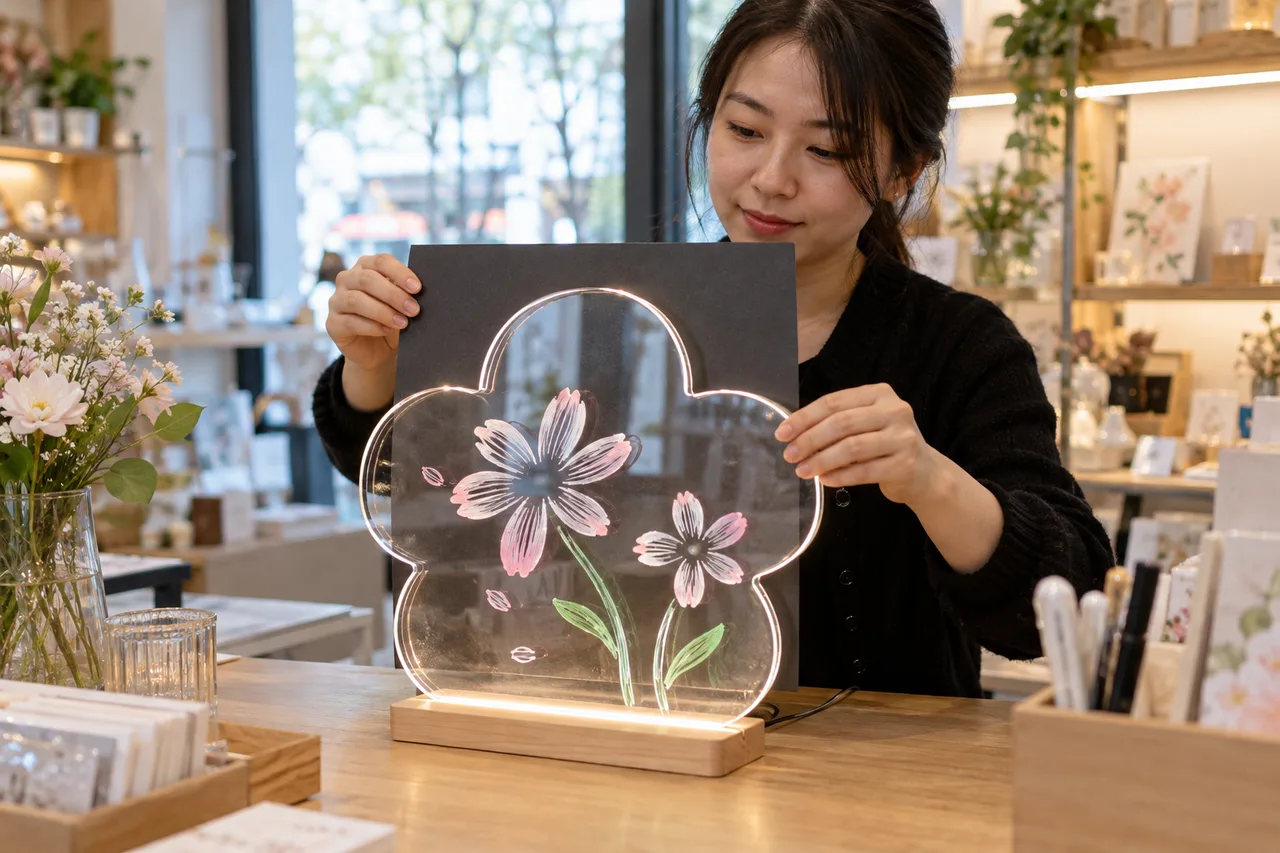
Try a plain light and a plain darker background where the supplier's setup instructions permit them, leaving enough separation and access for normal use. Note whether the backdrop improves the intended strokes, obscures the product's clear-panel character or creates a different reflection. A busy merchandise wall may interfere with a simple outline even when the board itself operates normally. Record the background choice as part of the approved display concept, not as an invisible condition attached to a product photograph. The next store needs to understand what made the demonstration useful.
Review the full layout with the display team. A panel angled to avoid one reflection may be difficult for approaching shoppers to see or may no longer sit as the product was intended. Do not wedge the base, suspend the panel or cover parts to create a visually attractive but unapproved installation. Use the fixture-planning guide for the broader store setup discussion. If a stable, permitted arrangement cannot deliver the required task, select another location or product category instead of making a stronger brightness claim.
- Compare practical backgrounds under the same conditions.
- Keep setup within the supplied instructions.
5. Use artwork that matches the intended viewing task
Evaluate the proposed marker colours, line weight, amount of detail and drawing area at the relevant sightline. A dense illustration viewed close up may not serve a distant passerby. Approve the actual activity or message and avoid claiming universal readability from a simplified sample.
Prepare two or three representative drawings that the store would genuinely use. One can show the decorative shape with modest detail, while another can show the actual short message or activity prompt if supported. Keep marker identity and colour assortment recorded. Ask observers to identify what they understand from the intended position without being told the answer first. This is a practical merchandising exercise, not a validated test of consumer attention or sales conversion. Its value is revealing whether the display task and sample presentation are aligned.
Do not solve a visibility problem by adding unsupported permanent artwork or substituting brighter-looking markers without review. The actual ink, drawing surface and approved cleaning method remain a system. If staff will refresh the drawing during trading, include the reset activity and access to supplies in the trial. A presentation that works only with a professional illustrator and special lighting may not be a practical everyday display. For a model-specific starting point, review the Heart LED Fluorescent Board and confirm its supplied configuration rather than assuming a photographed mode or marker set is universal.
- Trial drawings the store can reproduce.
- Assess the actual marker and panel combination.
| Application question | Trial observation | Decision to record |
|---|---|---|
| Passerby notices the shape | View from the actual approach path | Suitable location or alternative |
| Message can be understood | Use the proposed drawing and distance | Approved content and limits |
| Staff can reset the display | Follow actual care and setup instructions | Training and accessory needs |
6. Keep location approval separate from environmental ratings
A successful indoor visibility trial does not establish outdoor suitability, weather resistance, temperature tolerance or permission to use unapproved power accessories. Check the finished model's installation and environmental instructions independently. If the required location is outside that scope, request a documented alternative.
Ask whether direct sun, moisture, condensation, public access or proximity to other equipment creates conditions outside the product's stated use. The responsible supplier should identify applicable limits for the actual assembly. Do not infer them from the properties of bare acrylic, and do not invent a safe operating temperature because a panel looks unchanged during a short trial. A drawing board includes its base, power arrangement, controls, inks and accessories. Each part belongs in the product-specific review rather than being covered by a broad claim about durable clear plastic.
Plan installation preparation before the display arrives: a suitable stable surface, approved power arrangement, permitted cable route and access for normal care. Have a competent person review any installation issue that requires specialist judgment. If the retailer's request is effectively an outdoor sign project, say so clearly and ask whether another product is appropriate. This avoids selling an indoor creative item into a role it has not been documented to perform. Visibility is one decision in the project, not an exemption from the manufacturer's use instructions or destination requirements.
- Confirm the finished assembly's use limits.
- Do not infer an environmental rating from a photo.
7. Turn the trial into accurate sales and inspection information
Record the approved display conditions and use representative images. A dark-room hero can show the light effect, but it should not imply the same contrast in every window. Factory testing and shipment inspection should verify agreed product facts rather than certify an unspecified retail location.
Prepare a display handover containing the model, operating mode, marker set, artwork example, approved layout and relevant trial observations. Identify which images show daytime context and which are illustrative effect views. Keep exposure and editing reasonable and disclose AI-generated illustrations. Avoid promises such as visible in direct sunlight or readable from any distance unless suitable evidence establishes the defined claim. The photography brief can help organize assets, while the actual location record defines what was reviewed.
At shipment inspection, confirm the agreed product and supplied contents under the chosen plan. An inspector can observe functionality and configuration, but cannot guarantee every store's daylight environment from a factory desk. If a retailer has a formal site acceptance requirement, define who performs it and when. Preserve unresolved conditions in the handover so a distributor does not delete them when translating the catalogue. An honest limitation can help select a better application and prevent a complaint caused by a promise the product was never shown to support.
- Label effect views and location views clearly.
- Separate shipment checks from site acceptance.
8. Conclusion: approve the complete daylight application
Source a window-display board by reviewing the actual product, sightline, background, content and permitted setup together. Choose another location or product when the required task is not supported. A documented trial is more useful than an exaggerated glow photograph or an unsupported universal brightness statement.
Before ordering for multiple stores, summarize which location types are represented by the sample review and which still need checking. Purchasing should know whether the board was selected for decorative recognition, a close-range activity or another confirmed task. Marketing should use wording and imagery consistent with that purpose. Store staff should understand the approved layout and normal care. These are related decisions, but none replaces the others. A clear summary lets the next team repeat the useful conditions without assuming the demonstration proved performance in every possible window.
LumDigi can discuss a shaped LED board selection and the proposed indoor application once the buyer shares the location, viewing task and desired presentation. Use the Why Us page to begin a capability discussion and provide site photographs when available. Ask for confirmed model facts, relevant sample options and the limits of any remote demonstration. The result should be a realistic display brief and a traceable purchasing decision, with environmental and performance claims restricted to appropriate product-specific evidence.
- Approve a stated application, not every environment.
- Keep location limitations visible in the handover.
Frequently asked questions
Does a dark-room photo prove a board will look equally bright in a shop window?
No. The background, ambient light, reflections, viewing position and camera exposure differ. Use a representative sample in the intended approved location and record the actual task. Keep an effect photograph separate from evidence about daylight window visibility.
Will a dark background always solve visibility problems?
Not necessarily. It can change contrast but also the product's presentation, reflections and access. Compare practical approved layouts under the same conditions. If the required task remains unsupported, choose a different position or product instead of assuming a backdrop guarantees the result.
Can an indoor LED drawing board be used as an outdoor sign?
Do not assume so. Confirm the finished model's intended use, installation requirements and environmental limits with the supplier. A short indoor visibility demonstration does not establish weather resistance, outdoor electrical suitability or a commercial-sign performance specification.
What should an importer send to request a window-display sample?
Provide the store setting, glazing and background photographs, intended viewer and task, proposed position, expected content and target market. Ask which model and setup are appropriate and what limitations apply. State whether a local site trial will still be required.
Image planning for this topic
These notes document the role and intended context of the two visuals used in this guide.
Evaluate a daylight window location
- Placement
- hero
- Caption
- Illustrative AI-generated photograph: a retailer reviews a clear board beside a bright shop window.
- ALT text
- Asian retailer assessing an LED acrylic board beside a daylight shop window
View AI image direction
Use case: photorealistic-natural. Asset type: editorial photograph for a LumDigi B2B LED acrylic drawing board buying guide. A Chinese adult shop merchandiser in a small stationery boutique observes a transparent heart-shaped LED drawing board near a bright window, viewed from inside. Natural daytime street reflections on glazing and realistic low-contrast restrained LED glow, not an impossibly bright sign. Stable freestanding table, neat safe cable route. Landscape 3:2, real acrylic material texture and believable human anatomy, candid authentic commercial photography rather than a glossy AI render. Any employees are Chinese/Asian adults. No invented logos, watermarks, readable certificates, text overlays or numerical test results. This is an illustrative planning scene, not proof of an actual LumDigi test or customer project.
Compare background and sightline
- Placement
- after-second-section
- Caption
- Illustrative AI-generated photograph: a matte backdrop is reviewed behind a transparent sample board.
- ALT text
- Chinese merchandiser positioning a neutral backdrop behind a clear acrylic LED board
View AI image direction
Use case: photorealistic-natural. Asset type: editorial photograph for a LumDigi B2B LED acrylic drawing board buying guide. A Chinese adult merchandiser holds a matte charcoal removable display card behind a clear flower-shaped acrylic LED drawing board on a shop counter set back from a window. Visible soft reflections, simple marker petals, ordinary daylight, shopper eye-level view. No signage, commercial logos or readable text. Landscape 3:2, real acrylic material texture and believable human anatomy, candid authentic commercial photography rather than a glossy AI render. Any employees are Chinese/Asian adults. No invented logos, watermarks, readable certificates, text overlays or numerical test results. This is an illustrative planning scene, not proof of an actual LumDigi test or customer project.
Turn the article into a practical sourcing brief
Use the checkpoints above to document the product, evidence, packaging, and approval decisions relevant to your market. A clear brief helps suppliers respond to the same commercial question and gives your team a traceable basis for the next step.
Useful external references
- ACRYLITE: visible-light transmission and reflection
Material manufacturer's explanation of reflection and transmission for its acrylic sheets; not a LumDigi product specification.
- ACRYLITE: light-guiding edge-lit sheet
Primary material context for edge-lighting arrangements and grade-specific optical behavior.
LED Drawing Board Retail Display Fixture Guide
A B2B buying guide for specialty retailers, gift buyers, and distributors who need to plan a display fixture around the approved board, display location, staff workflow, and product information.
Read article
LED Drawing Board Selection Guide for Small Retail Spaces
A practical buyer guide for specialty retailers, distributors, and shop buyers who need to choose a small-space assortment from the approved product, package footprint, display plan, customer path, and replenishment process.
Read article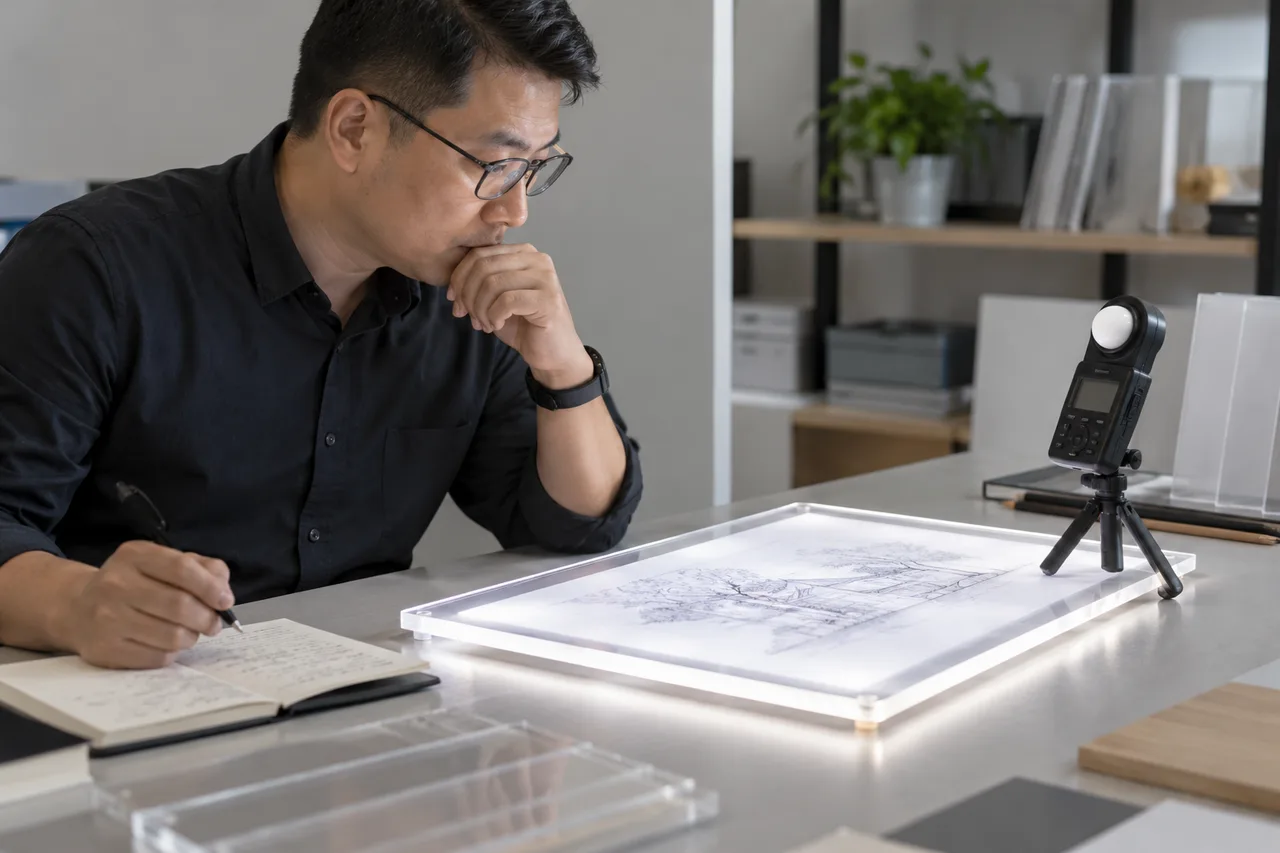
Luminance, Illuminance, and Watts: How Buyers Should Compare LED Drawing Board Brightness
A technical buying guide for teams that need comparable brightness evidence rather than photographs or unrelated electrical ratings.
Read article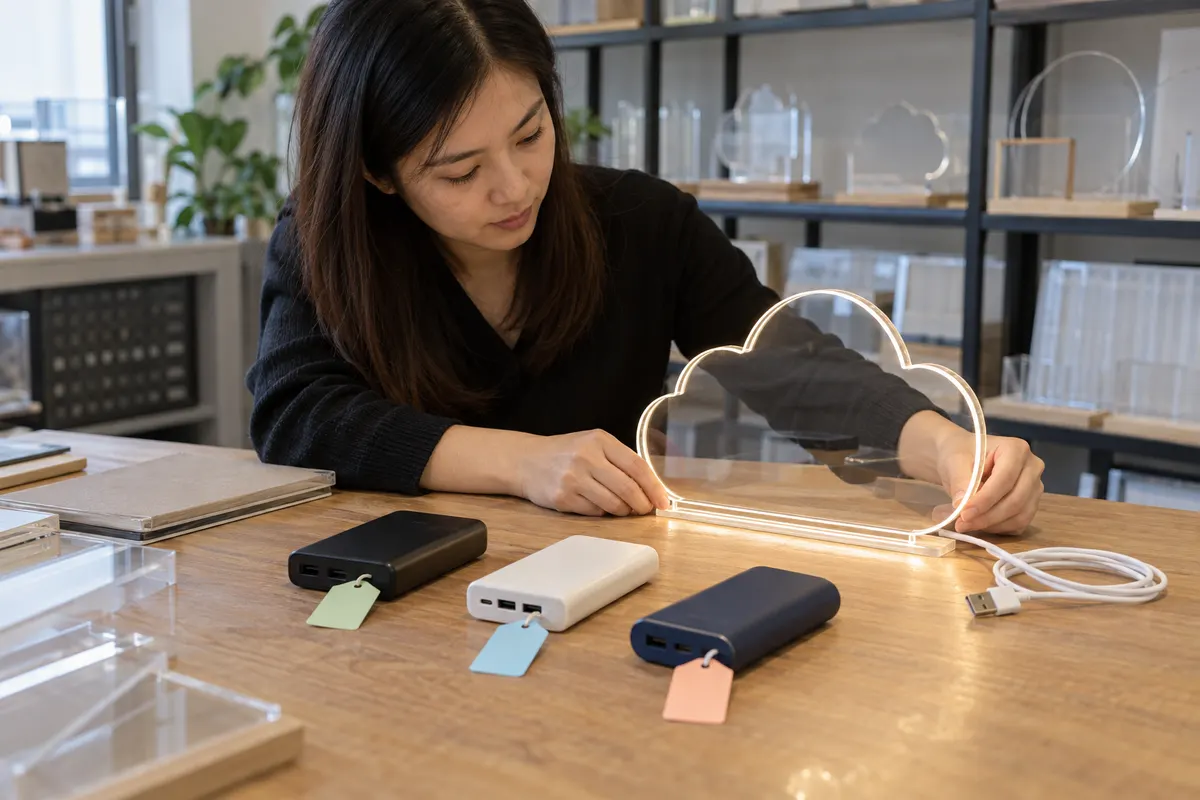
Why Does a Power Bank Turn Off a USB LED Drawing Board?
A B2B troubleshooting guide for portable demonstrations and product listings that avoids promising universal power-bank operation.
Read article