How to Choose an LED Drawing Board Base for Retail and Private Label
The direct answer is to compare base options against the approved panel, use case, pack, and sample evidence, while avoiding treating a base shown in a product photo as included with every board version.
1. Clarify the buyer decision
For LED drawing board base selection, start by identifying the exact commercial decision, selected product direction, target market, channel, quantity context, and buyer owner before requesting a supplier response.
How to Choose an LED Drawing Board Base for Retail and Private Label is most useful when it answers one practical question: how can retail buyers and private-label teams compare base options against the approved panel, use case, pack, and sample evidence? Begin with the intended customer and product application, then name the board silhouette, acrylic panel, LED base, power arrangement, fluorescent marker set, packaging direction, quantity scenario, and current sample or image reference. That scope prevents a similar shaped board, an early prototype, or a persuasive catalogue photograph from silently becoming the working reference. It also turns the topic into a decision tool rather than a general product description.
The related search language—LED board stand type, light up drawing board base, acrylic LED board stand, LED drawing board panel fit, LED board product configuration—should be treated as connected questions, not interchangeable claims. A buyer can compare them by recording what is actually known for the selected version and what still requires evidence. Request current product photos, a contents list, dimensional or packaging information where relevant, a quotation basis, and a simple open-point register. If a point is not confirmed, retain it as an open question. This is more useful than filling the gap with a broad claim about performance, compliance, availability, cost, delivery, or suitability.
Review the sample in use. Record finish, fit, operation, contents, and packaging. Factory testing and shipment inspection document observations; specialist review remains separate.
- Name the exact LED drawing board base selection decision, SKU direction, and intended channel.
- Record confirmed evidence separately from assumptions and unresolved points.
- Assign a buyer owner, next evidence request, and release condition.
2. Map the approved product configuration
For LED drawing board base selection, use the approved product reference and documented evidence to make this step specific, comparable, and traceable.
How to Choose an LED Drawing Board Base for Retail and Private Label is most useful when it answers one practical question: how can retail buyers and private-label teams compare base options against the approved panel, use case, pack, and sample evidence? Begin with the intended customer and product application, then name the board silhouette, acrylic panel, LED base, power arrangement, fluorescent marker set, packaging direction, quantity scenario, and current sample or image reference. That scope prevents a similar shaped board, an early prototype, or a persuasive catalogue photograph from silently becoming the working reference. It also turns the topic into a decision tool rather than a general product description.
The related search language—LED board stand type, light up drawing board base, acrylic LED board stand, LED drawing board panel fit, LED board product configuration—should be treated as connected questions, not interchangeable claims. A buyer can compare them by recording what is actually known for the selected version and what still requires evidence. Request current product photos, a contents list, dimensional or packaging information where relevant, a quotation basis, and a simple open-point register. If a point is not confirmed, retain it as an open question. This is more useful than filling the gap with a broad claim about performance, compliance, availability, cost, delivery, or suitability.
Review the sample in use. Record finish, fit, operation, contents, and packaging. Factory testing and shipment inspection document observations; specialist review remains separate.
- Name the exact LED drawing board base selection decision, SKU direction, and intended channel.
- Record confirmed evidence separately from assumptions and unresolved points.
- Assign a buyer owner, next evidence request, and release condition.
3. Request useful evidence
For LED drawing board base selection, use the approved product reference and documented evidence to make this step specific, comparable, and traceable.
How to Choose an LED Drawing Board Base for Retail and Private Label is most useful when it answers one practical question: how can retail buyers and private-label teams compare base options against the approved panel, use case, pack, and sample evidence? Begin with the intended customer and product application, then name the board silhouette, acrylic panel, LED base, power arrangement, fluorescent marker set, packaging direction, quantity scenario, and current sample or image reference. That scope prevents a similar shaped board, an early prototype, or a persuasive catalogue photograph from silently becoming the working reference. It also turns the topic into a decision tool rather than a general product description.
The related search language—LED board stand type, light up drawing board base, acrylic LED board stand, LED drawing board panel fit, LED board product configuration—should be treated as connected questions, not interchangeable claims. A buyer can compare them by recording what is actually known for the selected version and what still requires evidence. Request current product photos, a contents list, dimensional or packaging information where relevant, a quotation basis, and a simple open-point register. If a point is not confirmed, retain it as an open question. This is more useful than filling the gap with a broad claim about performance, compliance, availability, cost, delivery, or suitability.
Review the sample in use. Record finish, fit, operation, contents, and packaging. Factory testing and shipment inspection document observations; specialist review remains separate.
- Name the exact LED drawing board base selection decision, SKU direction, and intended channel.
- Record confirmed evidence separately from assumptions and unresolved points.
- Assign a buyer owner, next evidence request, and release condition.
4. Review samples and real application
For LED drawing board base selection, use the approved product reference and documented evidence to make this step specific, comparable, and traceable.
How to Choose an LED Drawing Board Base for Retail and Private Label is most useful when it answers one practical question: how can retail buyers and private-label teams compare base options against the approved panel, use case, pack, and sample evidence? Begin with the intended customer and product application, then name the board silhouette, acrylic panel, LED base, power arrangement, fluorescent marker set, packaging direction, quantity scenario, and current sample or image reference. That scope prevents a similar shaped board, an early prototype, or a persuasive catalogue photograph from silently becoming the working reference. It also turns the topic into a decision tool rather than a general product description.
The related search language—LED board stand type, light up drawing board base, acrylic LED board stand, LED drawing board panel fit, LED board product configuration—should be treated as connected questions, not interchangeable claims. A buyer can compare them by recording what is actually known for the selected version and what still requires evidence. Request current product photos, a contents list, dimensional or packaging information where relevant, a quotation basis, and a simple open-point register. If a point is not confirmed, retain it as an open question. This is more useful than filling the gap with a broad claim about performance, compliance, availability, cost, delivery, or suitability.
Review the sample in use. Record finish, fit, operation, contents, and packaging. Factory testing and shipment inspection document observations; specialist review remains separate.
- Name the exact LED drawing board base selection decision, SKU direction, and intended channel.
- Record confirmed evidence separately from assumptions and unresolved points.
- Assign a buyer owner, next evidence request, and release condition.
5. Control packaging and content
For LED drawing board base selection, use the approved product reference and documented evidence to make this step specific, comparable, and traceable.
How to Choose an LED Drawing Board Base for Retail and Private Label is most useful when it answers one practical question: how can retail buyers and private-label teams compare base options against the approved panel, use case, pack, and sample evidence? Begin with the intended customer and product application, then name the board silhouette, acrylic panel, LED base, power arrangement, fluorescent marker set, packaging direction, quantity scenario, and current sample or image reference. That scope prevents a similar shaped board, an early prototype, or a persuasive catalogue photograph from silently becoming the working reference. It also turns the topic into a decision tool rather than a general product description.
The related search language—LED board stand type, light up drawing board base, acrylic LED board stand, LED drawing board panel fit, LED board product configuration—should be treated as connected questions, not interchangeable claims. A buyer can compare them by recording what is actually known for the selected version and what still requires evidence. Request current product photos, a contents list, dimensional or packaging information where relevant, a quotation basis, and a simple open-point register. If a point is not confirmed, retain it as an open question. This is more useful than filling the gap with a broad claim about performance, compliance, availability, cost, delivery, or suitability.
Review the sample in use. Record finish, fit, operation, contents, and packaging. Factory testing and shipment inspection document observations; specialist review remains separate.
- Name the exact LED drawing board base selection decision, SKU direction, and intended channel.
- Record confirmed evidence separately from assumptions and unresolved points.
- Assign a buyer owner, next evidence request, and release condition.
6. Plan factory and shipment checks
For LED drawing board base selection, use the approved product reference and documented evidence to make this step specific, comparable, and traceable.
How to Choose an LED Drawing Board Base for Retail and Private Label is most useful when it answers one practical question: how can retail buyers and private-label teams compare base options against the approved panel, use case, pack, and sample evidence? Begin with the intended customer and product application, then name the board silhouette, acrylic panel, LED base, power arrangement, fluorescent marker set, packaging direction, quantity scenario, and current sample or image reference. That scope prevents a similar shaped board, an early prototype, or a persuasive catalogue photograph from silently becoming the working reference. It also turns the topic into a decision tool rather than a general product description.
The related search language—LED board stand type, light up drawing board base, acrylic LED board stand, LED drawing board panel fit, LED board product configuration—should be treated as connected questions, not interchangeable claims. A buyer can compare them by recording what is actually known for the selected version and what still requires evidence. Request current product photos, a contents list, dimensional or packaging information where relevant, a quotation basis, and a simple open-point register. If a point is not confirmed, retain it as an open question. This is more useful than filling the gap with a broad claim about performance, compliance, availability, cost, delivery, or suitability.
Review the sample in use. Record finish, fit, operation, contents, and packaging. Factory testing and shipment inspection document observations; specialist review remains separate.
- Name the exact LED drawing board base selection decision, SKU direction, and intended channel.
- Record confirmed evidence separately from assumptions and unresolved points.
- Assign a buyer owner, next evidence request, and release condition.
7. Prepare the channel handover
For LED drawing board base selection, use the approved product reference and documented evidence to make this step specific, comparable, and traceable.
How to Choose an LED Drawing Board Base for Retail and Private Label is most useful when it answers one practical question: how can retail buyers and private-label teams compare base options against the approved panel, use case, pack, and sample evidence? Begin with the intended customer and product application, then name the board silhouette, acrylic panel, LED base, power arrangement, fluorescent marker set, packaging direction, quantity scenario, and current sample or image reference. That scope prevents a similar shaped board, an early prototype, or a persuasive catalogue photograph from silently becoming the working reference. It also turns the topic into a decision tool rather than a general product description.
The related search language—LED board stand type, light up drawing board base, acrylic LED board stand, LED drawing board panel fit, LED board product configuration—should be treated as connected questions, not interchangeable claims. A buyer can compare them by recording what is actually known for the selected version and what still requires evidence. Request current product photos, a contents list, dimensional or packaging information where relevant, a quotation basis, and a simple open-point register. If a point is not confirmed, retain it as an open question. This is more useful than filling the gap with a broad claim about performance, compliance, availability, cost, delivery, or suitability.
Review the sample in use. Record finish, fit, operation, contents, and packaging. Factory testing and shipment inspection document observations; specialist review remains separate.
- Name the exact LED drawing board base selection decision, SKU direction, and intended channel.
- Record confirmed evidence separately from assumptions and unresolved points.
- Assign a buyer owner, next evidence request, and release condition.
8. Authorize the next step
For LED drawing board base selection, use the approved product reference and documented evidence to make this step specific, comparable, and traceable.
How to Choose an LED Drawing Board Base for Retail and Private Label is most useful when it answers one practical question: how can retail buyers and private-label teams compare base options against the approved panel, use case, pack, and sample evidence? Begin with the intended customer and product application, then name the board silhouette, acrylic panel, LED base, power arrangement, fluorescent marker set, packaging direction, quantity scenario, and current sample or image reference. That scope prevents a similar shaped board, an early prototype, or a persuasive catalogue photograph from silently becoming the working reference. It also turns the topic into a decision tool rather than a general product description.
The related search language—LED board stand type, light up drawing board base, acrylic LED board stand, LED drawing board panel fit, LED board product configuration—should be treated as connected questions, not interchangeable claims. A buyer can compare them by recording what is actually known for the selected version and what still requires evidence. Request current product photos, a contents list, dimensional or packaging information where relevant, a quotation basis, and a simple open-point register. If a point is not confirmed, retain it as an open question. This is more useful than filling the gap with a broad claim about performance, compliance, availability, cost, delivery, or suitability.
Review the sample in use. Record finish, fit, operation, contents, and packaging. Factory testing and shipment inspection document observations; specialist review remains separate.
- Name the exact LED drawing board base selection decision, SKU direction, and intended channel.
- Record confirmed evidence separately from assumptions and unresolved points.
- Assign a buyer owner, next evidence request, and release condition.
Frequently asked questions
What should a buyer prepare for LED drawing board base selection?
Prepare the market, channel, product direction, quantity scenario, packaging objective, and the evidence needed for the next decision. Keep unknown items visible instead of assuming they are included.
How should an LED drawing board sample be reviewed?
Review the identified board, base, marker set, contents, visible finish, normal operation, packaging, and customer-facing information against the current project record. Record the configuration and unresolved questions with the observations.
Can factory testing confirm every product requirement?
No. Factory testing and shipment inspection can document agreed observations on an identified configuration. They do not replace responsible legal, regulatory, laboratory, freight, safety, commercial, or destination-market review.
When should a buyer contact LumDigi?
Contact LumDigi when you can share the target market, channel, board direction, quantity, packing or customization objective, and the sourcing questions needing a configuration-focused response.
Image planning for this topic
These notes document the role and intended context of the two visuals used in this guide.
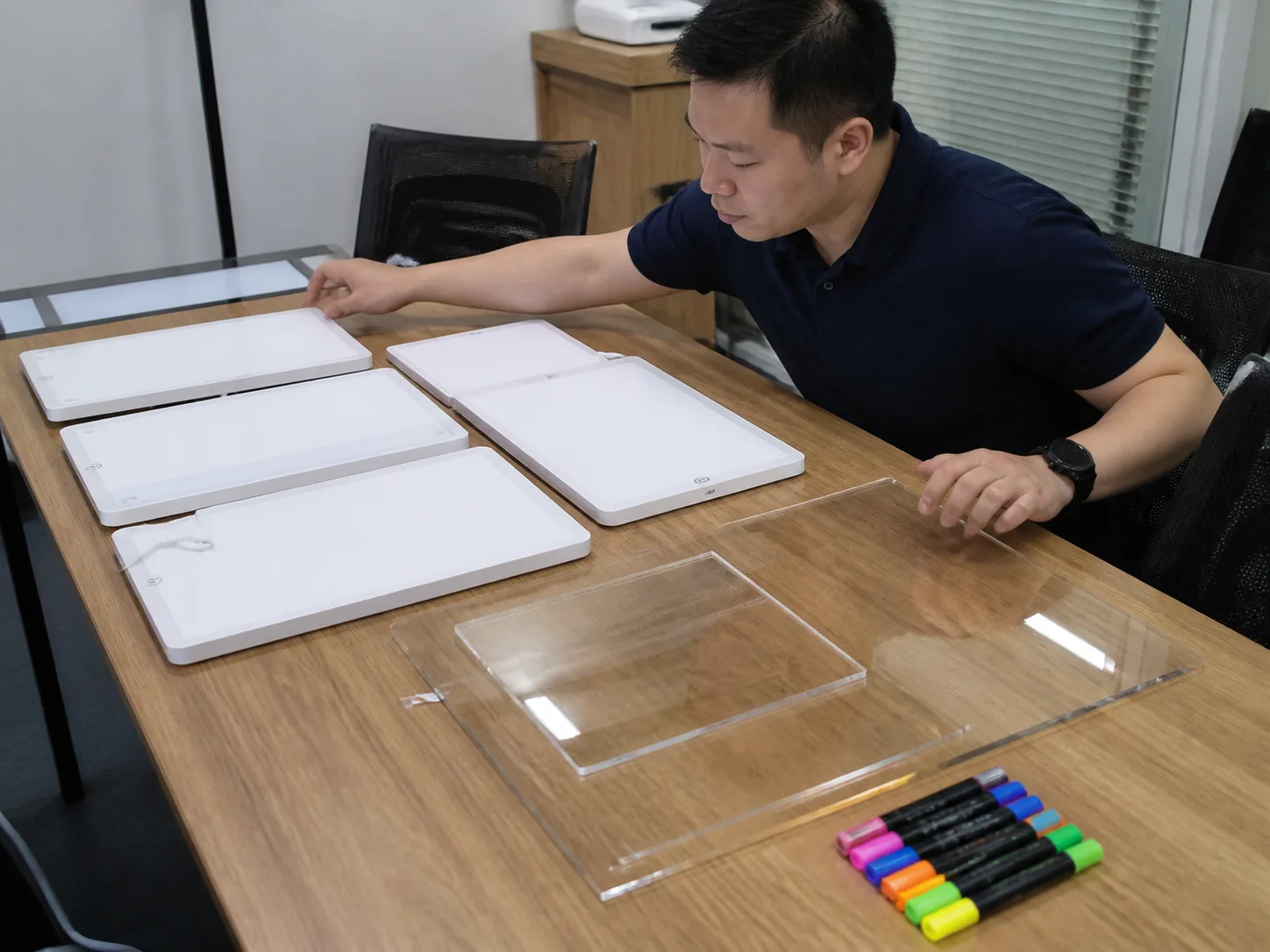
Show a buyer decision context for How to Choose an LED Drawing Board Base for Retail and Private Label.
- Placement
- hero
- Caption
- Configuration-specific evidence supports a clearer B2B buying decision.
- ALT text
- LED drawing board base selection B2B buyer review
View AI image direction
Photorealistic commercial documentary photograph for a LumDigi B2B article about How to Choose an LED Drawing Board Base for Retail and Private Label. A professional buyer reviews a shaped LED fluorescent acrylic drawing board, LED base, fluorescent markers, product records and plain retail packaging in a credible sourcing, retail, or product-planning setting. Natural practical light, real acrylic texture, landscape composition, no readable logos, no text overlay, no watermark.
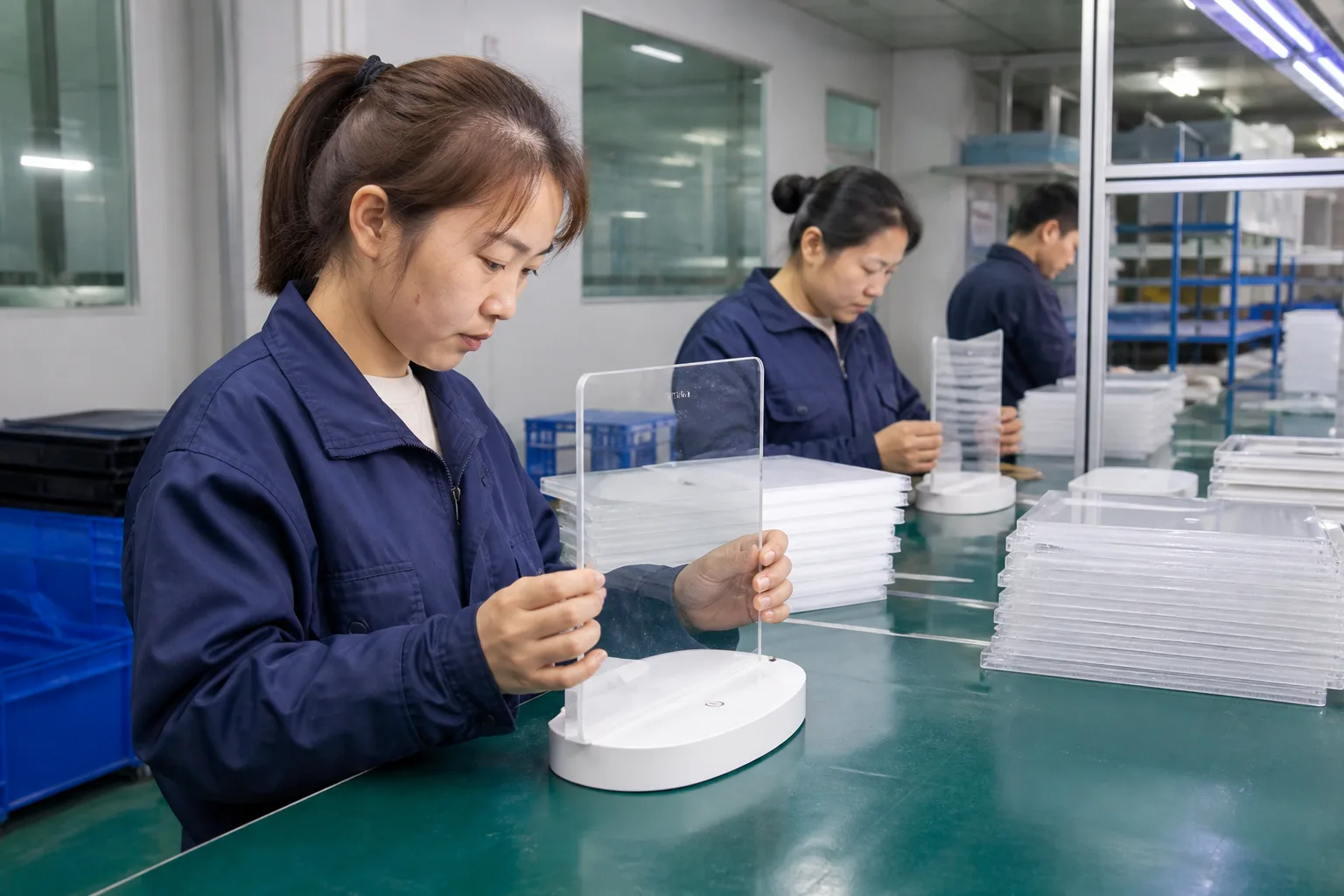
Show practical factory or shipment-review context for How to Choose an LED Drawing Board Base for Retail and Private Label.
- Placement
- after-key-considerations
- Caption
- Factory observations should be recorded against the agreed configuration and defined scope.
- ALT text
- LED drawing board base selection Chinese factory review
View AI image direction
Photorealistic documentary photograph for a LumDigi B2B article about How to Choose an LED Drawing Board Base for Retail and Private Label. Ten or more Chinese factory workers and quality staff review shaped LED fluorescent acrylic drawing boards, LED bases, fluorescent markers, retail packaging and carton information in a clean active workshop. Natural industrial light, real acrylic texture, candid work activity, landscape composition, no readable competitor logos, no certificates, no text overlay, no watermark.
Turn the article into a practical sourcing brief
Use the checkpoints above to document the product, evidence, packaging, and approval decisions relevant to your market. A clear brief helps suppliers respond to the same commercial question and gives your team a traceable basis for the next step.
Useful external references
- CPSC manufacturing best practices
Official U.S. guidance on specifications, component controls and supply-chain diligence; buyer obligations require project-specific review.
- CPSC Children's Product Certificate guidance
Official U.S. information on children's product certification and testing responsibilities where applicable.
- GS1 barcode standards
Primary information on product, shipment and attribute identification through GS1 standards.

LED Drawing Board Power Adapter Procurement Guide
A B2B buying guide for product developers, importers, and retail buyers who need to define the supplied power arrangement from the approved board, base, connector, cable, and destination context.
Read article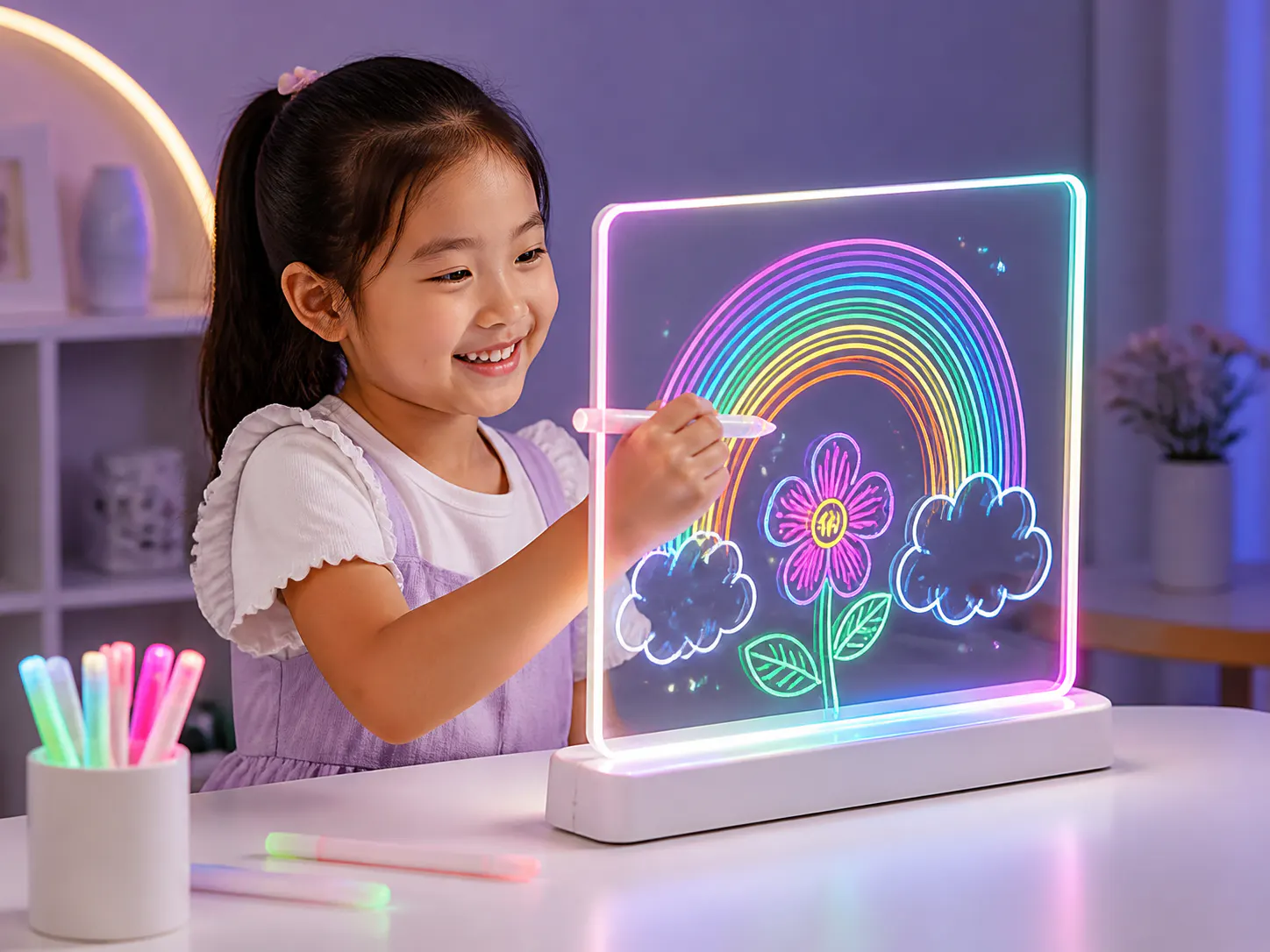
LED Acrylic Drawing Board Specification Guide: Questions Buyers Should Ask
A practical B2B guide for importers and product developers who need to prepare a configuration-specific question set for the selected acrylic panel, base, markers and pack.
Read article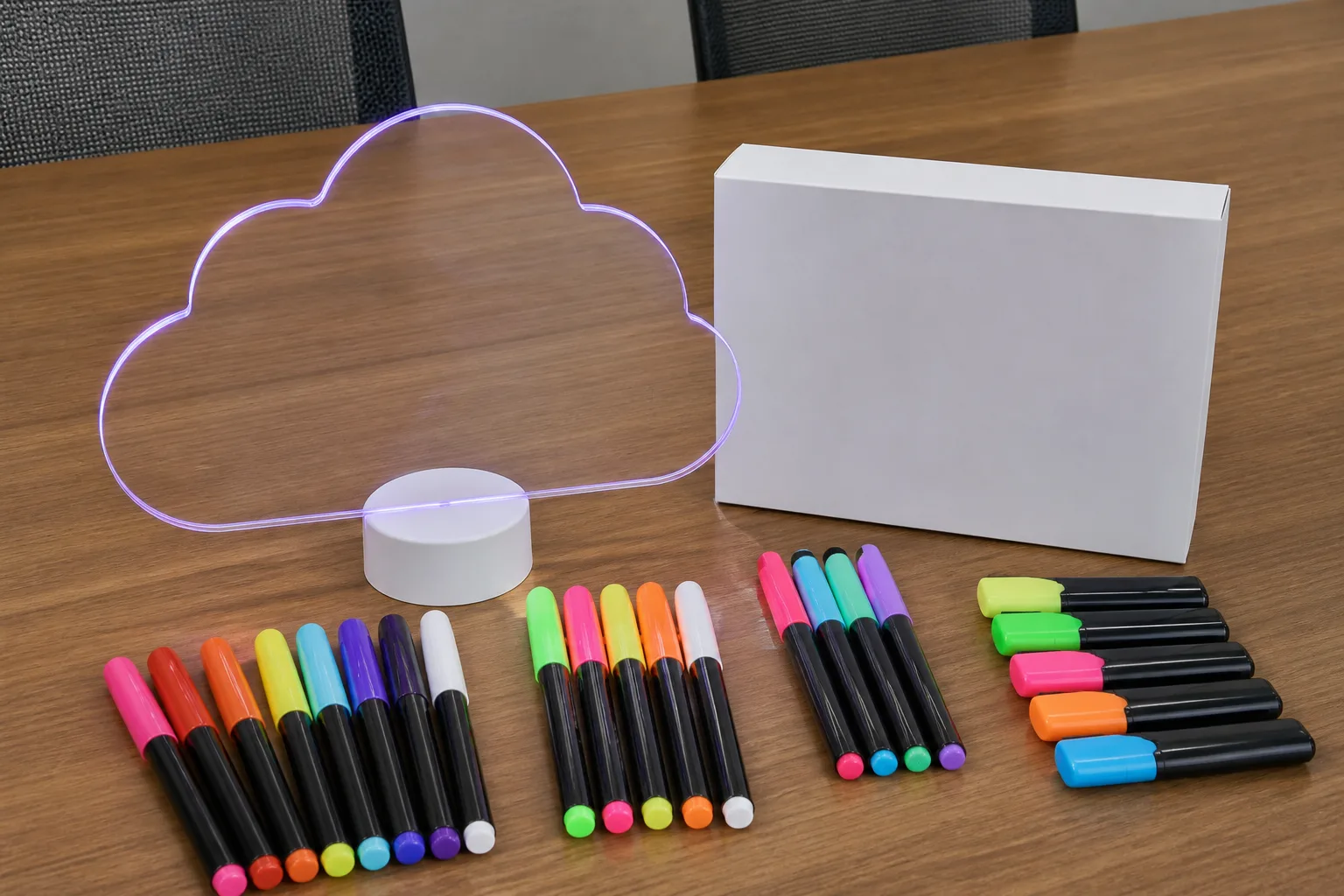
LED Drawing Board Marker Replenishment Guide for Retailers
A B2B buying guide for retailers, distributors, and ecommerce sellers who need to plan marker replenishment around the approved board, marker set, package information, and customer-support process.
Read article
South Africa NRCS Scope Screening for LED Drawing Board Importers
A B2B buying guide for South African importers, toy and gift distributors, ecommerce sellers, and private-label brands who need to check current compulsory specifications for the board and any power unit, then confirm the import route with NRCS or a qualified local adviser.
Read article