
Thailand TIS 685 for LED Drawing Boards: A Buyer Scope and Label Checklist
The direct answer is to verify current TISI toy scope and applicable standard editions for the marketed set before sample, label, or bulk-order release, while avoiding relying on an older TIS reference, treating every illuminated board as an electric toy, or assuming a translated label completes market review.
1. Decide whether the board is marketed as a toy
TISI defines toys by their design and use for children; intended play and presentation matter. Check the complete set and product claims rather than relying on an invoice name.
Start with the retail offer: the board, fluorescent markers, activity instructions, age claim, illustrations, and channel. A product may use an acrylic panel but be designed for children to draw and play. Ask the Thai importer to assess the complete marketed set with local advice. If the product is genuinely a display or professional drawing aid, document that use without disguising a child-directed toy presentation. Consult the official Thailand resource alongside the exact product facts.
For an uncertain classification, assemble a sample, catalog sheet, packaging proof, component list, and intended-use statement. The Thai importer can ask TISI or a qualified local specialist which standard and approval route apply. A supplier should provide factual product information and sample references, not make the local classification decision.
A distributor's use of the product can differ from the manufacturer's original description. Provide the local reviewer with the sales page, instructions, photos, and intended channel, not just a technical drawing.
The product record should include model, revision, materials, electronics, age statement, marketing claim, markers, power items, pack, and bill of materials. Use it as the common input to the laboratory and Thai importer.
Do not rely on a certificate photo in a sales brochure without checking its holder, model, standard, and validity. Ask the issuing body or applicant to confirm current status.
A buyer should ask the local laboratory whether reports must use a particular Thai or international edition and how the lab identifies the submitted sample. If the report lists a component set different from the quote, resolve the mismatch before the factory begins a production run.
- Review actual play function and marketing language.
- Include markers, instructions, packaging, and electrical accessories.
- Ask for local scope confirmation before print release.
2. Verify the current TIS 685 edition and legal record
TISI's official record identifies TIS 685 Part 1-2562 as a mandatory toy safety standard with an effective date. Confirm the latest in-force edition and applicable parts directly before relying on a checklist.
Standards can be revised, withdrawn, or supplemented. A buyer should note the TIS number, part, edition, effective date, scope, and source consulted. Do not copy a standard number from an old report or a supplier catalogue. Ask the importer or local laboratory to confirm which parts cover the product's mechanical, flammability, chemical, electrical, and labeling questions. Use an identified model such as the Dinosaur LED Fluorescent Board and confirm its current supplied configuration before applying this workflow.
The word mandatory in a standard record is important but not a complete product determination. Match the product to the covered definition, exceptions, tariff description, and any component-specific rules. Keep a short scope note stating which facts were checked and who made the decision.
When a report cites a legacy standard, ask the issuer and local reviewer whether the edition remains accepted for the current transaction. Do not edit a report's standard reference yourself.
If TISI's standard catalog and an older product database show different editions, do not choose one based on convenience. Ask the authority or an accredited local professional which current notice governs the transaction.
A buyer can request a pre-production sample, but an appearance approval alone may not answer safety or legal questions. Define separate approval gates.
The Thai importer may need to coordinate product description and tariff information with a broker while separately confirming standards with TISI. Keep the customs question and conformity question linked by the same model record but do not treat one answer as the other.
- Record standard number, part, edition, and date.
- Recheck current official TISI notices.
- Tie each report to the actual version tested.
3. Review light and power components separately
For an illuminated board, document the LED base, supply method, input ratings, batteries or adapter, and whether each item is included. Ask the local reviewer whether electric-toy requirements also apply.
Evidence for the Thailand review
A board's light feature does not alone decide that every electric-toy standard applies. The correct question is how the set is designed, how it is powered, and what current Thai requirements say for the relevant category. Record product model, cable, battery compartment, voltage information, adapter identity, and product labeling from the sample or controlled specification.
If the factory offers USB, battery, or adapter variants, treat each as a separate configuration until a reviewer confirms they can share a file. Changes to power components may require new sample or report review. Do not assume a USB socket eliminates electrical hazards or that a generic LED report covers the full toy.
A powered base can be included, sold separately, or supplied by the buyer. State which arrangement applies and identify the source in the product record.
Ask whether laboratory reports need a particular issuer, language, test format, sample count, or model-family rationale. These are specific process questions; do not assume international report acceptance.
Archive current official links alongside the buyer's scope memo and review date. This makes an annual or pre-launch refresh much faster.
If a product uses fluorescent markers, document the included colors and any claims about washability or non-toxicity. Such claims require their own substantiation and should not be inferred from the acrylic board's illumination or from a toy standard title.
- Photograph ratings and connector details.
- List optional and included power accessories.
- Check whether each configuration needs separate evidence.
4. Plan local import and conformity steps with the Thai buyer
The Thai importer should confirm the process for the exact product, including any licensing, test, shipment, and marking steps. The manufacturer's role is to provide accurate model and factory evidence.
Before samples or production, identify the applicant, local importer, broker, responsible product owner, and target arrival date. Ask which product documents, samples, factory information, and marks will be required. The answer may differ by standard, product category, sample purpose, and current TISI notices. A quote should not promise a certification timeline unless the responsible body has confirmed it.
Prepare a supplier pack with model-specific photos, complete contents, material and power facts, packaging revision, and relevant reports. Keep local applications, customs classification, supplier testing, and buyer acceptance in separate sections of the project file so no one confuses a sample check with formal approval.
For a mixed carton, list model quantities separately. This helps the importer reconcile sample and shipment records without suggesting that all variants have one approval.
A factory test sheet should state its instruments and conditions only when recorded. Avoid placeholder numerical thresholds or invented pass rates in product marketing.
Mark prototype packaging clearly as draft and keep it out of saleable production. This prevents placeholder Thai copy from being treated as an approved label.
Review photographs in normal and illuminated states, but avoid misleading exposure or color correction. Images used for label review should make the outline, base, supplied accessories, and actual lighting arrangement easy to identify.
- Identify the Thai applicant and local contact.
- Ask for current forms, fees, samples, and sequence from TISI.
- Separate supplier evidence from regulator decisions.
5. Review Thai-language package information against the final set
Have the responsible Thai reviewer check applicable language, warnings, age information, product identity, and importer details on the actual package proof before mass printing.
Translation should be reviewed in context. The panel shape on the front, marker count, activity description, power information, and contents illustration should match the product shipped. Use a professional Thai-language reviewer familiar with product labeling; a literal translation may not preserve the intended safety meaning or required placement.
Keep the approved Thai file, artwork source, dieline, sample photo, and production revision connected. If a warning, age claim, or optional accessory changes, reopen the review. Online listing images and printed packaging should not create conflicting descriptions of what the consumer receives.
Have the Thai reviewer approve the translated warnings after seeing the layout. Text correctness and package placement are separate review questions.
Keep the shipping carton and retail package distinct. If inspection reports check outer carton labels, they should not imply that consumer warnings were assessed unless they were.
Translate all instructions and warnings consistently across the carton, insert, listing, and customer support response.
For package instructions, check both the wording and where a caregiver will see it. A warning that is technically present but obscured by a fold or covered by a retail sticker may require a layout revision and a new proof.
- Review text, placement, legibility, and product images.
- Keep one final approved proof for production.
- Recheck copy after product or age-claim changes.
6. Define what supplier testing and shipment inspection show
Factory checks can record observations against an agreed sample and specification. They do not replace TISI process, accredited tests, or the Thai importer's legal assessment.
A sample review can check fit of the panel and base, visible edges, illumination under a defined power supply, marker set, package contents, and artwork version. Write down what was observed, who checked it, and the sample identification. If formal testing is necessary, the importer and laboratory should agree the method and sample configuration before testing begins.
A pre-shipment report can document order identity, quantities sampled, packaging condition, carton marks, and specified functional observations. It cannot guarantee customs release or establish that the applicable standard is met unless performed within the required formal procedure. If a discrepancy appears, hold and escalate rather than altering the record.
Do not use a sample route for commercial goods without confirmation. Record the purpose and disposition of samples sent for testing or display.
For a private-label launch, lock the product image and Thai carton proof to the same approved sample. Any later product image substitution needs a content review.
If customs or a marketplace asks for evidence, the importer should respond with the exact required document, not a loosely related supplier statement.
A supplier corrective action should identify the affected batch, deviation, proposed change, verification evidence, and buyer decision. It should not claim standard compliance unless the responsible conformity route has confirmed it.
- Define test or inspection scope in writing.
- Record sample identity and findings honestly.
- Keep regulatory testing distinct from visual acceptance checks.
7. Use a Thai market release checklist
Release the order only after the importer has confirmed scope, current standards, local process, approved sample, Thai artwork, shipment documents, and responsibility for unresolved items.
A useful final checklist asks: Does the product fall within toy scope? Which TIS parts apply? Does power configuration create additional review? Which party applies? Has the current label proof been approved? Are the test sample and production unit the same version? Are shipment descriptions consistent? Every answer should have an owner and evidence reference.
Revisit the decision whenever the shape, board base, power source, included markers, age presentation, packaging, supplier, or official standard changes. Keep open items visible and do not rely on a previous shipment to decide a new SKU. This is a procurement workflow, not legal advice; obtain current TISI and Thai professional guidance.
Ask the local lab whether the sample must be sealed or witnessed and who may submit it. The supplier should follow the agreed sample-control procedure.
Set a change trigger so procurement alerts the importer before altering a panel, base, cable, packaging, or customer-facing claim.
The article provides general sourcing guidance and is not a Thai legal opinion.
Before ordering multilingual inserts, confirm whether the board will be sold only in Thailand or through neighboring markets too. Do not assume a Thai approval or translated insert automatically covers other destinations.
The safest Thailand workflow is a model-specific scope review against current TISI records, followed by controlled sample, report, Thai-language artwork, and shipment handover. Do not treat the board's LED feature or a past import as a complete conformity decision.
- Track open questions and release owners.
- Tie shipment records to the approved model and artwork.
- Refresh official source checks for every launch and material change.
Frequently asked questions
Is TIS 685 mandatory for all LED drawing boards in Thailand?
The standard has mandatory status in the official TISI record, but whether it applies to a particular set depends on product scope and current rules. Confirm the exact model with TISI or a local adviser.
Does every LED board also need an electric-toy standard review?
Do not assume either way. Identify the power arrangement and ask which current requirements apply to the marketed set.
Can the factory approve Thai label wording?
The factory can implement buyer-approved artwork. The Thai importer or its qualified reviewer should determine applicable local text and approve the final proof.
What should be checked before shipment?
Match the goods, sample, model, packaging revision, marks, shipment documents, and agreed inspection scope. Regulatory release remains with the responsible importer and authority.
Image planning for this topic
These notes document the role and intended context of the two visuals used in this guide.
Show a buyer decision context for Thailand TIS 685 for LED Drawing Boards: A Buyer Scope and Label Checklist.
- Placement
- hero
- Caption
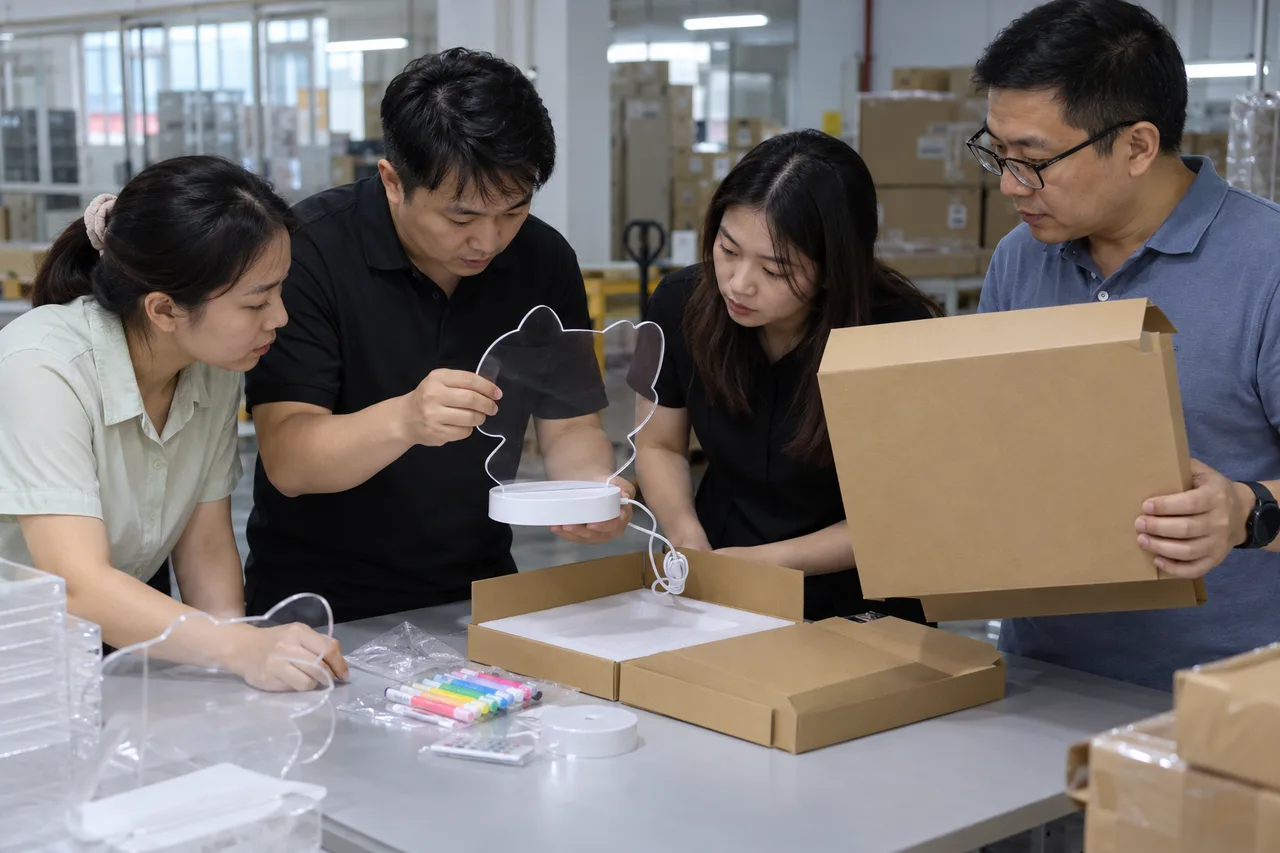
- Illustrative AI-generated photograph: A Thai buyer checks an LED drawing board sample and the current TISI question list before artwork approval.
- ALT text
- Thai importer reviewing an LED drawing board sample and TISI checklist
View AI image direction
Photorealistic documentary photograph for a LumDigi B2B article about Thailand TIS 685 for LED Drawing Boards: A Buyer Scope and Label Checklist. Photorealistic commercial documentary photograph in a Bangkok toy-import office: an adult Thai buyer studies a shaped transparent LED drawing board beside a neutral standards checklist and Thai package proof with all writing blurred. Natural daylight, calm procurement meeting, realistic acrylic, landscape 3:2. No TISI mark, readable Thai text, logos, certificates, watermark, or overlay. Real acrylic texture, candid commercial setting, landscape composition, no readable logos, no certificates, no text overlay, no watermark.
Show practical factory or shipment-review context for Thailand TIS 685 for LED Drawing Boards: A Buyer Scope and Label Checklist.
- Placement
- after-second-section
- Caption
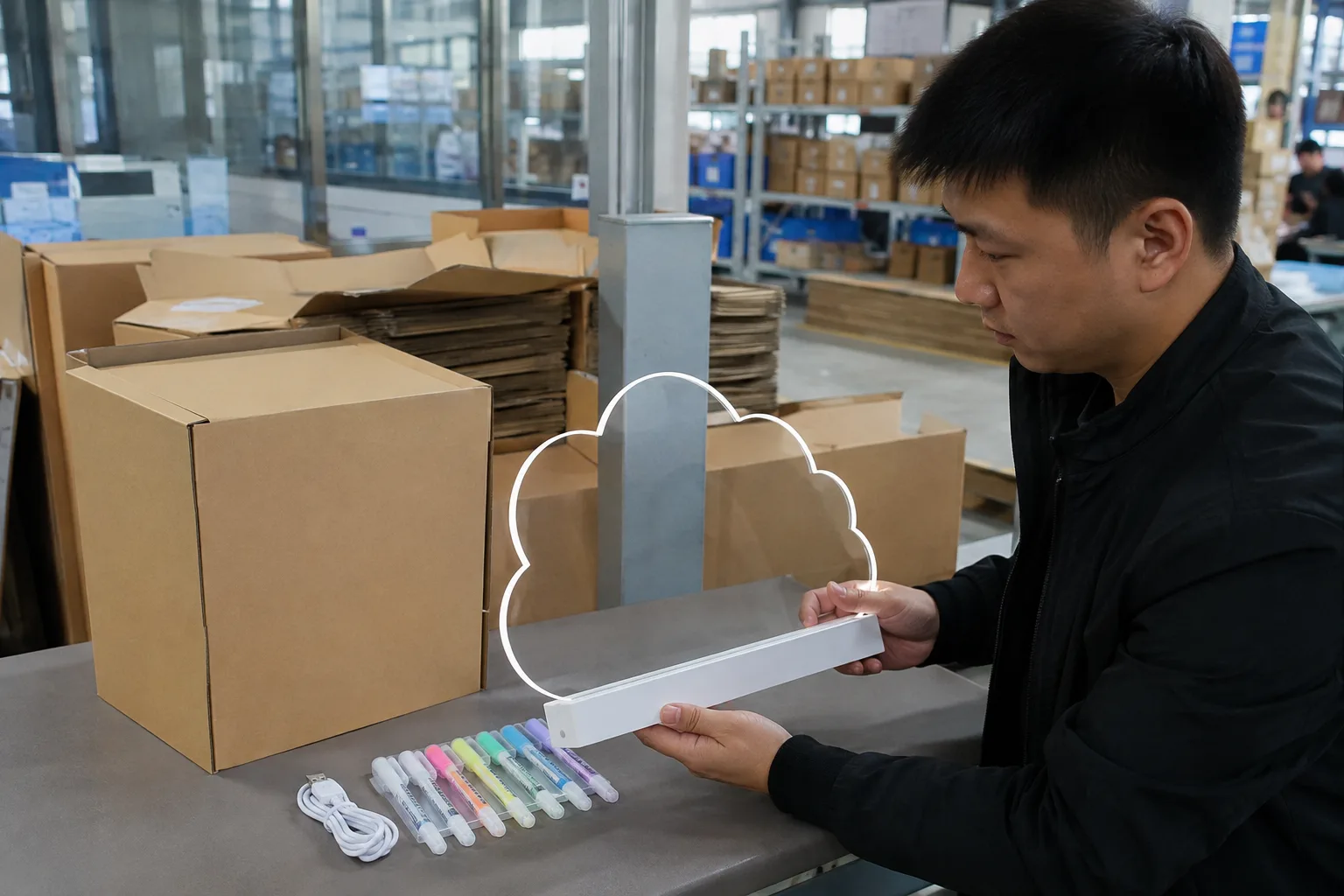
- Illustrative AI-generated photograph: Chinese factory staff match a board sample and packaging proof to the version requested by a Thai importer.
- ALT text
- Chinese factory staff comparing an LED drawing board sample with packaging artwork
View AI image direction
Photorealistic documentary photograph for a LumDigi B2B article about Thailand TIS 685 for LED Drawing Boards: A Buyer Scope and Label Checklist. Photorealistic documentary photograph in a Chinese factory packaging review room: Chinese/Asian adult staff compare one shaped acrylic LED drawing board, markers, base, and an unbranded carton proof for a Thailand buyer. Print is fully unreadable, candid work, realistic materials and lighting, landscape 3:2. No fabricated TIS label, readable text, logos, test claims, watermark, or overlay. Real acrylic texture, candid commercial setting, landscape composition, no readable logos, no certificates, no text overlay, no watermark.
Turn the article into a practical sourcing brief
Use the checkpoints above to document the product, evidence, packaging, and approval decisions relevant to your market. A clear brief helps suppliers respond to the same commercial question and gives your team a traceable basis for the next step.
Useful external references
- TISI standard record: TIS 685 Part 1-2562
Official record identifying the toy safety standard and its mandatory status/effective information.
- TISI: Toys and TIS mark guidance
Official explanation of toy scope and the need to check applicable TISI requirements.
- TISI mandatory product database
Official product/category and labeling information; check current records with TISI.
LED Drawing Board Multilingual Packaging Guide for Private Label
A B2B buying guide for private-label brands, importers, and packaging teams who need to review language versions against the approved product, packed set, artwork reference, and destination responsibilities.
Read article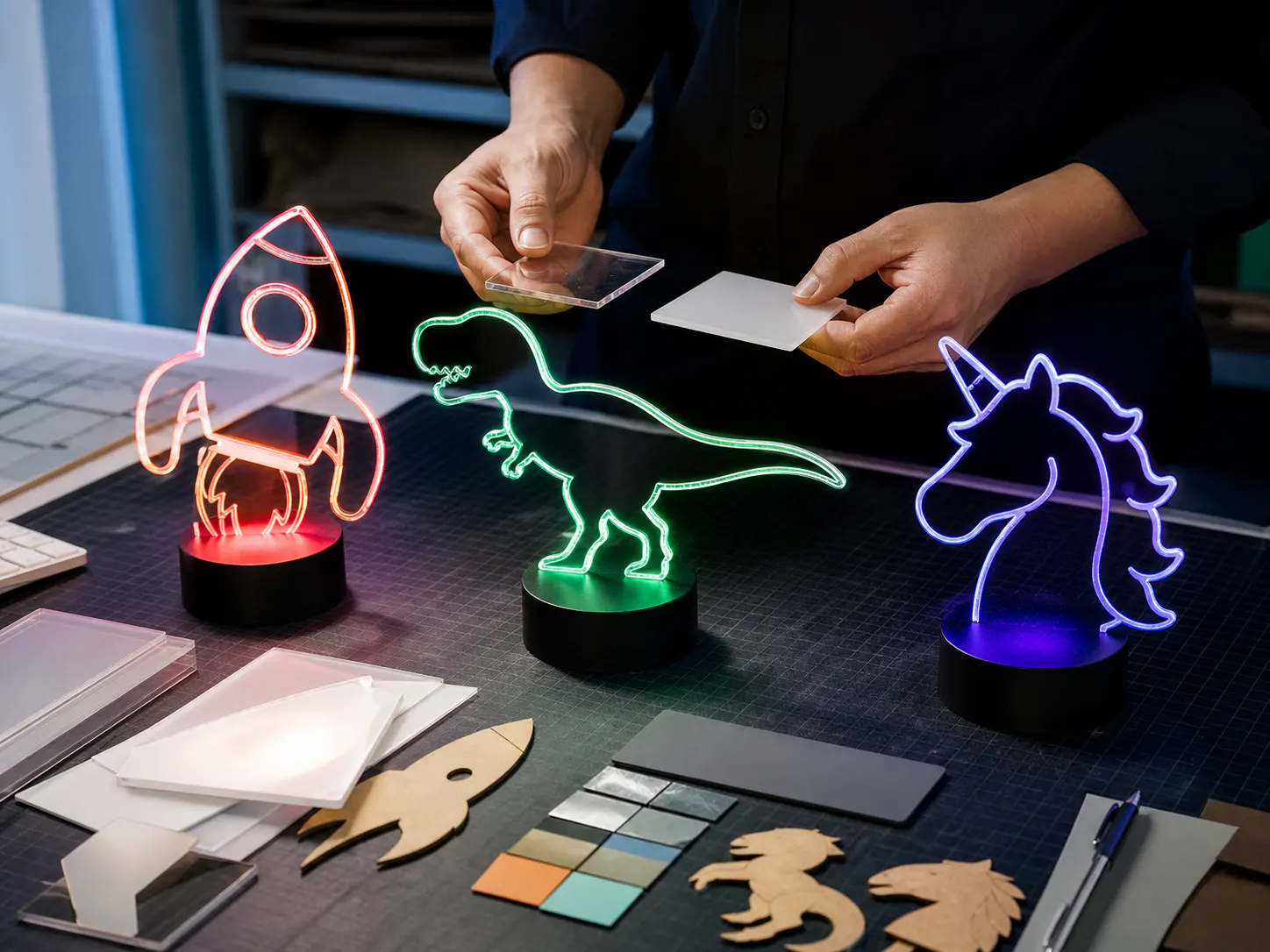
How to Approve a LED Drawing Board Sample Before Bulk Production
A practical B2B guide for buyers approving a production-ready custom or wholesale set who need to turn a loose sample into a controlled product, packaging, and release decision before bulk production is authorized.
Read article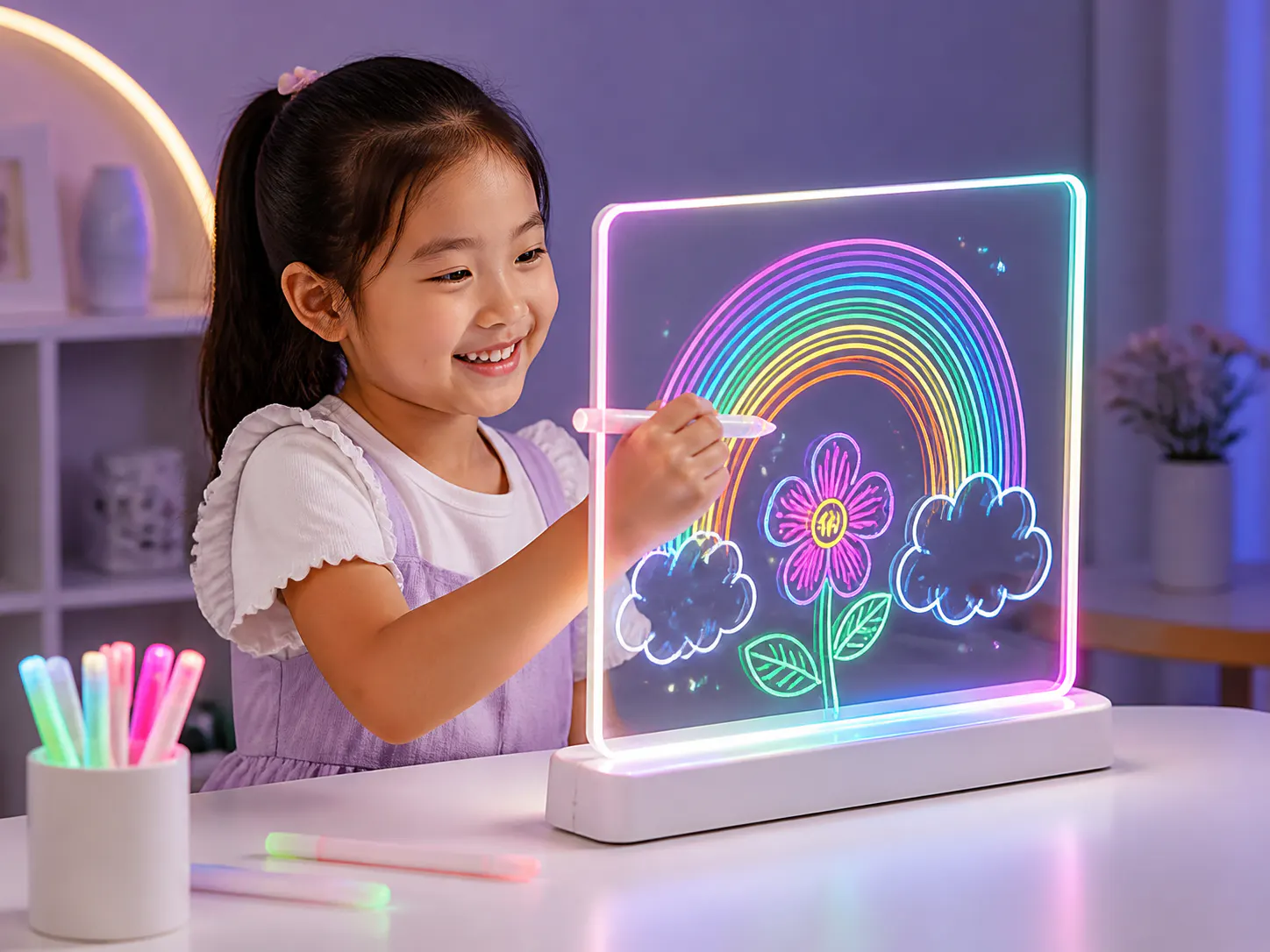
How to Build a LED Drawing Board Product Specification Sheet
A practical B2B guide for B2B teams aligning suppliers, quality reviewers, packaging teams, and sales channels who need to create one readable source of truth for the exact board configuration, set contents, packaging, and verification requirements.
Read article
Brazil INMETRO Toy Certification: A Classification Guide for LED Drawing Boards
A B2B buying guide for Brazilian importers, toy and gift distributors, and foreign manufacturers preparing a Brazil project who need to determine the applicable INMETRO product family and certification route for the exact LED board and obtain local confirmation before importing or selling.
Read article