
Turkey 2026/10 Toy Import Inspection: A Pre-Shipment Guide for LED Board Buyers
The direct answer is to check the current 2026 import-inspection guidance for the exact product, then prepare matching product, conformity, and shipment records before dispatch, while avoiding treating a CE image, generic declaration, or supplier test report as proof that an import inspection will clear every product or shipment.
1. Read the current 2026/10 import-inspection notice
Turkey's Ministry of Trade lists toys among product groups inspected at import under Product Safety and Inspection Communiqué 2026/10. Read the current inspection guide for the actual product and entry.
The official product-group page is an important starting point for a 2026 Turkey-bound shipment, but it does not answer every SKU-specific question. The importer should open the current communiqué and toy inspection guidance, note its effective period, product codes, documents, controls, and any exemptions or sampling rules. Check the latest version immediately before order release and customs planning. Consult the official Turkey resource alongside the exact product facts.
Do not infer that a drawing board will be treated as a toy solely because a keyword says toy, or that a writing board is outside scope because it uses acrylic. Provide the intended age and play function, package, instructions, electrical configuration, and tariff description to a Turkish product-safety specialist.
The Turkish product-rules database and Ministry import notice answer different questions: the toy framework and the import-control process. Keep both sources in the file.
Product description quality affects communication among engineering, procurement, broker, and conformity teams. Use a plain-language description and attach photos that show both lit and unlit state without embellishment.
A container consolidation does not merge product identities. Keep each SKU, pack version, and document set mapped to the relevant carton quantities.
The Turkish importer should translate the notice into an order calendar with named dependencies: final product identity, declaration, technical records, any inspection application, approved pack, and shipment booking. Keep dates as planning assumptions until the responsible authority or service provider confirms a specific appointment.
- Download the current 2026/10 guidance and appendices.
- Confirm the importer and product code for the offered set.
- Seek Turkish scope advice for ambiguous products.
2. Match conformity evidence to the product under Turkish toy rules
Turkey's official product-rules guide describes toy safety requirements and conformity assessment. The importer should verify the relevant declaration, technical documentation, standards, and marking for the exact model.
A CE symbol on an image is not a complete conformity file. Ask for the EU/Turkish declaration relevant to the market and exact model, the applicable standards, technical file index, manufacturer identity, and the basis for conformity assessment. The authorized manufacturer or responsible local economic operator should confirm the documents; the factory can supply technical facts and reports within their actual scope. Use an identified model such as the A4 Desktop LED Fluorescent Board and confirm its current supplied configuration before applying this workflow.
Compare the declaration's product family and models with the sample, order, and package. Check whether the base, adapter, LED assembly, markers, or material changed after the assessment. If the documentation does not name the offered model, ask the responsible person to explain the coverage before shipment.
Ask the Turkish importer which version of the inspection guide they are applying and whether the product code or category has a special document requirement.
Ask whether a Turkish import inspection can review the goods at a particular point in the logistics chain and which local party coordinates it. Confirm the operational process with the broker and authority, not the factory alone.
When a discrepancy is resolved by rework, document the changed unit and verify it against the approval criteria. Do not backdate the report or erase the original observation.
Ask whether an inspection requirement is triggered by product code, risk category, or another criterion under the current communiqué. Share the exact code hypothesis and goods description with the Turkish broker; do not use an overseas HS code as if it were a local ruling.
- Request the signed declaration and technical-file references.
- Reconcile model, brand, manufacturer, and variants.
- Do not rely on logos or report covers without scope review.

3. Freeze the exact SKU and shipment description
The purchase order, technical documents, invoice, packing list, carton marks, and sample should describe one consistent product. Split variants where their power setup or contents differ.
Evidence for the Turkey review
Create a product identity sheet containing shape, acrylic panel, base, power source, connector, marker set, pack contents, model, and artwork version. Add the customs description and tariff hypothesis provided by the Turkish broker. This helps the importer and inspection team understand what the shipment contains and prevents a generic invoice name from obscuring the actual goods.
For mixed-SKU orders, list quantities and carton mapping by model. Keep demonstration samples separate from saleable cartons. If a new adapter or battery is added, record it and ask whether the product file, tariff classification, or inspection route needs to be revisited.
If an overseas test report is used, check issuer, standard edition, product model, language, and whether the responsible Turkish conformity party accepts it.
If one board is sold as an educational product and another as a children's toy, have the importer assess each presentation. Marketing copy and age claims can be material facts.
The buyer should decide whether a sample-only item can be shipped under a different purpose. Never declare saleable inventory as a sample to avoid a process.
If an authority requests a sample or additional document, record the exact request and the responding party. Supply the smallest complete set of records that answers it, with revisions visible. Avoid sending an old report because it has a similar product photo on its cover.
- Use one buyer-approved SKU reference on all records.
- Identify power and packaging differences explicitly.
- Reconcile carton count and packing list before dispatch.
4. Prepare an inspection-ready document room
Keep the current conformity records, technical information, product photos, invoice, packing list, transport details, and importer correspondence available in an indexed file.
A clean document room reduces delay when a broker, inspection team, or importer asks for support. Use an index with document name, revision, model coverage, issuer, date, and owner. Include approved artwork, sample photos, test reports, declaration, material and power details, purchase order, invoice, packing list, and the applicable official notice.
Store supplier evidence and official decisions separately. A factory QC report is not a Turkish import decision; a lab test does not itself establish that a particular shipment matches the tested model. Link records so the buyer can see how evidence supports the file without overstating it.
A product family should not be considered covered by a declaration unless the technical documents include its variants. Resolve model naming differences before the purchase order is fixed.
A declaration should be signed by the correct responsible party and use current product identifiers. A draft or template is not evidence of a completed assessment.
Store source files in a read-only released folder and send a clearly named copy to the factory. Retain the working versions elsewhere.
A technical file should provide a path from model to evidence: drawings or product description, component identity, test reports, risk assessment where required, declaration, and label/marking references. Ask the responsible conformity party which documents are mandatory and which are supporting context.
- Use a dated index and model-level coverage notes.
- Provide the local broker access to the released pack.
- Keep official inspection results separate from supplier records.
5. Align the approved sample with factory and shipment checks
Review an identified production-like sample before bulk release, then inspect shipment identity and packing against the buyer's agreed scope. Formal import controls remain separate.
A product sample review can observe panel edges, base fit, normal illumination, control behavior, marker contents, and retail packaging. The reviewer should note sample status and conditions. If formal safety testing is required, the responsible conformity party should arrange it with the appropriate lab and keep the tested sample configuration traceable.
Before dispatch, agree inspection checkpoints such as model, quantities, carton labels, packaging revision, visible workmanship, and defined operating checks. Report actual findings and deviations, not a broad statement that the product passed Turkish requirements. If the shipment differs from the approved sample, stop and obtain a documented buyer decision.
For an adapter included in the pack, verify its ratings and supplier, and ask whether it changes documentation or tariff treatment.
A factory can maintain a sample retention record, but retention does not prove that every shipment unit was inspected. Define the retained sample's relationship to production.
Use a document request that asks for issuer, date, standard, model, and scope rather than simply requesting a certificate.
When a shipment is held, preserve the original notice, customs entry reference, and correspondence. The importer should coordinate any correction with competent local parties; a supplier should not alter product descriptions or create replacement evidence after the fact.
- Label prototype and production samples clearly.
- Define visual, functional, and packing scope separately.
- Escalate substitutions before shipment.
6. Review Turkish consumer-facing information and package
The importer should review required Turkish-language warnings, identity details, instructions, and markings against current rules and the intended consumer offer before packaging is printed.
Use an accurate translation of safety information and instructions, reviewed by a person familiar with Turkish product language. Confirm the product image, age presentation, included components, and power description. A package can be internally consistent yet fail to describe the shipped item if a marker set or accessory changes late in production.
The factory should receive one approved artwork revision and confirm its code on production records. Compare a printed sample with the signed PDF, including placement, legibility, image variant, and any regulatory markings allowed for use. Keep the buyer's signoff and avoid changing text for space without a fresh review.
Pre-shipment inspection should report the actual cartons and units reviewed. Never create photos after the fact or represent planned checks as completed.
Keep the final Turkish packaging proof with the corresponding model and power version; a translation is not reusable automatically across variants.
Inform the Turkish importer promptly when the factory substitutes a component, changes the manufacturer address, or revises the package.
A production change log can alert the importer to a new adapter, panel material, base supplier, age statement, or package. Make these change triggers part of purchase-order communication rather than relying on a buyer to notice a subtle difference in an inspection photo.
- Get Turkish copy reviewed by the responsible local party.
- Match artwork to the physical approved set.
- Control print files and late changes.
7. Build a pre-shipment decision and escalation plan
Before booking, confirm current inspection rules, conformity file, product identity, local importer owner, shipment document pack, and the person authorized to resolve a hold or discrepancy.
The buyer's release checklist should name each open question, evidence needed, owner, due date, and stop condition. For example, do not book until the declaration identifies the selected model, or hold the carton proof until Turkish warnings are approved. This is more useful than assuming a product will be cleared because a previous shipment passed.
If an inspection or customs query occurs, preserve the notice and exact product facts, respond through the responsible Turkish importer, and consult an authorized professional. Do not alter a declaration or shipment description to fit an expected outcome. Recheck official information after changes to regulation, product, factory, importer, or shipment. This article is informational, not legal advice.
Keep buyer approval, factory record, and government clearance as separate milestones in the shipment tracker.
At each reorder, verify current import-control notice, contact details, product changes, and document validity before production is authorized.
This workflow supports preparation; it cannot promise an inspection outcome or customs release.
For mixed products consolidated in one container, keep distinct line items and packing records so a request about one toy model does not create confusion across unrelated LED board variants.
For a Turkey-bound toy shipment in 2026, combine the current 2026/10 import-inspection guidance with the Turkish toy-safety file for the exact model. Keep conformity evidence, sample identity, labeling, and shipping records synchronized, and leave the clearance decision with the responsible local parties.
- Assign an escalation contact in Turkey.
- Preserve inspection requests and responses.
- Refresh guidance before each shipment and model change.
Frequently asked questions
Are LED drawing boards automatically covered by Turkey's 2026/10 toy inspection?
The notice lists toys as an inspected product group, but the exact product's classification and code need local review against current guidance.
Does a CE logo prove that a Turkey shipment will clear?
No. The importer should verify the declaration, technical documentation, model coverage, and import-inspection requirements for the exact shipment.
What should be ready before dispatch?
Prepare a matching product file, sample reference, invoice, packing list, transport records, approved Turkish artwork, and local importer contact.
Can a factory pre-shipment inspection replace Turkish import controls?
No. Factory inspection documents agreed observations; Turkish authorities and responsible importers control local conformity and import decisions.
Image planning for this topic
These notes document the role and intended context of the two visuals used in this guide.
Show a buyer decision context for Turkey 2026/10 Toy Import Inspection: A Pre-Shipment Guide for LED Board Buyers.
- Placement
- hero
- Caption
- Illustrative AI-generated photograph: A Turkish importer aligns the toy model, conformity file, and shipment references before booking an LED board order.
- ALT text
- Turkish importer reviewing an LED drawing board and toy import inspection file
View AI image direction
Photorealistic documentary photograph for a LumDigi B2B article about Turkey 2026/10 Toy Import Inspection: A Pre-Shipment Guide for LED Board Buyers. Photorealistic documentary photograph in an Istanbul toy import office: an adult Turkish buyer reviews a shaped acrylic LED drawing board beside a neutral technical folder and blurred shipping calendar on a laptop. Practical business setting, natural light, candid preparation meeting, real acrylic texture, landscape 3:2. No CE logo, government seal, certificate, readable text, watermark, or overlay. Real acrylic texture, candid commercial setting, landscape composition, no readable logos, no certificates, no text overlay, no watermark.
Show practical factory or shipment-review context for Turkey 2026/10 Toy Import Inspection: A Pre-Shipment Guide for LED Board Buyers.
- Placement
- after-second-section
- Caption
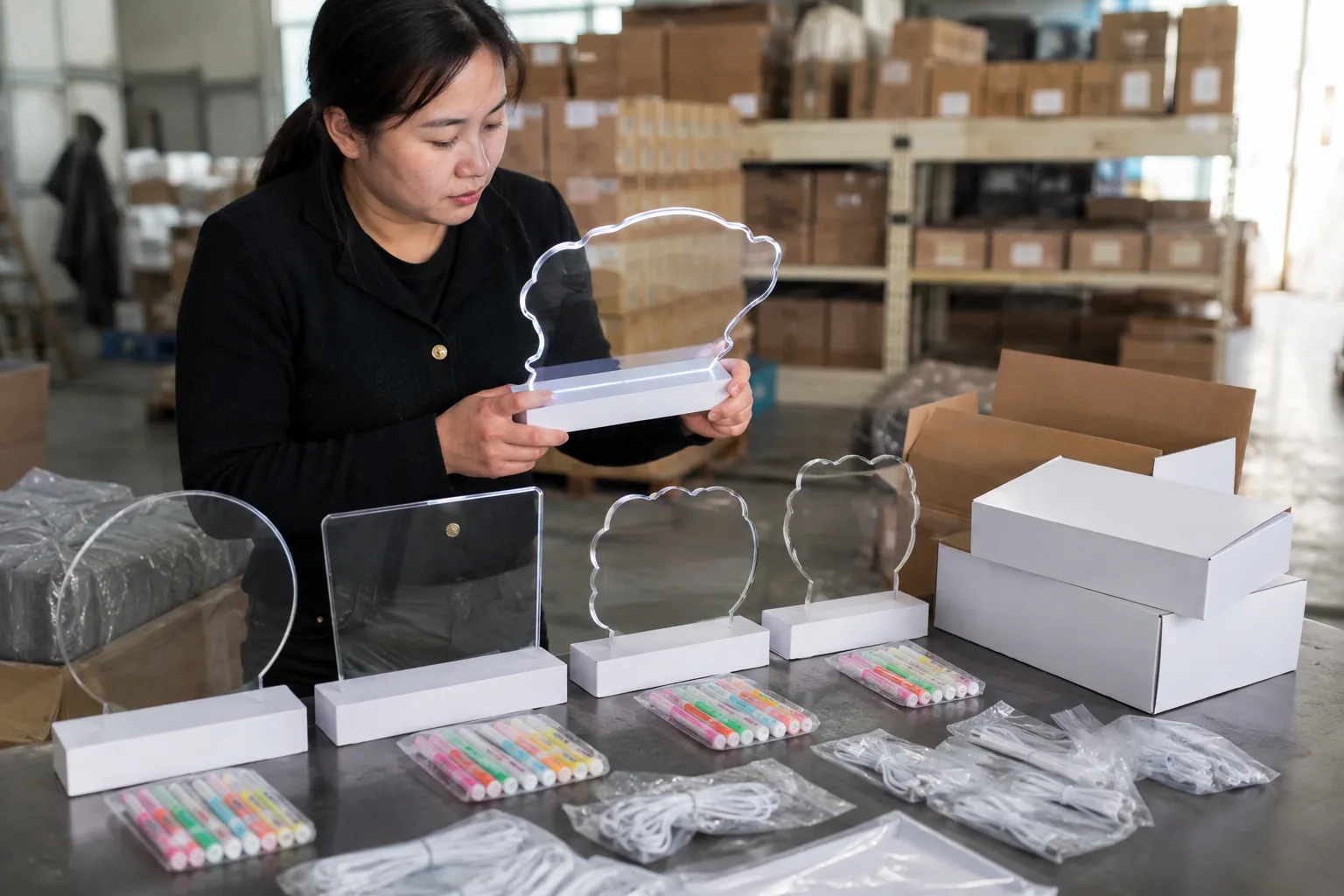
- Illustrative AI-generated photograph: Chinese factory staff compare the approved board sample with technical and packing records for a Turkey-bound shipment.
- ALT text
- Chinese factory team checking a shaped LED drawing board sample and shipment records
View AI image direction
Photorealistic documentary photograph for a LumDigi B2B article about Turkey 2026/10 Toy Import Inspection: A Pre-Shipment Guide for LED Board Buyers. Photorealistic documentary photo in a Chinese export factory: Chinese/Asian adult quality staff compare one shaped LED drawing board sample, base, cable, markers, carton proof, and blank shipment checklist before export to Turkey. Candid realistic work, daylight, landscape 3:2. No readable documents, invented test results, CE marks, government logos, watermark, or overlay. Real acrylic texture, candid commercial setting, landscape composition, no readable logos, no certificates, no text overlay, no watermark.
Turn the article into a practical sourcing brief
Use the checkpoints above to document the product, evidence, packaging, and approval decisions relevant to your market. A clear brief helps suppliers respond to the same commercial question and gives your team a traceable basis for the next step.
Useful external references
- Türkiye Ministry of Trade: import-inspected product groups
Current official list identifying toys under Product Safety and Inspection Communiqué 2026/10.
- Turkey Product Rules Database: Toys
Official English guide to toy scope, essential safety requirements, conformity, and CE marking.
- Turkey toy legislation and harmonized standards
Official Turkish product-rules database listing the Toy Safety Regulation and harmonized-standard notice.
LED Drawing Board Shipment Consolidation Guide
A B2B buying guide for importers, freight coordinators, and distributors who need to prepare a consolidation record for identified SKUs, cartons, quantities, and buyer-owned freight instructions.
Read article
Commercial Invoice vs. Packing List for LED Drawing Board Imports
A B2B buying guide for importers, logistics teams, and distributors who need to review invoice and packing-list facts against the confirmed order and measured shipment configuration.
Read article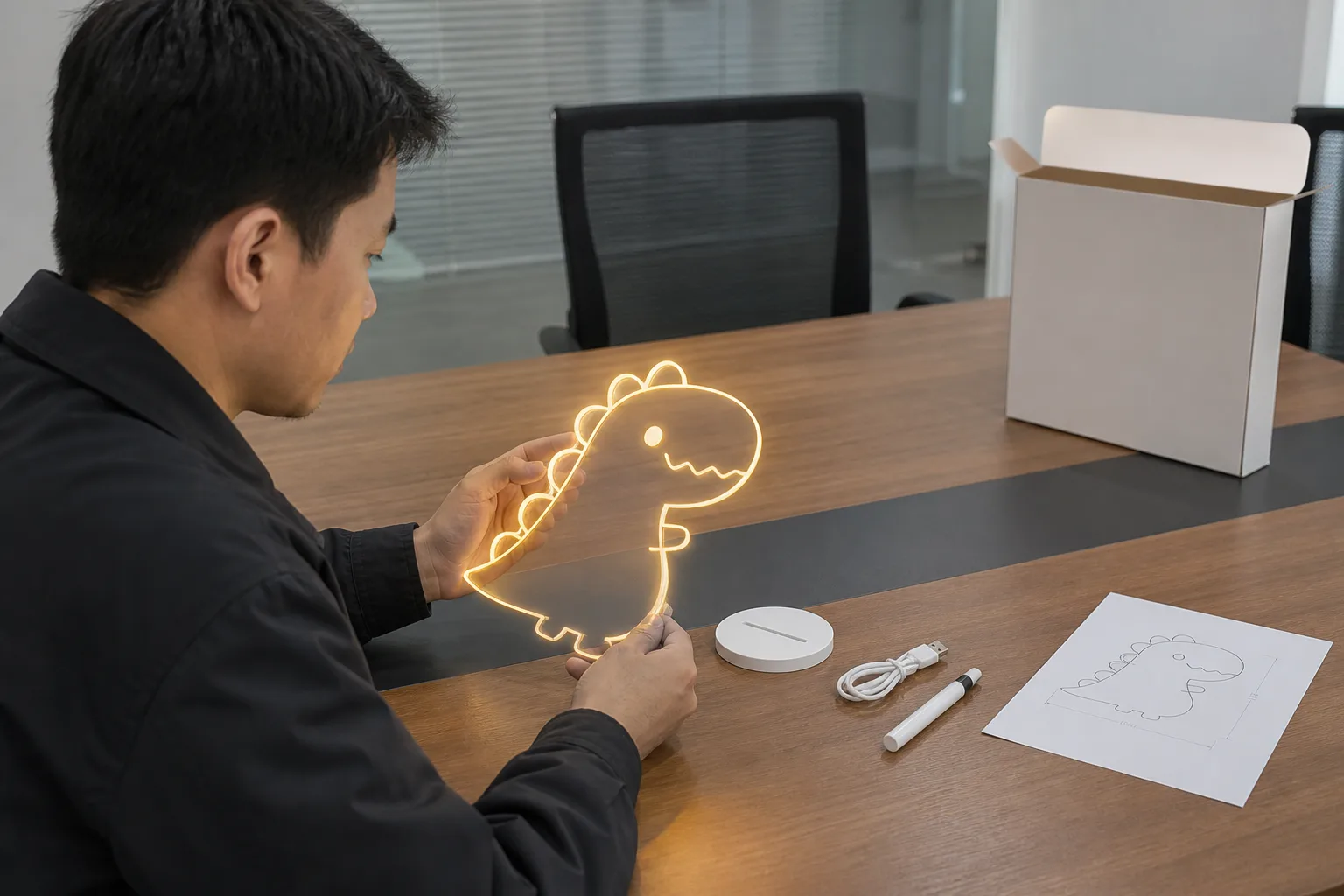
LED Drawing Board Product Document Room Guide
A B2B buying guide for importers, sourcing managers, and private-label operations teams who need to maintain a controlled project file that names documents, versions, owners, purpose, and open questions.
Read article
Taiwan BSMI Toy Inspection in 2026: A Buyer Guide to Scope and Release
A B2B buying guide for Taiwan importers, toy and stationery distributors, and product compliance teams who need to check whether the exact product is a toy and within a mandatory inspection category, then follow BSMI's current procedure and marking rules.
Read article