
U.S. Tracking Labels for Children's LED Drawing Boards: Importer Checklist
The direct answer is to review the product's intended-use scope, required identifying information, practical marking locations, and matching production record with the responsible compliance adviser, while avoiding assuming a carton-only number or a supplier's internal batch code automatically meets every legal and recall-readiness need.
1. First determine whether the product is within the U.S. tracking-label rule
CPSC describes tracking-label requirements for products designed or primarily intended for children 12 years of age or younger; the responsible importer should confirm product scope and legal application.
A product's name alone does not determine whether it is a children's product. Intended age, marketing, design, packaging, and foreseeable use can matter under applicable law. For a shaped LED drawing board sold as a children's creative toy, the U.S. importer should ask its product-safety professional to confirm the scope before approving a marking plan. This article explains the buyer's coordination questions, not a binding legal interpretation for every board or age range.
CPSC's FAQ says required identifying information generally needs to be permanently affixed to the product and its packaging to the extent practicable. It also explains that the information may be visible through clear packaging and that a separate package mark may not be needed in that circumstance. Apply those details only after reviewing the exact construction, packaging, visibility, and applicable law. A clear retail box may not be the final shipping carton, and production handling can hide a mark that looked visible in a sample photo.
The phrase to the extent practicable is not a blanket exemption. A buyer should document why a mark on a particular surface may or may not be feasible, considering size, material, normal use, visibility, package design, and durability, then seek advice on the conclusion.
- Confirm age and intended-use classification with a qualified adviser.
- Review the current CPSC FAQ and statutory provision.
- Evaluate both the product and its retail package in the actual packed state.
2. Know the identifying information the mark is meant to make ascertainable
CPSC lists the manufacturer, importer, or private-labeler name; production location and date; and batch, run, or other source-identifying information among the tracking details.
A tracking label is not merely a decorative SKU sticker. CPSC describes information that should be ascertainable from the distinguishing marks, including the manufacturer or private-labeler name, production location and date, detailed process information such as batch or run number, and other information that helps identify the specific source. The requirement is framed to the extent practicable. Buyers should verify current official wording and consult counsel on their exact product.
For a board set with an acrylic panel, light base, markers, and package, decide with the compliance owner how a consumer or importer can connect the product to production records. A supplier's internal lot code is useful only if it can be decoded and retained with accessible records. Document who owns the cross-reference, how long records are maintained, and how a code maps to factory, date, line, and affected SKUs without exposing unnecessary proprietary detail on the product.
CPSC states there is no universal label size, location, or format supplied for every product. Do not market one template as an official CPSC label. Treat the illustration as a buyer's working brief and have the legal owner confirm its applicability.
- Use identifying information that can be tied to the specific source.
- Keep a controlled code-to-production-record crosswalk.
- Do not treat the sticker alone as the entire traceability system.

3. Choose practical mark locations for the board and pack
The mark should remain reasonably durable and discoverable in the product's real configuration, while the importer documents any impractical marking decision for expert review.
A shaped acrylic panel may have limited printable area and a visible mark could affect artwork or a child's drawing surface. The LED base may offer a concealed underside, while a retail package may have a back panel or bottom label. CPSC has not prescribed a universal label size or location; its FAQ emphasizes that product types differ and that practicability matters. Photograph candidate locations and review readability, permanence, and package visibility on a production-representative sample.
Do not assume a hangtag fixes a missing permanent mark, or that a transport carton label is the same as product or retail-package identification. Compare the actual unpacked board, the sealed retail box, and any clear window. If the board's mark can be seen through the packaging, record that evidence. If it cannot, the compliance owner should decide the appropriate alternative and retain the basis for the practicability analysis.
A package can carry useful information but may be discarded. Buyers should consider how product-level identification remains available through the useful life and whether the package mark is also necessary under the actual visibility facts.
- Review panel, base, and retail package separately.
- Test visibility on the packed and unpacked sample.
- Record any proposed exception or alternate marking for legal review.
4. Give the factory a controlled marking brief
The factory needs one approved marking artwork, data source, application location, and revision rule for each production configuration.
The importer should send the approved name, identifier format, date or lot convention, placement drawing, language, and packaging version through a controlled artwork brief. Confirm who generates the production date and batch value, how operators apply it, and which record captures the value for each order. If multiple board shapes use different bases or plants, the brief should not silently reuse one identifier map. Ask the factory to provide a marked sample or proof for review before releasing the run.
Agree how a printing defect, unreadable mark, or changed label substrate will be handled. A pre-shipment inspection can observe marking presence and legibility under a defined plan; it does not determine all legal requirements. Record the inspection sample, acceptance criteria, and outcome. Avoid printing variable data onto artwork until the version and source are validated, because a wrong production date or unmapped code can defeat the traceability purpose.
If one master carton contains multiple shapes, keep the carton tally connected to inner retail units. A carrier label identifies a shipment unit for logistics; it generally is not a substitute for the item-level source information contemplated by the tracking rule.
- Approve the mark artwork and placement before production.
- Define who creates variable batch/date information.
- Tie inspections and production logs to the same code format.
5. Make the mark useful when a question arrives
A traceability mark only helps if the importer and supplier can use it to find the relevant product, order, factory, production period, and distribution records.
Create an internal lookup procedure that starts with the visible mark and returns the SKU, production site, production date or run, supplier order, shipment, test and inspection records, and customer or distribution channel data the business lawfully holds. Set access permissions and record owners. Run a tabletop retrieval exercise before launch using a sample code, then note how long it took and what fields were missing. This tests the record workflow, not product safety.
The supplier and importer may keep different parts of the record. A written agreement should identify who preserves the code key and who responds to a retailer or authority request. If a factory changes a line or marking method, update the crosswalk and communicate the effective date. Avoid code formats that rely on an undocumented employee's memory or an obsolete spreadsheet stored on a personal device.
When factory dates are encoded, define the timezone, format, and source system. This reduces confusion where production crosses midnight or records are stored in another country. The code must be intelligible to the firm's retrieval process, even if the public-facing mark is concise.
- Test a code lookup from a real sample mark.
- Document ownership and retention for the crosswalk.
- Control access to business and consumer records.
6. Reopen review when the product or label changes
A change to a board base, package, manufacturing site, mark placement, or lot-code format should trigger a documented scope check before the next order is released.
A small product revision can affect identification even when the retail name stays the same. Replacing the LED base, moving assembly to another location, changing the package from opaque to clear, or combining two shapes in one gift set may change what a buyer can see and how records should be queried. Maintain a change log with old and new drawings, sample photographs, responsible approver, and first affected order. Have compliance review decide whether the marking remains suitable.
Review artwork at approval, first article, and pre-shipment stages using the same reference. Avoid treating a supplier's statement that the label is unchanged as proof that the placement is still visible on a revised pack. If a product's age grading, intended use, or private-label responsible party changes, reopen the legal scope review too.
A periodic mock retrieval can reveal whether a supplier can locate the exact production record after normal staff turnover. Record the result, missing fields, corrective owner, and next test date. Do not claim recall readiness based solely on a successful label photograph.
- Add tracking marks to the change-control checklist.
- Verify placement on the production-representative pack.
- Keep records of the first order using the revised mark.
7. Separate statutory tracking marks from other codes and certifications
A UPC, marketplace identifier, carton shipping label, or laboratory report may serve another purpose and should not be represented as a tracking label unless the required information is actually satisfied.
Product teams often use many identifiers: SKU, barcode, serial number, carton number, purchase order, factory lot, and customs shipment ID. They can be connected in a traceability database, but one does not automatically replace the others. The legally relevant tracking information should be assessed independently. A small QR code can help retrieve details, but CPSC says the required name also needs to be identified so a consumer without internet access can know whom to contact. Confirm the full rule rather than relying on a QR-only concept.
A tracking mark is also distinct from a CPC or testing result. It helps identify a source; it does not certify that a product passed a safety test. Conversely, a certificate without a product-to-lot crosswalk may be difficult to connect to the units in an incident. Maintain both records and make the relationship clear. This distinction protects retailer communication from overstating what the code proves.
Factory inspection can check that the mark is present, legible, and placed according to the approved sample. The contract and inspection plan should specify the scope; neither activity determines the full statutory analysis or product risk.
- Map identifiers but assess each purpose separately.
- Ensure consumer contact information remains accessible as required.
- Do not describe a tracking code as product safety certification.
8. Conclusion: review mark, package, and records as one system
The importer should validate product scope, required identifying information, practical product and package placement, factory data capture, and a retrievable crosswalk before releasing the first order.
CPSC provides flexibility because products differ, while requiring the responsible firm to make the information ascertainable to the extent practicable. For a drawing board, the approved location must be checked on the actual acrylic panel or base and the retail pack. Keep the assessment connected to the shipped SKU and to a record that can identify the manufacturing source. A generic supplier lot number is a starting point, not a complete program.
For a U.S. private-label project, send LumDigi the intended age range, model and shape plan, branding, packaging direction, and proposed mark location. We can help verify supplier-controlled product and factory details and review a marked sample within an agreed scope. The importer and its compliance professional remain responsible for the legal determination and the finished record system.
For online product pages, the image and variant data should identify the same model as the product and packaging marks. A listing with mismatched shape or SKU can make an otherwise useful mark difficult for a downstream retailer to interpret.
- Confirm legal scope.
- Approve a practical mark and package presentation.
- Exercise the retrieval process before launch.
Frequently asked questions
Which children's products need a U.S. tracking label?
CPSC says products designed or primarily intended for children 12 years old or younger are subject to the requirement. The importer should confirm the product's classification and current rule with qualified counsel.
Must the tracking information appear on both the board and the package?
CPSC says the information should be permanently affixed to the product and packaging to the extent practicable, and explains visibility scenarios for clear packaging. Review the FAQ against the actual product and pack.
Can a QR code replace all printed identifying details?
CPSC allows code-based ascertainment in some circumstances but says a manufacturer, importer, or private-labeler name must also be identified so consumers without internet can know whom to contact. Confirm the official FAQ and product facts.
What can LumDigi provide for a tracking-label review?
LumDigi can help confirm supplier-held model, factory, production, and packaging facts and review a marked sample within scope. The U.S. importer determines legal compliance and maintains the required records.
Image planning for this topic
These notes document the role and intended context of the two visuals used in this guide.
Show a buyer decision context for U.S. Tracking Labels for Children's LED Drawing Boards: Importer Checklist.
- Placement
- hero
- Caption
- A buyer checks the product identification mark and its relationship to the retail package.
- ALT text
- US tracking label LED drawing board B2B buyer review
View AI image direction
Photorealistic documentary photograph for a LumDigi B2B article about U.S. Tracking Labels for Children's LED Drawing Boards: Importer Checklist. Close-up documentary photograph of a small durable identification mark discreetly applied to the underside of an acrylic LED drawing board base, a matching plain retail carton and an unbranded production log nearby; a U.S. buyer's gloved hand checks visibility and permanence, no readable personal data or fabricated certification logo. Real acrylic texture, candid commercial setting, landscape composition, no readable logos, no certificates, no text overlay, no watermark.
Show practical factory or shipment-review context for U.S. Tracking Labels for Children's LED Drawing Boards: Importer Checklist.
- Placement
- after-key-considerations
- Caption
- Chinese packing-line staff compare matching batch identifiers on a board base and carton.
- ALT text
- US tracking label LED drawing board Chinese factory review
View AI image direction
Photorealistic documentary photograph for a LumDigi B2B article about U.S. Tracking Labels for Children's LED Drawing Boards: Importer Checklist. Chinese packing-line quality staff verify that a shaped LED drawing board base and its retail carton carry matching blank batch identifiers while comparing a production record, realistic Asian factory workers in a clean station, documentary photo, codes not legible. Real acrylic texture, candid commercial setting, landscape composition, no readable logos, no certificates, no text overlay, no watermark.
Turn the article into a practical sourcing brief
Use the checkpoints above to document the product, evidence, packaging, and approval decisions relevant to your market. A clear brief helps suppliers respond to the same commercial question and gives your team a traceable basis for the next step.
Useful external references
- CPSC: Tracking Label FAQ
Official requirements, practical visibility questions, and limits of the tracking-label rule.
- CPSC: Retailers, Product Safety, and Responsibilities
Retailer-facing explanation of tracking label information and other responsibilities.
- CPSC: CPSIA
Official statute overview including tracking-label provisions.

LED Drawing Board Lot Traceability Guide for Wholesale Buyers
A practical buyer guide for importers, distributors, and after-sales operations teams who need to create a buyer-owned lot traceability record that connects the approved configuration, order, pack, and factual support information.
Read article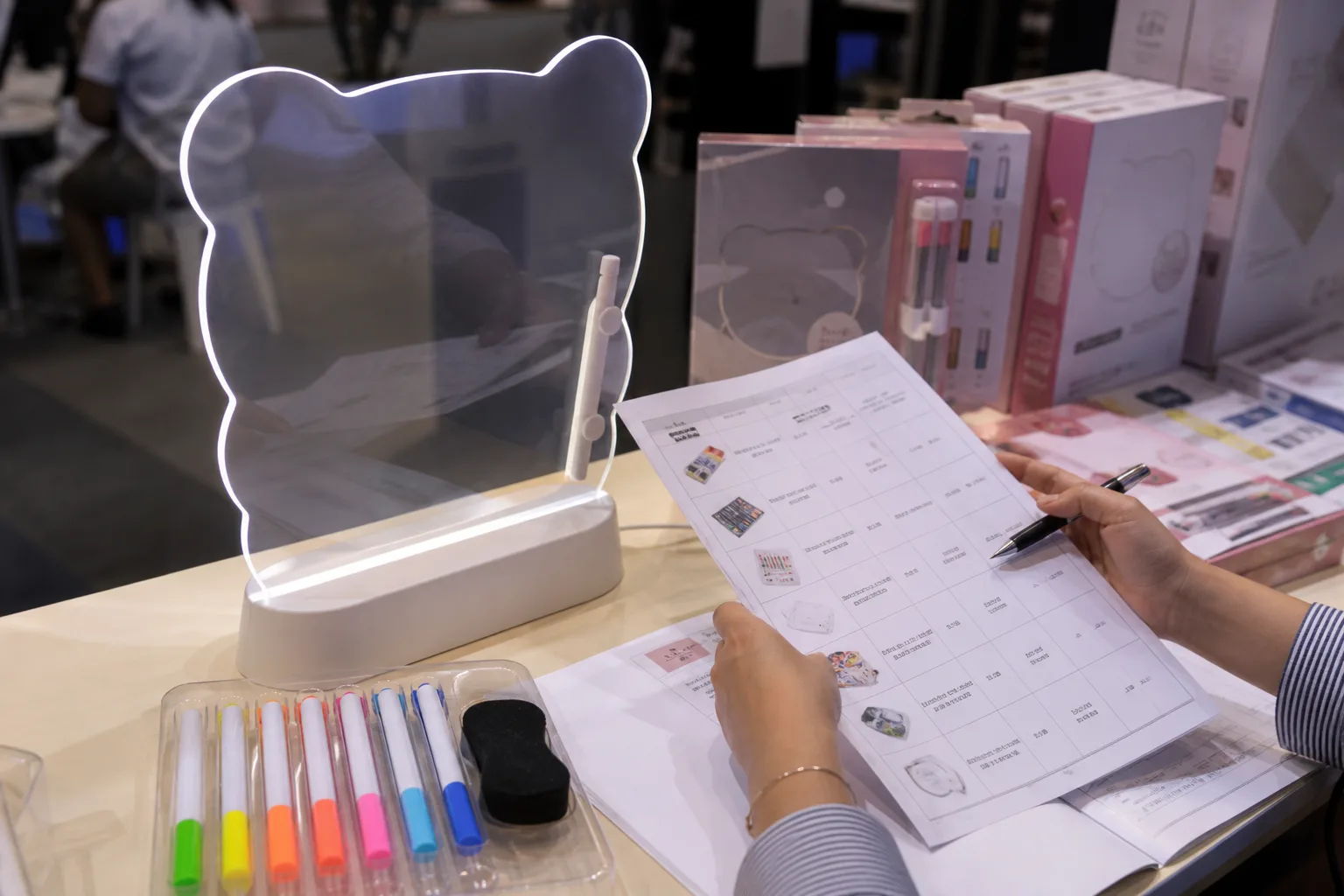
LED Acrylic Drawing Board Component Traceability Guide
A practical B2B guide for quality teams, importers and private-label managers who need to maintain component traceability references for the selected panel, base, marker set, packaging and order version.
Read article
LED Drawing Board Age Grading and Warning Packaging: A Buyer Guide
A B2B FAQ and product-information research guide for toy buyers, brand managers, and import compliance teams: organize age-related presentation and warning questions around the exact product, market, packaging, and evidence path rather than copying a label from another item.
Read article
India BIS Toys Quality Control Order: A Sourcing Guide for LED Drawing Boards
A B2B buying guide for Indian toy importers, distributors, brands, and foreign manufacturers supplying India who need to screen the product and factory against the current BIS Quality Control Order, standards, licensing scope, and shipment timing before approving an India launch.
Read article