Requirement brief
Describe the user, use environment, panel direction, light behavior, base, controls, power, markers, accessories and intended pack.
OEM & ODM LED DRAWING BOARDS
Define the user, product behavior, physical constraints, supplied set, packaging and approval evidence before custom development advances.
An OEM project usually starts from a buyer-defined specification, while an ODM discussion may adapt an existing platform or supplier proposal. Both need clear ownership, feasibility limits and approval records.
Describe the user, use environment, panel direction, light behavior, base, controls, power, markers, accessories and intended pack.
Identify which choices are standard, adapted or new and which questions require samples, engineering review or buyer-side specialist input.
Record changes across drawings, prototypes, artwork and packed samples so an approved point is not overwritten silently.
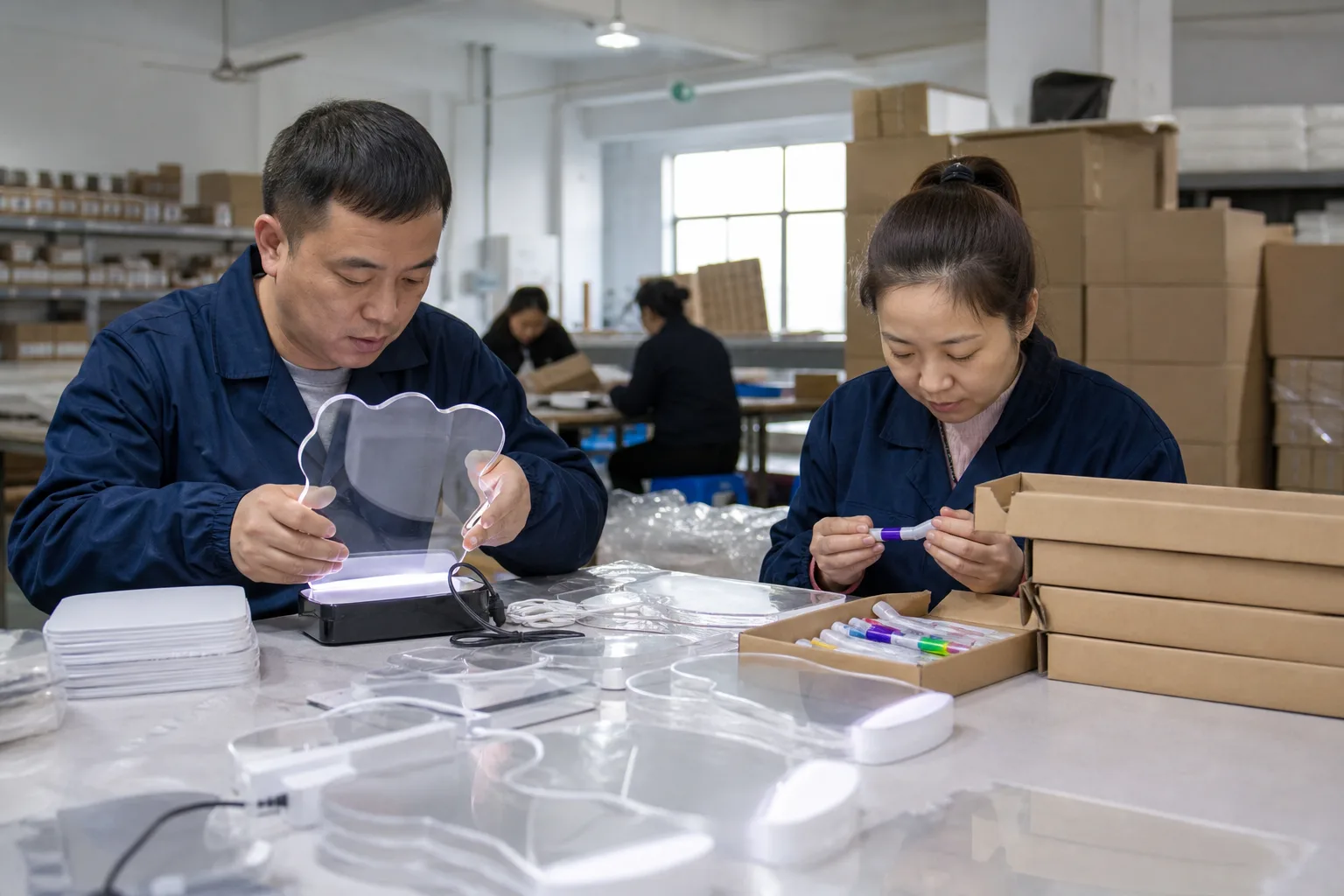
A prototype should not be accepted with one general comment. Review appearance, fit, operation, supplied contents and unresolved risks against the purpose of that build.
Regulatory, intellectual-property and market-claim decisions remain with the buyer and its qualified advisers.
Define user, market, intended product, commercial context and non-negotiable requirements.
Separate feasible standard options, adaptations, new development and buyer-owned decisions.
Build and review identified samples against written questions and acceptance evidence.
Release the approved configuration, files, pack references and production control points.
A focused brief avoids spending prototype cycles on questions that could have been resolved in writing.
OEM generally follows a buyer-defined product or specification; ODM generally begins with supplier-developed concepts or platforms that may be adapted. The actual scope and ownership should be documented for each project.
No. Feasibility depends on geometry, material behavior, lighting, base support, processing, pack protection, quantity context and other design constraints.
Only after the named configuration, prototype or sample, drawings or files, packed contents, artwork, open deviations and release responsibilities are aligned.
Share the user, market, product concept, functional expectations, dimensions, pack direction, quantity scenario and approval priorities.
Send your requirements