
Specify an identified grade and finished-panel requirements
Neither cast nor extruded acrylic is automatically the right choice for every LED drawing board. Identify the proposed PMMA grade and manufacturing route, then review the actual cut panel, drawing surface, artwork and base fit. Select from documented finished-product requirements rather than a generic premium-material label.
1. What decision does cast versus extruded actually describe?
Cast and extruded describe routes used to manufacture acrylic sheet. They do not identify the complete drawing board, its coating, LED system, marker formulation or approved age range. Begin by defining the panel role and the actual grade under discussion.
A purchaser may receive two quotations that both say clear acrylic while one supplier describes cast sheet and another describes extruded sheet. Before comparing price, ask whether the quotes cover the same silhouette, usable drawing area, nominal thickness, finish, artwork, removable-panel arrangement and base. If those features differ, the price comparison contains several variables. Record the manufacturing route as one field in the bill of materials, not as a substitute for the rest of the specification. A photograph of a transparent panel cannot reliably supply that missing identity.
The ACRYLITE process comparison describes cell casting and continuous manufacture for that maker's products and lists different trade-offs. Those details are context for questions, not specifications for LumDigi. Ask the offered supplier for its actual sheet designation and current documentation. If material identity is commercially confidential, agree what evidence can be shared with the buyer or its qualified reviewer before accepting a vague equivalent-grade description. Do not imply that a referenced brand is used without confirmation.
- Identify the sheet route separately from the assembled model.
- Compare otherwise equivalent product configurations.
2. Which material facts belong in the purchasing file?
Request the polymer identification, sheet supplier or controlled designation, manufacturing route, finish, nominal thickness and agreed tolerance information. Record coatings and recycled-content statements separately so a process label does not silently become a claim about composition or certification.
Separate process identity, composition and finished-product claims
A useful material file links a sample panel to a supplier designation, drawing revision and purchase specification. Include how the sheet is identified when received and how substitutions are controlled. The buyer does not need to publish proprietary formulation data in its catalogue, but the responsible technical team needs enough information to assess the proposed use. Ask whether the drawing face is bare acrylic, coated, printed or treated. Two panels made by the same route can still offer different surface behavior because the supplied finish is different.
Keep recycled content on a separate line from casting or extrusion. A process name does not establish a recycled percentage, chain of custody or environmental benefit. Similarly, an available sheet data sheet does not certify the finished toy or electrical assembly. Use the recycled-PMMA RFQ guide when composition claims matter, and keep its evidence request distinct from the current process comparison. Give each claim an owner and an evidence status so marketing cannot convert an unconfirmed material option into an advertised product fact.
- Identify grade, route, surface and revision.
- Do not infer composition or certification.
3. How should sheet thickness translate into base fit?
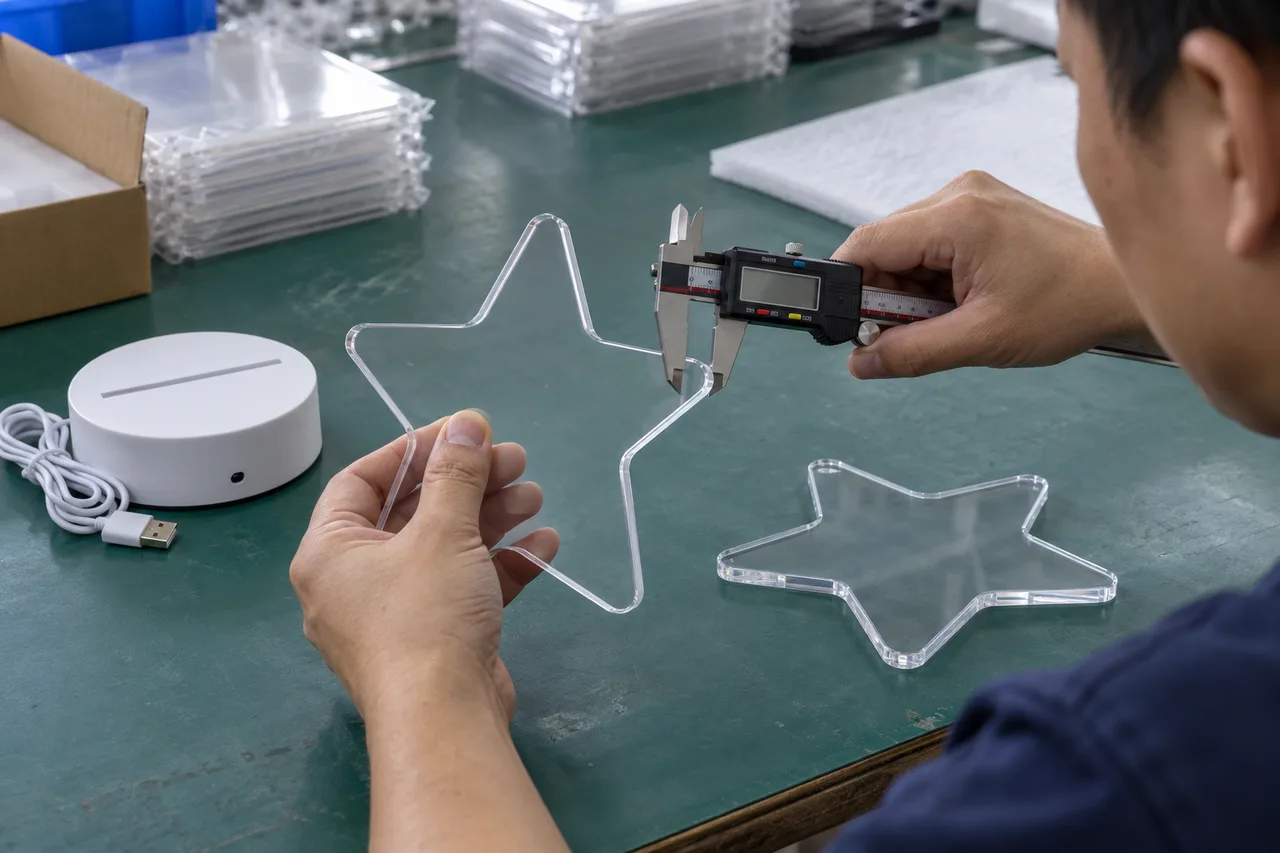
Review actual panel thickness at relevant locations and the assembled fit in the specified base. A sheet tolerance statement and a satisfactory finished fit answer different questions. Agree a measurement approach and functional acceptance criteria with the supplier before approving production.
A shaped panel can have a broad drawing area and a narrow insertion portion. Ask where thickness matters to the slot, how the insertion geometry is defined and which finishing operations affect the mating surfaces. Evaluate removal and insertion only as permitted by the product instructions. Record whether the sample seats as intended without an improvised forceful assembly. A tighter-looking fit is not inherently better: the design must also consider intended handling and applicable safety requirements. The buyer should not invent an interference-fit number from a single sample.
Use multiple identified panels where the agreed sample plan calls for them, and retain the supplier's measurement record rather than relying on one caliper photograph. An instrument display alone does not show calibration, method or representativeness. For a concrete product discussion, start with the Cloud LED Fluorescent Board and ask which panel and base revision are offered. Establish the required function for that model, then let the technical reviewer translate it into suitable dimensional controls. Do not transfer the cloud sample's geometry to every silhouette.
- Define relevant dimensions and measurement locations.
- Approve the actual panel and base together.
4. Compare optical appearance after the intended fabrication
The purchasing sample should show the finished silhouette, edges and artwork under its intended lighting, not only an untouched rectangle of sheet. Compare the effects relevant to the product and keep visual preference separate from measured optical or durability claims.
Request a representative panel produced by the proposed cutting and finishing route. View it with the supplied illumination off and on, using the same background, room lighting, marker pattern and viewing position for the candidates. Include broad curves and narrow silhouette features if they are present in the proposed design. Record visible workmanship in neutral terms, such as the location of a scratch or a difference in edge appearance. Avoid describing every visible variation as a process defect until the approved criteria and technical assessment support that conclusion.
If engraved artwork is involved, approve a physical proof rather than assuming a material category guarantees a particular white or glowing line. If printing is proposed, identify its surface and care requirements. The engraved-versus-printed artwork guide addresses that separate choice. Here the buyer is checking whether a specific sheet and fabrication combination supports the intended product. An attractive trial does not demonstrate long-term yellowing resistance, universal marker compatibility or the performance of a different supplier's material.
- Use the intended shape and production process.
- Compare lit and unlit conditions consistently.
5. Include drawing, wiping and edge condition in the sample review
A material-route decision should include the proposed writing surface, marker set, approved care method and finished perimeter. These product interactions can matter more to the user than the name of the sheet-production process. Review them together without creating unsupported resistance claims.
Draw a repeatable pattern using the proposed retail markers, retain their identity and follow the finished board's approved wiping instructions. Observe the drawing face before and after the agreed activity. Keep contact conditions and timing in the record; one promptly erased line does not establish indefinite stain resistance. Where a coating is present, ask whether cleaning or fabrication restrictions differ from those for the underlying sheet. Do not introduce an aggressive cleaner simply to force a distinction between cast and extruded candidates without an appropriate technical plan.
The ACRYLITE finishing guidance provides manufacturer-specific context for processed surfaces. Use it to frame questions about the actual perimeter, not to issue a blanket approval of a completed board. Photograph the insertion area, decorative points and accessible edge transitions in useful close-up views. Ask the supplier which workmanship observations are controlled by its process and which require a design review. A buyer can identify a concern without prescribing an unverified machining fix or claiming a material failure cause.
- Qualify marker, panel and care as a combination.
- Review the accessible finished perimeter.
6. Compare costs with a controlled decision matrix
Compare quotations for the same finished outcome, including fabrication, approved material, sample requirements and change controls. A lower sheet price does not necessarily establish the lowest delivered cost for the finished board, and a higher price does not prove better suitability.
Ask each supplier to quote the agreed panel and base configuration, artwork route, included supplies, packing and quantity scenario. Identify any charge related to additional samples or a requested alternative material, without assuming a universal surcharge. The buyer can then distinguish a different grade from a different scope of work. Keep transport and tax assumptions visible in the broader commercial comparison, but do not attribute every landed-cost difference to acrylic manufacture. A useful quote can explicitly state that a proposed process needs further sample approval.
An illustrative comparison might show one candidate meeting the chosen fit requirement while another remains unconfirmed, even if both look acceptable in the first photograph. The practical response is to resolve the missing evidence, not automatically select the more expensive material. Include purchasing, product development and quality in the signoff because they own different risks. Record why a route was selected for this application and which conditions could reopen the decision. This prevents a material preference from becoming an unexplained company rule for unrelated future products.
- Normalize the finished scope before comparing price.
- Treat missing evidence as an open decision.
| Decision field | Evidence to compare | Avoid assuming |
|---|---|---|
| Panel/base fit | Identified assembled samples and dimensions | Every nominally equal sheet fits equally |
| Artwork appearance | Finished physical proof | Route alone guarantees the effect |
| Material substitution | Named grade and notice requirement | Clear acrylic means unrestricted equivalence |
7. Control the chosen route through production and reorder
Attach the approved material designation and process to the released specification. Require the supplier to disclose relevant changes before manufacture. Factory testing and shipment inspection should compare the delivered configuration with that release, while specialist tests retain their own defined scope.
A replacement sheet source can arrive during a reorder even when the finished product code remains unchanged. Agree which changes need notice: supplier designation, sheet route, coating, nominal thickness, finishing method or artwork process. Ask for a description of the proposed difference and a risk-based review rather than a promise that the material is the same quality. The release record should identify who can authorize it and whether existing samples remain representative. Commercial urgency should not turn an unreviewed substitution into an approved specification.
For shipment inspection, include checks that can reasonably confirm the intended panel identity and observable assembly characteristics under the agreed plan. An inspector cannot authenticate an undisclosed polymer formulation by looking through a clear panel. If material verification is needed, specify suitable evidence and a qualified provider. Retain sample codes and supplier records so a later complaint can be investigated against the actual delivered version. Keep the decision history accessible to the next buyer rather than leaving it in an isolated messaging thread.
- Require advance notice of relevant substitutions.
- Match inspection scope to evidence it can establish.
8. Conclusion: buy a controlled finished panel, not a slogan
Choose a manufacturing route only after identifying the grade and confirming the finished requirements. A well-defined decision links sheet identity, fabrication, drawing use, base fit, evidence and change approval. That is more useful than declaring cast or extruded acrylic universally best.
Before issuing the order, ask a colleague to reconstruct the choice from the file. They should be able to identify the approved panel, the base it fits, the relevant drawing-surface requirements and any unresolved limitations. If the conclusion depends only on a supplier's word premium, request the missing facts. If a sample has been accepted for appearance only, do not label it a comprehensive engineering approval. State precisely what was reviewed and what still needs to be established for the destination market and intended user.
LumDigi's custom design page is a starting point for discussing a shaped-panel brief, not a promise that every sheet option is available. Share the proposed silhouette, artwork, intended use and market so the offered material and sample route can be confirmed. Keep supplier capability review on the Why Us page connected to model-specific questions. The practical outcome is a comparable quotation and an identified approval sample, with no unsupported claim that a material process alone guarantees the product.
- Document the actual selection rationale.
- Confirm offered options before promising them to customers.
Frequently asked questions
Is cast acrylic automatically better for every LED drawing board?
No. The useful choice depends on the identified grade, finish, fabrication, fit and intended task. A process comparison can highlight questions, but only a relevant finished sample and suitable supporting evidence establish whether the proposed construction meets the buyer's requirements.
Can a buyer identify cast or extruded sheet from a finished-product photograph?
A photograph is not reliable material-route authentication. Request the controlled sheet designation and supplier records. If verification is important to the purchase, agree suitable evidence with a qualified technical reviewer rather than treating appearance, price or an engraving effect as conclusive identification.
Does an acrylic sheet data sheet certify the assembled toy?
No. Sheet information has its own scope. The drawing board also includes its shape, base, electrical arrangement, markers, accessories, instructions and intended user. Product-specific safety and destination obligations need their own appropriate review and evidence.
Should a material-route change trigger a new sample review?
Potentially. Require notification and assess what the change affects, including thickness distribution, fit, surface behavior, artwork and documentation. The responsible reviewer should decide which sample or technical checks are needed. Do not carry an old approval to a changed construction without considering its scope.
Image planning for this topic
These notes document the role and intended context of the two visuals used in this guide.
Compare material routes
- Placement
- hero
- Caption
- Illustrative AI-generated photograph: a buyer compares acrylic sample panels before choosing a fabrication route.
- ALT text
- Asian buyer comparing two clear acrylic panels and a shaped LED board
View AI image direction
Use case: photorealistic-natural. Asset type: editorial photograph for a LumDigi B2B LED acrylic drawing board buying guide. A Chinese female product engineer seated at a neutral sample-room desk compares two unbranded clear acrylic rectangles of similar dimensions beside one transparent cloud-shaped drawing panel in a simple LED base. A caliper and plain blank sample cards lie on the desk. Real reflections and subtle cut edges, no depicted conclusion that one material is superior. Landscape 3:2, real acrylic material texture and believable human anatomy, candid authentic commercial photography rather than a glossy AI render. Any employees are Chinese/Asian adults. No invented logos, watermarks, readable certificates, text overlays or numerical test results. This is an illustrative planning scene, not proof of an actual LumDigi test or customer project.
Review finished panel fit
- Placement
- after-second-section
- Caption
- Illustrative AI-generated photograph: a sample reviewer prepares a dimensional check of a shaped acrylic panel.
- ALT text
- Chinese technician using a caliper to review a clear star-shaped acrylic drawing panel
View AI image direction
Use case: photorealistic-natural. Asset type: editorial photograph for a LumDigi B2B LED acrylic drawing board buying guide. Close-up documentary photograph of Chinese adult technician hands measuring a transparent star-shaped acrylic drawing panel with a digital caliper whose screen is unreadable. An unpowered LED base and an identical blank sample panel are on a real factory sample bench. Natural overhead light, no fabricated test result. Landscape 3:2, real acrylic material texture and believable human anatomy, candid authentic commercial photography rather than a glossy AI render. Any employees are Chinese/Asian adults. No invented logos, watermarks, readable certificates, text overlays or numerical test results. This is an illustrative planning scene, not proof of an actual LumDigi test or customer project.
Turn the article into a practical sourcing brief
Use the checkpoints above to document the product, evidence, packaging, and approval decisions relevant to your market. A clear brief helps suppliers respond to the same commercial question and gives your team a traceable basis for the next step.
Useful external references
- ACRYLITE: comparing cast and extruded sheet
Material manufacturer's comparison of its sheet processes and grade-dependent trade-offs.
- ACRYLITE: finishing acrylic sheet
Primary fabrication guidance illustrating why the finished surface and process matter.

Virgin vs Recycled PMMA for LED Drawing Boards: What a Materials RFQ Should Verify
A material-selection guide for brands considering recycled acrylic without assuming equal performance or unsupported environmental benefits.
Read article
Laser-Engraved vs Surface-Printed Acrylic Artwork: A Custom LED Board Buying Guide
A customization guide for brands choosing a permanent graphic method without confusing a sample effect with a guaranteed finished-product result.
Read article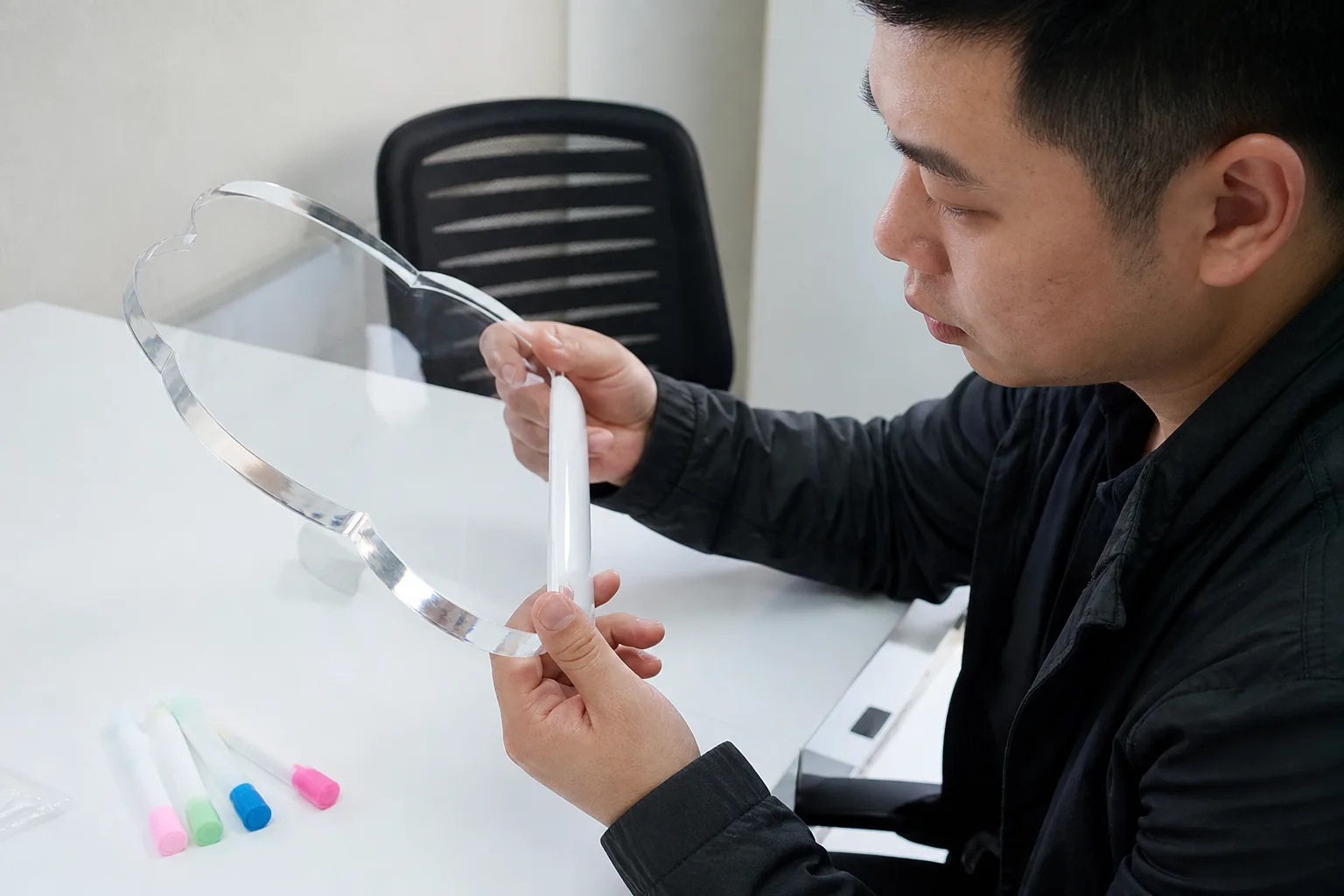
LED Drawing Board Acrylic Thickness and Edge Finish Guide for B2B Buyers
A practical B2B guide for private-label buyers, specialty retailers, import managers, and product developers who need to choose an acrylic and edge-finish direction only after reviewing the selected shape, light path, intended handling, sample, and packed configuration.
Read article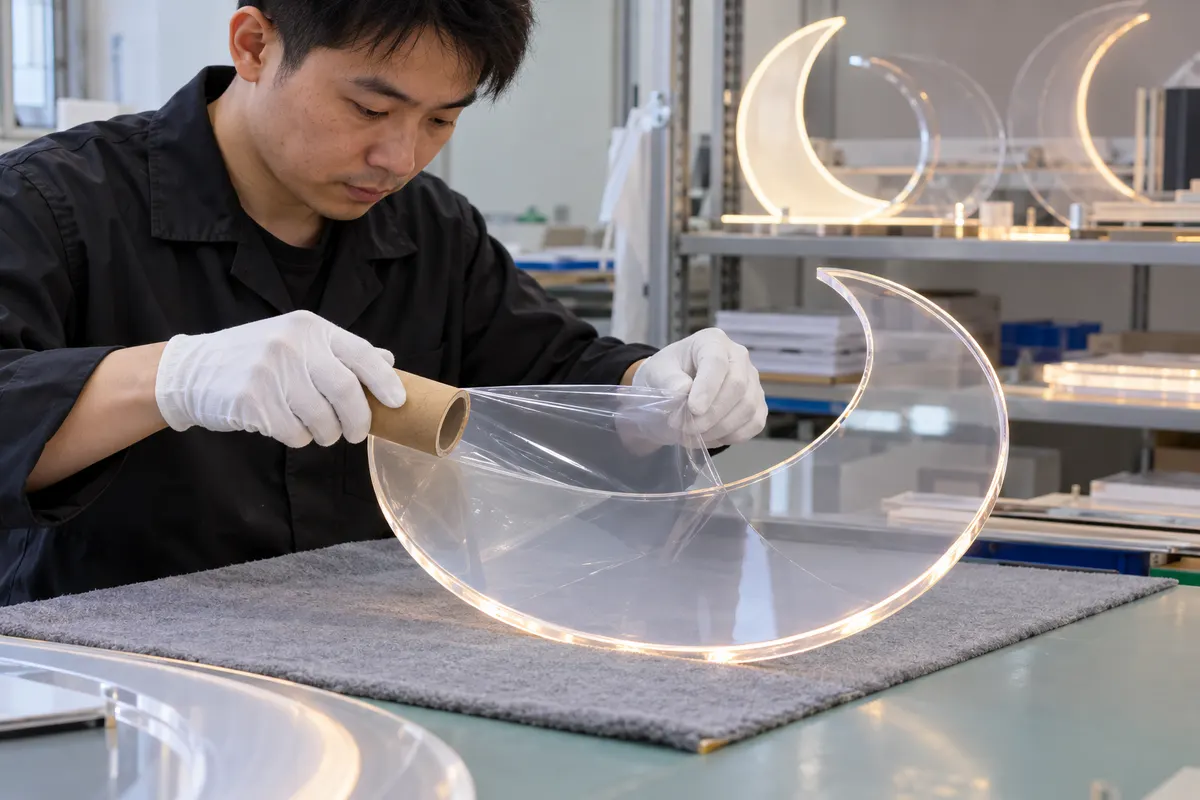
Protective Film on Acrylic LED Panels: Removal Timing and Residue Control
A practical specification and inspection guide for keeping acrylic panels protected without leaving difficult masking or hidden damage.
Read article