
Design the gift experience from shelf to storage
Gift-ready packaging combines an occasion-led story with honest product imagery, protected components, a clear unboxing sequence, controlled artwork, and timing built from verified milestones.
1. Define the recipient, occasion, and channel
A gift package needs a specific recipient and occasion so its imagery, message, shape, set, and opening experience make one coherent promise.
State whether the range serves birthdays, holidays, classroom rewards, party gifting, or a broad creative-gift program. Describe the intended retailer, shelf or online context, and the role of the shaped illuminated board. Select factual language around drawing, color, light, and display. Avoid developmental, safety, or performance claims that have not passed the buyer's appropriate review.
Write an occasion brief that specifies recipient context, gifting moment, retail channel, intended price presentation, shelf or parcel constraints, and whether the item must remain relevant after a seasonal sleeve is removed. A birthday gift sold online needs clear contents and protective delivery packaging, while a holiday promotion in stores may depend more on front-panel recognition and coordinated display. Decide whether the shaped board itself carries the occasion or whether the package creates a temporary seasonal story around a year-round product. This choice affects artwork inventory, photography, and the risk of dated stock. Avoid unsupported age, learning, or emotional-outcome claims; describe the tangible set and experience. The brief gives packaging designers a precise hierarchy instead of asking them simply to make the carton look festive.
- Name recipient, occasion, channel, and price-position role.
- Choose product shapes that support the gift story.
- Define the observable creative and display experience.
- Assign review ownership for every product statement.
2. Protect the acrylic product within the gift structure
The insert should retain the panel, base, markers, power component, care item, and printed pieces without harmful movement or contact.
Map every component and the order in which it is removed. Review panel edges, decorated surfaces, pressure points, cable or accessory contact, marker retention, and space for instructions. A window or reveal may improve presentation but must be evaluated with protection and retail handling. Confirm protective-film status and how customers are told to remove it when applicable.
Map every contact point inside the pack using the actual acrylic outline. Shaped ears, clouds, points, or narrow stems can approach carton walls differently even when the bases share dimensions. Place the panel so its faces and edges are separated from the base, marker clips, cable or power item, and printed pieces; define where the cleaning accessory sits so it cannot migrate across a decorated surface. Make a layer diagram and then handle a packed sample through ordinary orientation changes, recording movement before adjusting the insert. If the outer carton must fit a channel requirement, evaluate structural alternatives with the full set rather than compressing an assumed layout. Transit validation, where required, should follow the buyer's defined process and cannot be replaced by a visual packed-sample review.
| Pack zone | Structural question |
|---|---|
| Panel | Are face, edges, and decoration protected? |
| Base | Is it retained away from acrylic contact? |
| Markers | Can they remain counted and organized? |
| Printed pieces | Are they visible and protected from folding? |

3. Make the unboxing sequence clear and complete
The first opened view should identify the product, keep components organized, and lead naturally to setup without hiding essential items or instructions.
Review the pack through the recipient's sequence: seal, opening, first reveal, product removal, component discovery, setup information, drawing, and repacking or storage. Photograph each layer. Ensure accessories shown on the front are included or clearly identified. Gift presentation should not create false expectations through props, oversized light effects, or product views from another variant.
Storyboard the opening sequence from sealed carton to first drawing. The customer should encounter the shaped panel without loose markers falling behind it, understand which base and power-related item belong together, find the instructions before attempting setup, and see a contents arrangement that matches the package imagery. Photograph each layer of the packed sample and ask a reviewer unfamiliar with the project to identify, assemble, and repack the set using only the supplied information. Note every hesitation as an information or arrangement question rather than assuming the customer will infer the intended step. A premium unboxing impression comes from order, accurate presentation, and complete contents; decorative tissue or printing cannot compensate for accessories hidden under an unlabelled insert or a panel that must be pulled against a hard edge.
- Test the first reveal with the actual approved components.
- Keep setup information visible at the appropriate moment.
- Match front-panel imagery to the exact packed variant.
- Consider how the set is stored after opening.
4. Build a seasonal artwork system without version confusion
Use one controlled design system with variant, language, event, and revision identifiers across carton, insert, label, shipper, and digital files.
Create the evergreen product-information layer first, then add occasion-specific colors, messages, motifs, or sleeves where the business case supports them. This separation can make future updates clearer, but every structure still needs confirmation. Record product imagery, barcode space, languages, claims, recycling or disposal information assigned by the buyer, and approval owners in the artwork register.
Separate the evergreen product layer from the seasonal layer in the file architecture. Keep core product name, contents, imagery, instructions, identifiers, and buyer-reviewed information linked to the stable SKU, then assign campaign names, colors, messages, and sleeves to their own dated artwork codes. The master register should show which seasonal face pairs with which product and language version, preventing an old holiday front from being combined with a revised contents panel. When adapting files across markets, do not duplicate an entire folder and rename it casually; issue a revision with explicit language ownership and proof status. A retirement date and remaining-material decision for each seasonal component also helps purchasing understand what can be reused and what should not appear in the next campaign.
| Artwork layer | Control |
|---|---|
| Evergreen product | Current product, contents, setup, identifiers |
| Seasonal layer | Occasion, motif, message, event revision |
| Variant layer | Shape, color, set, and product code |
| Channel asset | Approved crop, copy, and release date |
5. Plan backward from the verified retail need date
Seasonal planning should show dependencies for selection, artwork, samples, reviews, production, inspection, shipping, and retailer intake without treating estimates as guarantees.
Ask suppliers and logistics partners for current conditional inputs, then add buyer review time and decision gates. Identify the last responsible dates for shape selection, copy, language review, packed sample, photography, and production file release. Maintain alternatives for late artwork or event-specific components. A timeline is useful only when assumptions and owners are visible and updated as evidence changes.
Work backward from the retailer's verified handover requirement through internal listing preparation, shipment planning, buyer release, packed-sample review, print proof, artwork preparation, product sample, and supplier clarification. Put decision owners and dependencies beside every milestone rather than inserting generic durations. Photography, for example, cannot accurately show final packaging before the approved physical pack exists; a custom insert cannot be reviewed before the exact set is frozen. Add contingency decisions for artwork corrections or a failed packed-sample check, including the latest point at which the buyer would switch to an evergreen package rather than release an unreviewed seasonal version. The schedule remains a planning document until suppliers and logistics parties provide current commitments, but it exposes which buyer approvals could otherwise consume the available window.
- Separate supplier estimates from buyer approval durations.
- Add gates for packed sample, artwork, inspection, and shipment release.
- Record dependencies and owners for event-specific materials.
- Maintain a decision path if the seasonal window changes.
6. Release the gift set through packed-sample evidence
Final approval should reconcile product, contents, gift structure, artwork, dimensions, carton data, and inspection criteria in one production-intended sample.
Compare the packed sample with the product specification, artwork proofs, insert drawing, set list, and retailer requirements. Record actual retail dimensions, weight, carton pack, opening sequence, component retention, and visible finish. If transport validation is required, use the agreed method rather than inferring performance from appearance. Convert accepted details into the inspection and purchase release index.
Review the final gift set as a sellable and shippable unit. Compare the enclosed shape, base, marker assortment, cleaning item, power-related component, instructions, and inserts with the contents panel; compare print with the numbered proof; and examine the item from each side customers or retail staff will see. Open several packed samples to check that the intended sequence is consistent and that component positions do not conceal damage or wrong variants. Photograph the closed carton, every unpacking layer, flat-laid contents, assembled lit product, labels, and master-carton arrangement under the sample code. Conditional approval should name the correction and evidence needed to close it. This record becomes the common reference for production packing, launch imagery, receiving checks, and any later seasonal reprint.
Add a seasonal sell-through handover to the approval record: product code, campaign artwork code, language, retail identifier, carton mark, launch images, and the date after which the seasonal layer should no longer be replenished. This is an inventory-control note, not a forecast. It helps retailers and the buyer distinguish evergreen product stock from campaign-specific packages and prevents an obsolete festive image from being used for a later shipment. If the same board returns in another campaign, start from the controlled product record while issuing new artwork and packed-sample references for the changed presentation.
Record who owns the withdrawal or replacement message for every affected retail channel.
- Use current product, print, insert, and accessories in the sample.
- Record dimensions, weight, pack count, and unboxing evidence.
- Close mismatches before authorizing production artwork or shipment.
- Reference the packed sample in final inspection requirements.
Frequently asked questions
What makes an LED drawing board gift-ready?
A clear occasion and recipient, an appealing approved product, organized complete contents, protective inner structure, coherent artwork, easy setup, and a pack tested in the intended channel context.
Should seasonal packaging use a new box every time?
Not necessarily. Buyers can assess an evergreen structure with controlled seasonal graphics, labels, or sleeves, but every selected combination still needs accurate artwork and physical review.
Why approve a packed sample?
It reveals the actual fit, contact points, unboxing sequence, printed-product match, dimensions, and presentation that separate renders and loose samples cannot prove.
How should seasonal dates be planned?
Work backward from the channel need date using current conditional production and logistics inputs, buyer approval time, sample gates, inspection, and fallback decisions. Update assumptions rather than treating estimates as guarantees.
Image planning for this topic
These notes document the role and intended context of the two visuals used in this guide.
Show the illuminated product in a credible gift context.
- Placement
- hero
- Caption
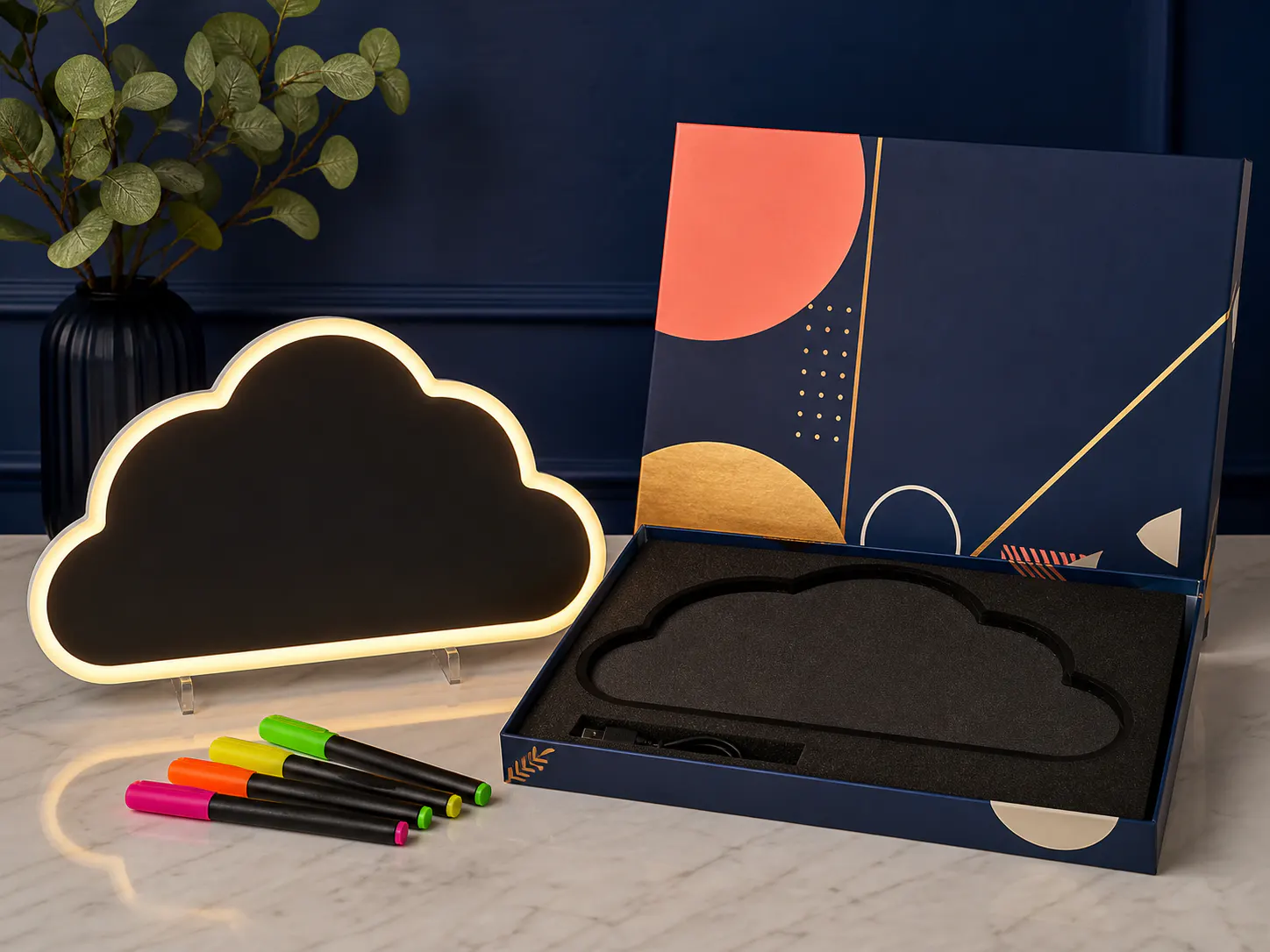
- Gift-ready presentation connects a shaped board, complete set, and occasion-led package.
- ALT text
- Gift-ready LED fluorescent drawing board with retail packaging
View AI image direction
Premium lifestyle product photograph of a shaped acrylic LED fluorescent drawing board glowing beside tasteful gift-ready packaging, markers and insert arranged accurately, subtle LumDigi brand on the box, warm seasonal table setting without holiday-specific trademarks, no competitor logos, realistic acrylic reflections and paper texture, no people, sophisticated international gift-retail editorial composition.
Illustrate production-intended pack review and component control.
- Placement
- after-key-considerations
- Caption
- A packed-sample workflow aligns gift presentation with the actual set.
- ALT text
- Chinese workers packing gift-ready LED drawing board sets
View AI image direction
Photorealistic Chinese factory packing line with twelve Chinese workers placing shaped acrylic LED boards, bases, markers, and printed inserts into gift-ready cartons, supervisors checking a packed sample and numbered artwork, understated LumDigi uniform badges and carton marks, clean but authentic production environment, natural industrial lighting, no competitor brands, candid high-quality documentary photography.
Turn the article into a practical sourcing brief
Use the checkpoints above to document the product, evidence, packaging, and approval decisions relevant to your market. A clear brief helps suppliers respond to the same commercial question and gives your team a traceable basis for the next step.
Useful external references
- GS1 Product Image Standard
Primary guidance for consistent product-image identification and digital assets.
- CPSC business and manufacturing resources
Official U.S. business resource; destination-specific obligations need suitable qualified review.
Private-Label LED Fluorescent Boards: Packaging, Samples and MOQ Planning
A private-label project becomes manageable when product scope, brand touchpoints, packed samples, quantity assumptions, and approvals are defined before release.
Read article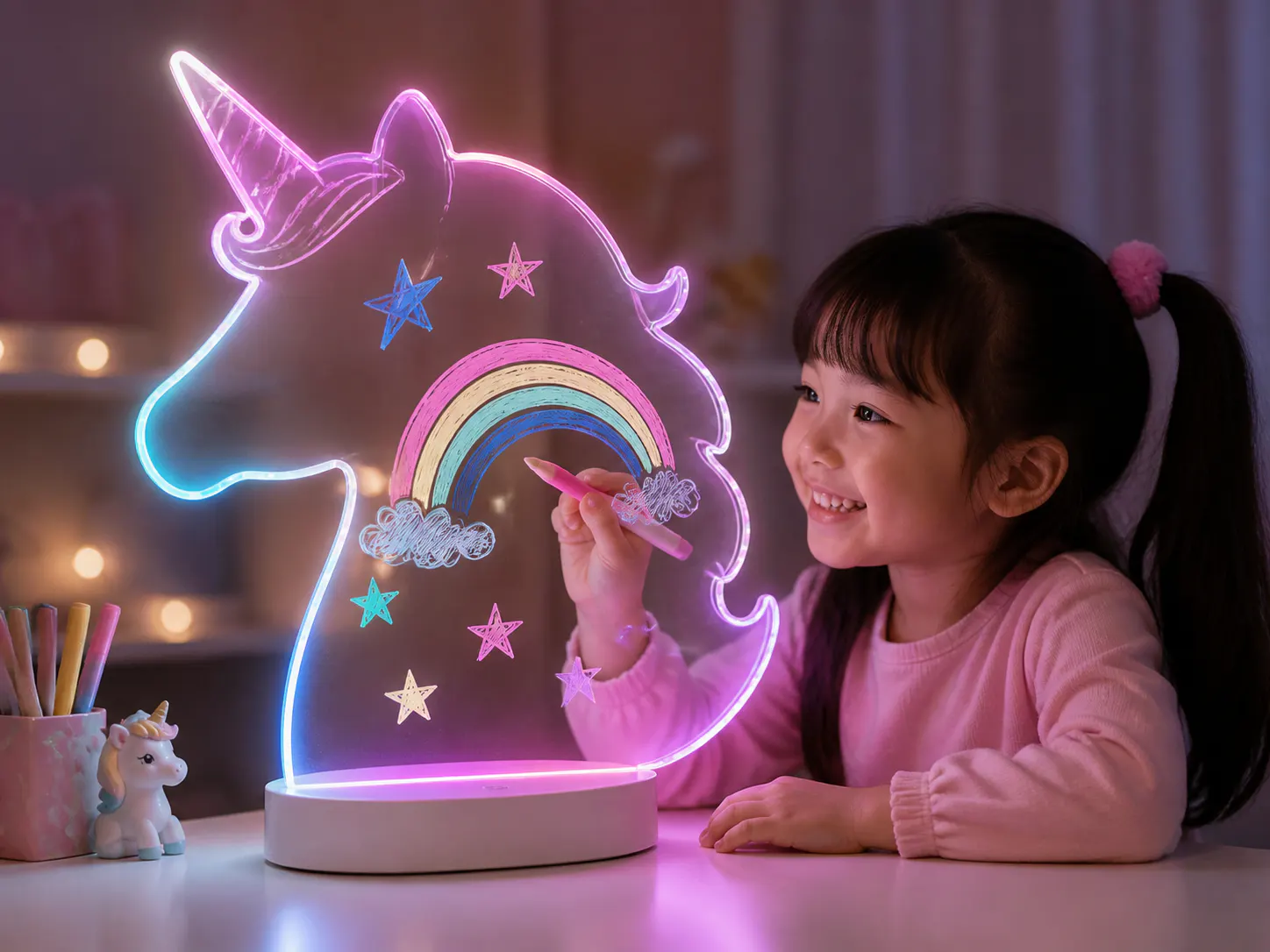
How to Build a Shaped LED Drawing Board Collection for Retail
Build a coherent collection by assigning each shape a customer and shelf role while sharing the product, packaging, and asset systems that make the range manageable.
Read article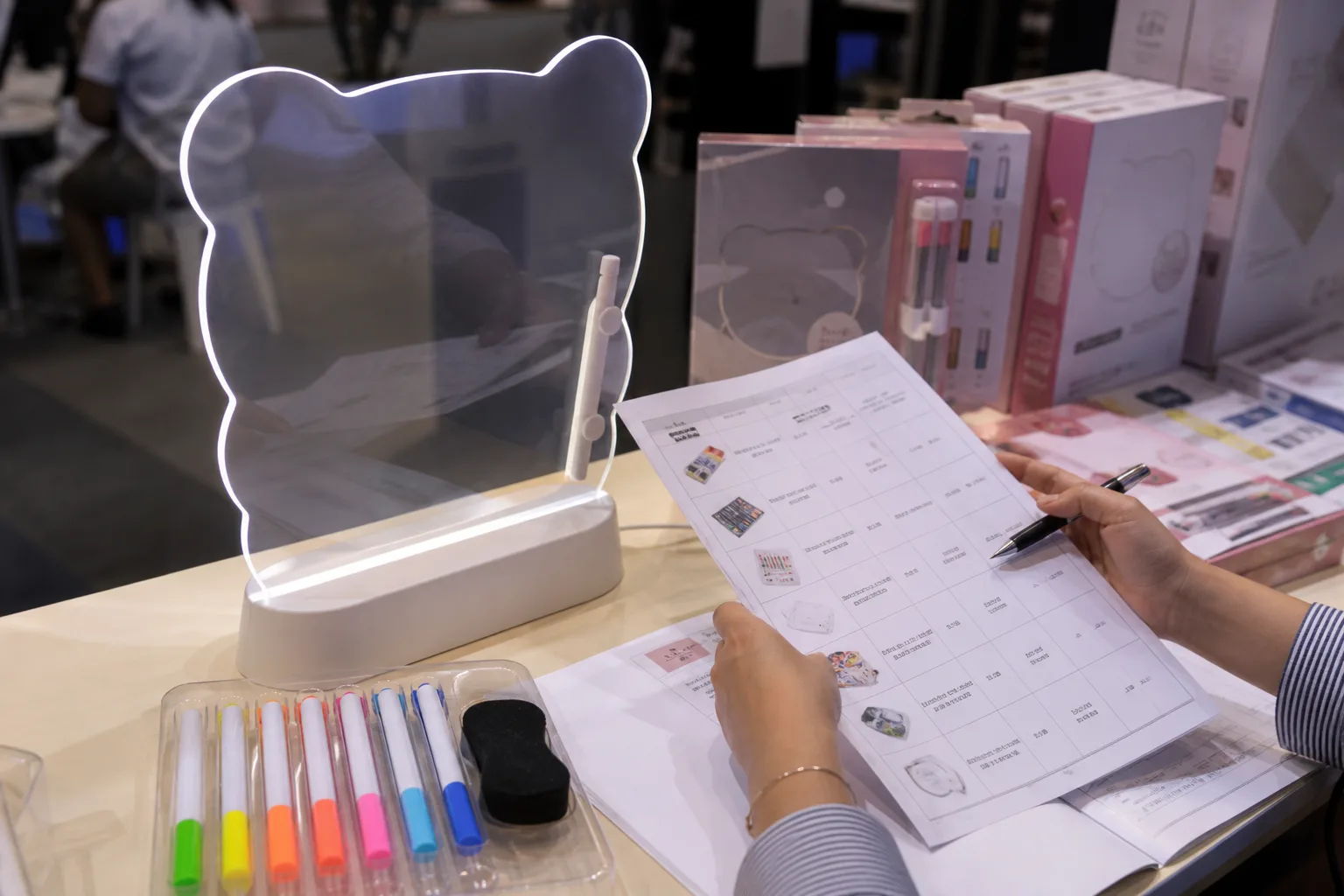
LED Acrylic Drawing Board Component Traceability Guide
A practical B2B guide for quality teams, importers and private-label managers who need to maintain component traceability references for the selected panel, base, marker set, packaging and order version.
Read article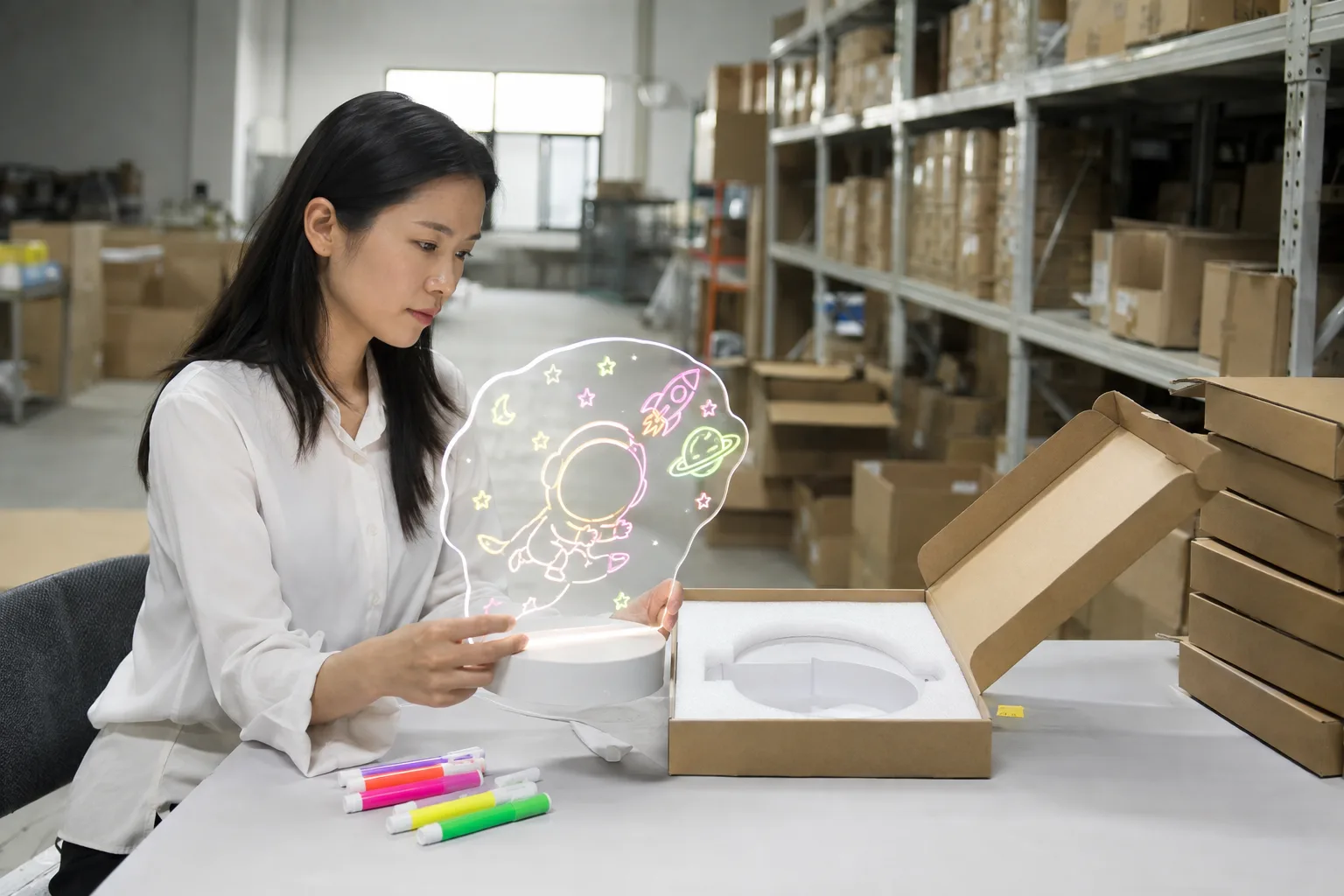
LED Drawing Board Carton Drop Test Planning Guide
A B2B buying guide for importers, packaging managers, and ecommerce brands who need to define an evidence-based carton test plan for the actual packed board, accessories, cartons, and shipment context.
Read article