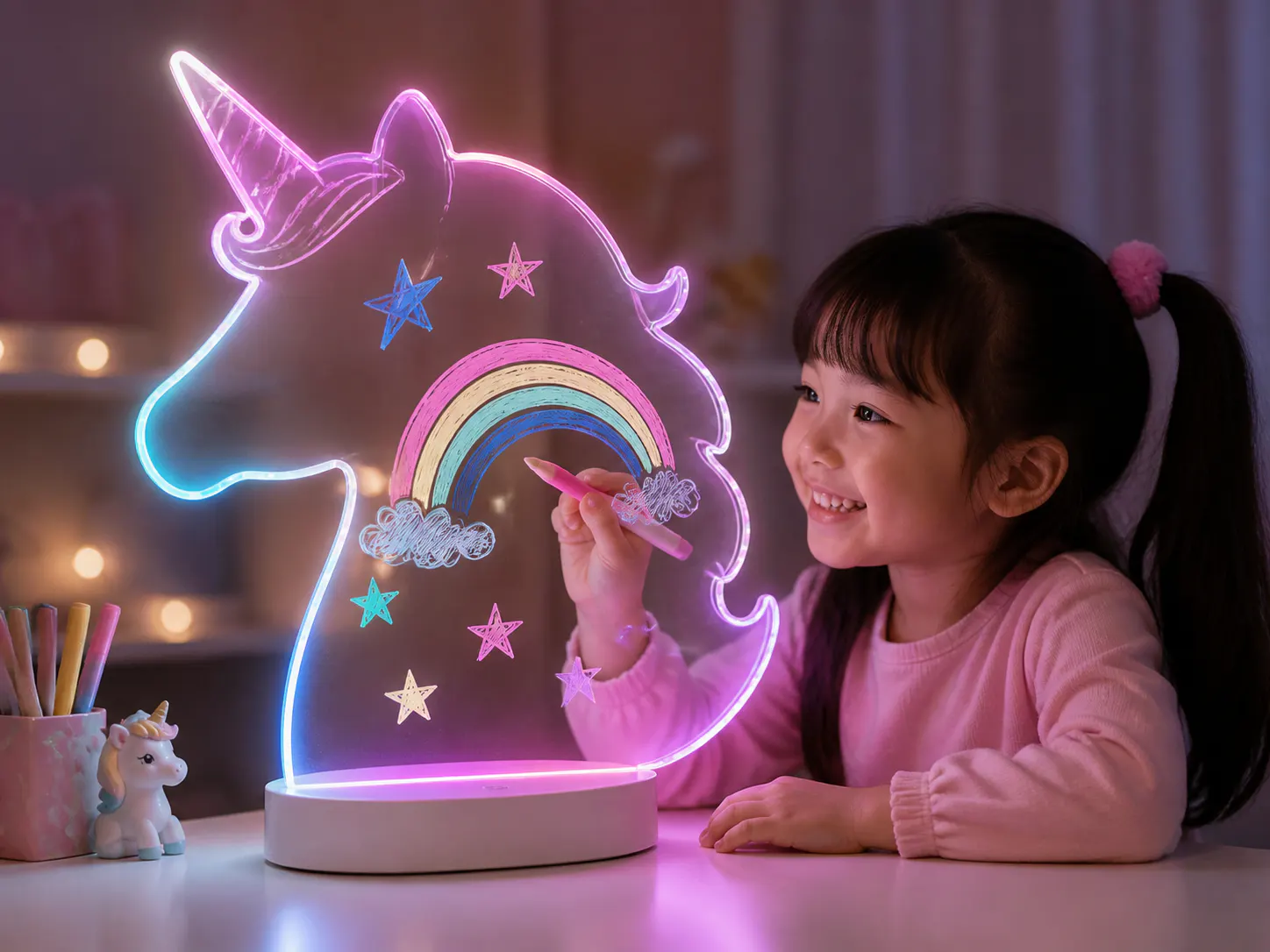
Make every shape earn a place in the range
A strong collection balances visual choice with clear range roles, shared product controls, coherent packaging, practical retail display, and disciplined variant data.
1. Write the range thesis before choosing shapes
The range thesis names the customer, occasion, channel, visual world, and reason shaped illuminated boards belong together.
Begin with the collection's job: giftable creative activity, colorful desk display, themed toy assortment, or another clearly reviewed proposition. Define the intended customer and retailer, then state what connects the variants beyond illumination. A collection may use animals, transport, space, or simple icons, but the theme should guide shape selection, packaging color, naming, and photography. Avoid unsupported child-development promises; describe the observable drawing and display experience.
Write the thesis in retailer language: who will notice the range, where it will be seen, why illuminated drawing is relevant, and how many buying choices the shelf or listing can support. A compact gifting range may need recognizable silhouettes and coordinated packs, while an activity assortment may emphasize drawing area and practical storage. Specify what remains constant across the family and what the shapes are expected to communicate. Then use the thesis to reject attractive concepts that do not improve assortment clarity. Without this statement, shape selection can become a catalogue exercise in which every outline looks desirable but no one can explain why the retailer needs all of them, how they should be merchandised together, or which variant should be replenished first.
- Name customer, occasion, channel, and core creative experience.
- Choose a coherent motif broad enough for several distinct shapes.
- Define how illumination and drawing are demonstrated across the range.
- Set boundaries for claims, language, and visual tone.
2. Give each shape a distinct assortment role
Use a range matrix to identify the hero, core, complementary, and seasonal roles, preventing visually similar variants from competing without adding useful choice.
Map each candidate by silhouette recognition, drawing area, display orientation, packaging footprint, color direction, recipient or theme, and visual difference at thumbnail size. Select a lead shape that communicates the range quickly, then add supporting designs for breadth. More variants create artwork, sample, photography, inspection, and inventory complexity, so every addition should answer a clear retailer or customer question rather than simply being available.
Give each proposed silhouette a role card containing target occasion or user context, price-position intention, visual cue, package color, hero image, adjacent variants, and a reason it earns a separate SKU. Check thumbnails at the actual digital-listing size and mock packs side by side at an approximate shelf scale. Shapes that are distinct as acrylic cutouts can become confusing once photographed against bright line art, so test recognition in both lit and unlit views. Avoid forcing demographic claims onto shapes; describe the merchandising job instead. If two variants tell the same story, keep the stronger one or distinguish them through a documented set difference. The resulting range reads as a planned collection rather than a row of similar boards with arbitrary names.
Use a range review board that combines silhouette, packaging front, product code, and one-sentence role for every candidate. Invite sales, purchasing, design, and quality reviewers to flag overlaps from their own perspective: sales may see duplicate customer stories, purchasing may see needless component fragmentation, and quality may identify outlines that require separate packing or edge references. Record a keep, combine, defer, or test decision for each candidate. Deferred shapes remain in an idea library outside the active quotation, which prevents concept images from reappearing later as if they were approved launch variants.
| Range role | Selection question | Evidence |
|---|---|---|
| Hero | Which shape explains the collection immediately? | Shelf mockup and hero image |
| Core | Which designs provide durable, distinct choice? | Range matrix and buyer feedback |
| Complement | Does it reach a different motif or recipient? | Thumbnail and packaging comparison |
| Seasonal | Is the event-specific value worth separate assets? | Channel and timing plan |
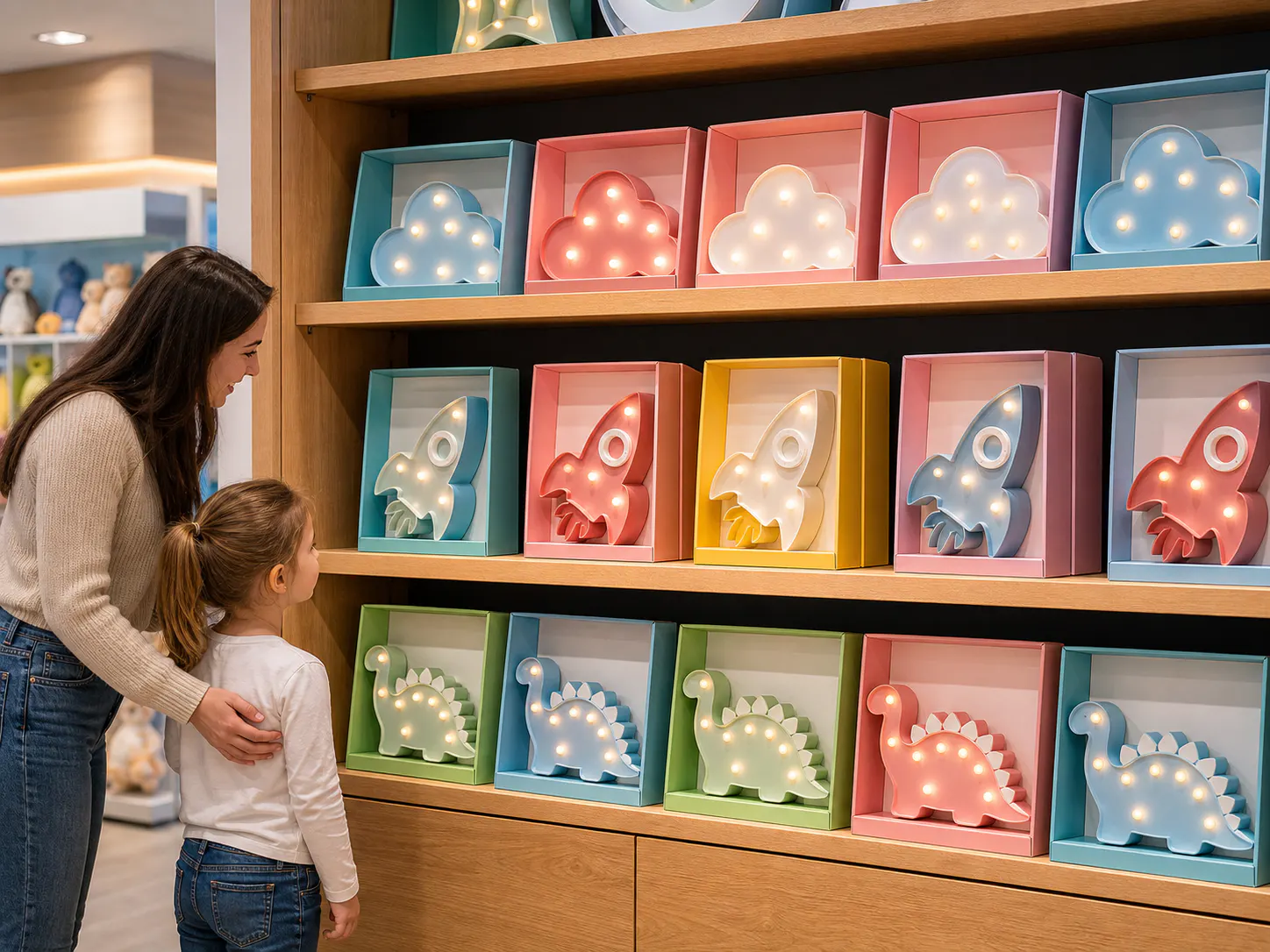
3. Share a controlled product platform where appropriate
Common bases, controls, marker sets, artwork systems, and pack components can simplify a range, provided every panel-to-base combination is verified rather than assumed.
Create a commonality matrix for base, input, light modes, panel interface, marker assortment, cleaning item, insert family, retail carton sizes, instructions, and shipping packs. Shared elements can reduce customer confusion and the number of documents to control, but a new silhouette can affect balance, fit, protection, drawing area, and pack dimensions. Test each production-intended combination and assign a unique variant code even when most components are common.
Create a platform matrix showing panel interface, base, control sequence, power-related component, marker set, cleaning item, instruction format, and inner-pack dimensions for every shape. Shared elements can simplify photography, spare information, incoming checks, and retailer education, but only when the physical fit has been verified for each outline. A tall or wide silhouette may change balance, insert contact points, carton size, or visible illumination even if it uses the same base. Record those exceptions explicitly rather than hiding them under a family name. Platform decisions should be based on the real product and packed samples, allowing the buyer to see where standardization improves range management and where a variant needs its own controlled part or check.
Give shared components a family code and variant-specific pieces their own child codes in the assortment file. The code structure should appear on sample labels, contents images, packaging schedules, and inspection references, making it possible to trace a common base without losing the identity of the paired panel. When a shared component changes, use the matrix to identify every affected SKU, image, insert, and pack review. This impact check prevents one small platform revision from reaching only the newest shape while older variants continue with conflicting instructions or visual references.
- Map shared and unique components for every approved variant.
- Verify fit, presentation, and packing for each new silhouette.
- Use variant codes on samples, artwork, orders, and inspections.
- Keep optional accessories outside the standard set unless confirmed.
4. Create a packaging family that differentiates variants
The packaging system should signal one collection while making shape, color, set contents, and variant identity clear at shelf and warehouse level.
Develop a consistent grid, logo position, product naming hierarchy, benefit language, icon style, and information panels, then give each shape a clear hero image and variant identifier. Test fronts at real shelf and ecommerce sizes. Review whether a shared carton or insert actually protects each silhouette; do not let graphic consistency override physical fit. Carton ends, labels, and case marks should help receiving teams distinguish variants without opening boxes.
Build one packaging grid with fixed locations for brand, product family, contents, instructions, identifiers, and variant name, then reserve a controlled area for shape-specific imagery and color. Review the family as a complete wall of fronts, sides, and top panels instead of approving cartons one at a time. This exposes inconsistent naming, swapped silhouettes, unreadable color coding, and accidental hierarchy changes. The inner structure also needs a variant map because different shaped tips and drawing areas may require different contact protection even when external cartons share a size. Assign every dieline and artwork to a product code, and photograph packed samples together so designers and inspectors can tell which structural insert belongs to which retail face.
| Packaging job | Shared rule | Variant rule |
|---|---|---|
| Brand recognition | Logo and layout hierarchy | Shape-specific hero image |
| Choice | Common naming system | Clear motif and color identifier |
| Protection | Approved material direction | Insert matched to geometry |
| Operations | Standard data locations | Unique product and carton code |
5. Build a launch and replenishment information set
Retailers need range-level storytelling plus accurate variant images, contents, dimensions, carton data, and identifiers that remain current after launch.
Create a hero range image, individual product views, lit-effect scenes, contents flat lays, pack fronts, dimensions, approved factual copy, and retailer-specific crops. Supply a range sheet that shows roles and differences without forcing buyers to reconstruct the story. For replenishment, preserve variant codes, carton marks, current pack counts, and change notices. Review early sales and customer-service information carefully, without inventing causal claims, to decide whether to retain, revise, or retire a shape.
Prepare a retailer matrix that joins each SKU to its approved product images, pack images, contents list, dimensions, carton data, identifiers, factual copy, and replenishment contact. Include one collection image that shows relative shape differences accurately, plus separate lit, unlit, and packaged views for each variant. Sales sheets should explain the role of each item without claiming outcomes that have not been documented. Before handover, perform a thumbnail and filename check from the retailer's perspective: can the team match an image, barcode, carton, and reorder code without opening the master design folder? This launch discipline continues after release by giving later artwork updates or assortment changes a clear distribution list rather than leaving marketplaces and distributors with mixed generations of the range.
Plan receiving and replenishment information at the same time as launch materials. Show master-carton marks, retail-unit identifiers, pack count, and variant color cues beside the consumer-facing image so a warehouse team can distinguish similar outer silhouettes. Establish which files change when a variant is discontinued or a package is revised, and name the person who will send the new asset pack to channel partners. A shaped collection often fails operationally through small identification errors rather than poor creative direction; connecting the merchandising story to physical codes gives the range a clean handover from buyer presentation to warehouse and reorder activity.
- Deliver both collection-level and variant-level imagery.
- Keep product, package, contents, and identifiers aligned.
- Provide warehouse-friendly carton and variant information.
- Use documented channel feedback to inform later range edits.
Frequently asked questions
How many shapes should a retail collection include?
There is no universal number. Choose only variants with distinct assortment roles that the channel can display, explain, stock, photograph, inspect, and replenish effectively.
Can different shapes share one base?
They may share a platform when interface, fit, stability, illumination, and presentation are verified for each panel. Assign separate variant codes and retain shape-specific pack and inspection requirements.
How should packaging connect the collection?
Use a common brand grid, naming hierarchy, colors, and information placement, while making the actual silhouette and variant identifier prominent. Validate inner protection separately for each geometry.
Which assets do retailers need?
Provide a range overview, individual product and lit-effect views, set contents, packaging, dimensions, factual copy, identifiers, carton information, and channel crops tied to current versions.
Image planning for this topic
These notes document the role and intended context of the two visuals used in this guide.
Show one distinctive shaped hero product within a collection strategy.
- Placement
- hero
- Caption
- A recognizable hero shape can introduce a broader illuminated drawing-board range.
- ALT text
- Unicorn-shaped LED fluorescent drawing board with glowing artwork
View AI image direction
Premium retail product photograph of a unicorn-shaped acrylic LED fluorescent drawing board glowing with colorful line art, matching base and marker set, clean cream-and-blue studio background, accurate transparent edges, subtle LumDigi brand card, no people or competitor branding, gift-retail editorial styling with space to suggest complementary range silhouettes.
Illustrate coherent multi-variant retail presentation.
- Placement
- after-key-considerations
- Caption
- A range-level display helps retailers understand variant roles and shared branding.
- ALT text
- Retail display of varied shaped LED fluorescent drawing boards
View AI image direction
Photorealistic international gift-and-toy retail display featuring different shaped acrylic LED fluorescent boards such as cloud, rocket, cat, flower, and race car, each design visibly distinct but using one restrained LumDigi packaging system, realistic shelf spacing and price-card placeholders without prices, no competitor logos, premium editorial lighting, no people, credible B2B assortment presentation.
Turn the article into a practical sourcing brief
Use the checkpoints above to document the product, evidence, packaging, and approval decisions relevant to your market. A clear brief helps suppliers respond to the same commercial question and gives your team a traceable basis for the next step.
Useful external references
- GS1 Product Image Standard
Primary guidance for consistent product-image identification and digital assets.
- CPSC business and manufacturing resources
Official U.S. business resource; destination-specific obligations need suitable qualified review.

Gift-Ready LED Drawing Boards: Packaging and Seasonal Planning
Create a gift proposition that protects the acrylic set, communicates the occasion, and remains controllable through artwork, packing, shipment, and seasonal change.
Read article
LED Fluorescent Board vs LCD Writing Tablet: A B2B Product Comparison
Choose the format that matches your retail story by comparing how illuminated acrylic boards and LCD writing tablets are used, displayed, packed, and specified.
Read article
Corporate Gift LED Drawing Board Customization: A B2B Planning Guide
A B2B guide for corporate-gift buyers, promotional distributors, agencies, and private-label teams who need to turn a corporate-gift idea into a configuration-specific brief that can be sampled, quoted, reviewed, and packed consistently.
Read article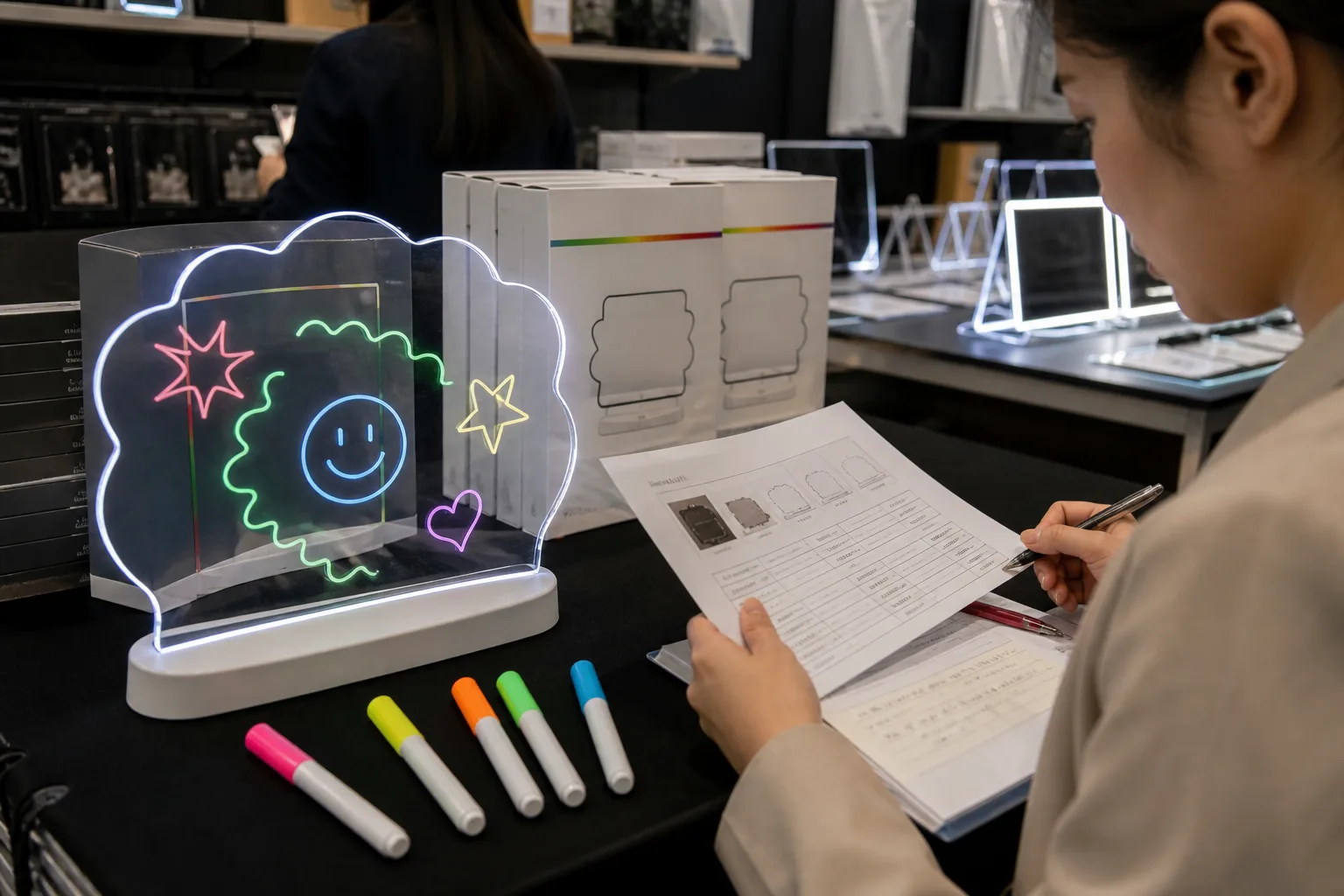
Custom LED Drawing Board Merchandising Plan Guide
A practical B2B guide for category buyers, gift retailers and private-label teams who need to prepare a merchandising plan from the approved custom board, packaging, product images and intended channel.
Read article