
Classify from function and intended use, not the LED alone
A light source does not decide the complete product category. IEC 62115 addresses electric toys within its scope, while IEC 60598-1 addresses luminaires within its scope. Give a qualified reviewer the intended use, age and marketing presentation, electrical design, accessories, and complete product so it can determine applicable standards and destination requirements.
1. Begin with the function the seller intends to offer
A product category depends on more than a transparent panel and LEDs. Document what the user does with the product, who it is intended for, and how the seller will present it.
A child-directed drawing activity, a decorative fixed-image light, and a commercial message display can share some components while having different functions. Write a use statement and attach the proposed product page, packaging, instructions, age presentation, and sample photos. This gives the reviewer the consumer-facing facts that a bare bill of materials cannot show. Avoid deciding the category from the supplier's catalog heading or a customs description alone.
For a shaped fluorescent board, identify whether the user draws, wipes, traces, displays, or performs another supported activity. For a decorative product, explain whether the light is its principal intended function and how it is installed or supported. The purpose of this brief is to allow a competent classification review, not to choose the easiest-looking standard or make a play product appear outside toy requirements.
An illustrative product meeting might compare a reusable drawing activity with a fixed decorative light. The commercial team should describe each intended offer separately and give both to the reviewer. This example is a planning method, not evidence that a particular product qualifies for either category. The same physical platform can raise different questions when its age claims, function, accessories, or installation instructions change.
- Describe actual use and intended users.
- Attach the complete marketing presentation.
- Have a qualified reviewer determine category and requirements.
2. Understand why electric-toy standards may be relevant
IEC 62115 concerns electric toys within its stated scope. A reviewer needs the play function, intended age, electrical features, and complete set before deciding whether it is relevant to the project.
The IEC 62115 catalog entry is a primary starting point for understanding the standard's scope. It is not evidence that a particular board has been assessed or that one international edition is the current legally referenced edition in every destination. Ask the laboratory to identify applicable adoption, amendments, and other toy requirements for the intended market.
An LED function can be a part of a play product rather than a reason to remove it from toy assessment. Share controls, power sources, accessible parts, battery arrangements if any, instructions, and how the panel is handled. A review of the complete set can reveal questions not visible in an acrylic-only sample. Keep the age and use assumptions explicit so a later marketing change triggers a fresh check.
Use an identified model such as the Unicorn LED Fluorescent Board when requesting a drawing-product review, and confirm its actual supplied configuration. Ask the supplier for current product facts rather than assigning a standard from its visual style. The qualified reviewer needs the complete intended presentation and electrical details to decide which requirements should be considered for the destination.
- Provide play and electrical-function facts.
- Check local adoption and edition.
- Review the complete set and intended presentation.
3. Understand the luminaire standard's distinct scope
IEC 60598-1 covers general safety requirements for luminaires within its scope. Its presence in a supplier file does not automatically establish that every illuminated acrylic product belongs to that category.
A light component is not a complete category determination
The IEC 60598-1:2024 description explains its general luminaire scope and safety topics. A lighting product may also need a relevant particular standard and local regulatory review. Do not assume that a general report, a power-supply report, or a component certificate answers all product-level questions. Ask a qualified provider to identify the actual product and the reason for its proposed standards route.
If a supplier markets the same physical platform as both a lamp and a children's drawing activity, provide both offers to the reviewer. The category analysis may consider design, intended use, foreseeable use, instructions, and marketing. A buyer should not treat a wording change as proof that a different safety framework applies. Preserve the analysis and its assumptions with the product file and approved consumer presentation.
A lamp assessment may include a particular standard or other applicable framework in addition to the general luminaire standard. Ask the qualified provider to explain the proposed route and its scope. Do not assume the presence of one IEC report establishes conformity for the complete marketed product, or that a component's safety record automatically covers the assembled base, acrylic panel, and supplied power arrangement.
- Ask why the product fits the proposed lighting scope.
- Check relevant particular and local requirements.
- Disclose all intended product offers to the reviewer.
4. Build a dossier that supports a useful decision
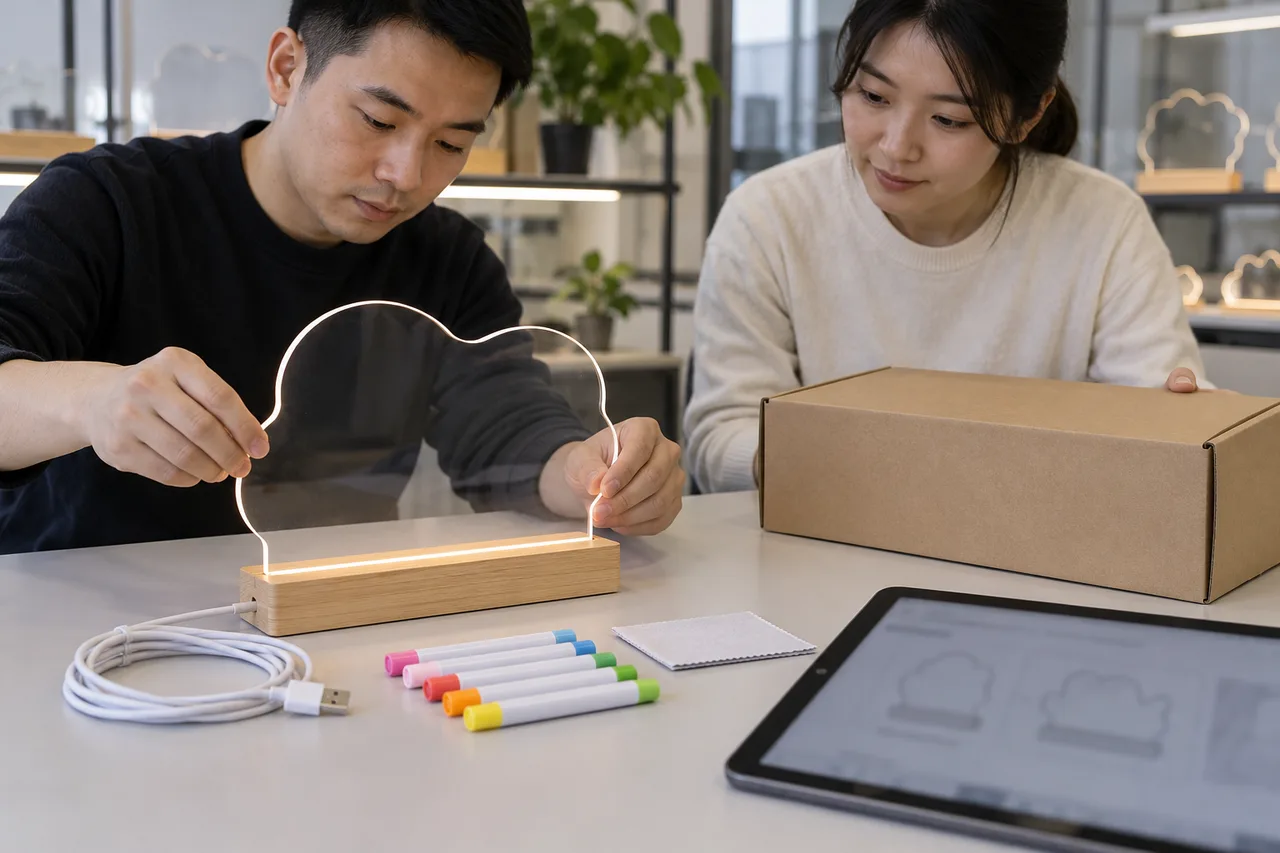
A scope dossier should show product identity, use, intended users, electrical configuration, components, installation, markings, instructions, and claims. The reviewer needs enough detail to assess the finished product.
Prepare clear lit and unlit photographs, dimensions, panel and base details, accessible interfaces, power ratings, supplied cable or adapter, battery facts where applicable, markers, and packaging. Mark prototype or optional items explicitly. Include the proposed age statement, activity images, and sales channel. Do not omit a feature because it makes the classification less convenient; a useful review depends on an accurate description.
Ask for a written conclusion identifying the product and version, reviewed facts, proposed standard route, current market references, open questions, and change triggers. A short answer detached from the submitted product facts can be misapplied later. The specification-sheet guide can organize the supplier facts, while the qualified reviewer supplies the category and standards reasoning.
The dossier should identify whether the buyer plans desktop use, a wall display, a child's activity, or another installation. Provide how the product is supported and which accessories are included. These facts can affect technical and regulatory review. Avoid adding a mounting or unattended-use scenario to marketing after the product has been assessed under a narrower intended-use statement without asking about its impact.
- Include complete physical and marketing facts.
- Identify prototype, optional, and supplied parts.
- Retain the scope conclusion with its assumptions.
5. Check whether reports assess the same product
A component report or lamp report cannot be assumed to cover the finished drawing-board set. Review model identity, configuration, standard, scope, and the actual samples assessed.
Ask whether the report concerns an LED module, external supply, base, complete luminaire, or complete toy. Compare the covered model and photographs with the quoted board and accessories. If the product has changed, ask the issuer or responsible conformity party whether the evidence remains applicable. A genuine document can still be irrelevant to a particular configuration, so authenticity and applicability are separate review questions.
Avoid broad copy such as fully certified when the file contains only selected component evidence. State product facts and supported claims accurately. If more work is required, have the laboratory propose a scope and sample plan. The buyer can then decide commercial timing from a realistic evidence path rather than assuming that one familiar standard number completes the project.
If a supplier sends several reports, create a coverage table rather than assuming the number of documents proves completeness. List the product or component, model, standard, issuer, sample, and limitation for each. Ask the responsible reviewer to identify gaps and unnecessary duplicates. This can save effort while keeping the product decision tied to actual evidence instead of a collection of familiar standard names.
- Identify whether evidence is component or product level.
- Match model and sample configuration.
- Request clarification for missing or mismatched coverage.
6. Keep drawing, message, and decorative product roles clear
Different applications can need different information, accessories, and reviews. Define a clear offer for each product role rather than bundling unsupported uses under one generic name.
A reusable drawing activity may include markers and child-directed instructions, while a message display may prioritize visibility and text updates in a retail setting. A decorative fixed image may use permanent graphics and different care. These are practical distinctions for RFQ and merchandising; the legal category still needs the responsible review. The drawing-board and message-board comparison can help the buyer define the commercial role.
Test the intended task with a sample and record the setup. Do not infer a product's suitability for unattended lighting, a public installation, or young children's use from a desktop demonstration. Ask the manufacturer what use is actually supported and have the relevant specialists assess installation and market obligations. Clear application limits can improve customer understanding and reduce pressure on the supplier to make an unsupported all-purpose claim.
A display-oriented model such as the RGB Message LED Fluorescent Board can provide a separate configuration reference, subject to confirmation of the offered facts. Compare its intended use with the drawing activity rather than inferring a legal category from the word message. The product owner should preserve a clear application statement for every offer it places on the market.
- Define a separate role for each offered model.
- Use task-specific sample observations.
- Confirm supported installation and user context.
7. Control changes that affect category or assessment
Changes in intended age, activity, marketing, electrical design, or supplied parts may affect the standards analysis. Require notice and qualified review before releasing a changed offer.
A purchase file should record both the physical configuration and the approved intended use. A brand may alter a listing without changing the factory order, yet introduce a new claim or younger audience that affects assessment. Conversely, a factory may change a base or power source while the package remains the same. Make both marketing and engineering changes visible to the product owner.
Factory testing and shipment inspection can confirm released identities and defined functional observations. They do not independently decide whether a product belongs to toy or luminaire scope. Keep a change log with the old and new facts, evidence affected, reviewer, and release decision. Use the market-specific standards guide when the project also needs comparison across toy-standard families and destinations.
Marketing changes need an owner in the same change process as hardware. A new child-directed photograph, age statement, or activity promise can affect the facts the original reviewer considered. Record the proposed change and obtain the appropriate review before publication. This does not mean every copy edit requires retesting; it means someone qualified should decide whether a material assumption has changed.
- Control intended-use and physical changes together.
- Route category questions to qualified reviewers.
- Keep production observations within their actual scope.
| Question | Evidence to provide |
|---|---|
| Intended function | Activity, lighting, or display use and instructions |
| User and presentation | Age, pack, listing, and images |
| Electrical design | Base, power, controls, and supplied accessories |
| Assessment | Current local scope reasoning and relevant reports |
8. Conclusion: choose standards after a product-scope review
IEC 62115 and IEC 60598-1 address different scopes. The correct route comes from the complete product, intended offer, and destination framework, with qualified assessment rather than inference from LEDs.
A good category brief improves communication between procurement, engineering, laboratory, importer, and marketing teams. It reduces mismatched test requests and makes report limitations easier to understand. Keep the written scope conclusion attached to the model, physical sample, and consumer presentation. If the project changes, revisit the facts that supported the conclusion rather than carrying a familiar report into every new offer.
For LumDigi, identify whether you want a drawing activity, message display, or decorative concept, and share intended users, markets, power arrangement, accessories, and packaging. We can confirm facts for an offered configuration and discuss sample development. Your qualified laboratory and responsible local parties should establish the applicable standards and conformity route for the actual product.
A final scope memo should identify the exact offer, reviewed sources, applicable market, standards route, evidence gaps, and update triggers. Keep it with sample and packaging records so another team can use it responsibly. Where uncertainty remains, ask a specific follow-up question with product facts. A broad claim that the item is a lamp or toy is less useful than a reasoned, model-specific decision.
- Describe function, users, and complete configuration.
- Use qualified local and standards review.
- Retain evidence and revisit material changes.
Frequently asked questions
Does the presence of LEDs make a board a luminaire?
Not by itself. Product scope depends on design, intended use, users, presentation, and the destination framework. Provide the complete product and marketing facts to a qualified reviewer before choosing standards. A light source is an important technical feature, but it does not resolve every classification question.
Can an IEC 60598 report replace electric-toy assessment?
Do not assume that. Check what product or component the report covers and whether the marketed product falls within toy requirements. A qualified laboratory and responsible local party should identify applicable standards and additional evidence for the actual configuration and destination.
What should trigger a new scope review?
Review changes to intended age, activity, claims, packaging, electrical design, batteries, power accessories, or supplied components. Some changes may have no effect and others may require updated assessment; the responsible qualified reviewer should decide from the actual facts.
Image planning for this topic
These notes document the role and intended context of the two visuals used in this guide.
Compare intended-use presentations
- Placement
- hero
- Caption
- Illustrative AI-generated photograph: a buyer reviews a drawing activity board and a separate decorative acrylic-light concept.
- ALT text
- Asian buyer comparing a reusable LED drawing board with a decorative acrylic light sample
View AI image direction
Use case: photorealistic-natural. Asset type: editorial image for a LumDigi B2B LED drawing board article. Adult Asian product buyer compares a clear acrylic fluorescent marker board with erasable doodles and a separate small decorative acrylic light with a fixed generic leaf outline. Two distinct unbranded products on a sample desk, no children, no standards logos. Landscape 3:2, real acrylic textures, modest natural light, candid professional photography. If workers appear, they are Chinese/Asian adults. No invented logos, certification marks, readable documents, numerical test results, watermark, or text overlay. Show an illustrative procurement or sample-review scene, not proof of an actual test or shipment.
Show a complete technical brief
- Placement
- after-second-section
- Caption
- Illustrative AI-generated photograph: Chinese sample staff record panel, base, power, and accessories before a scope review.
- ALT text
- Chinese staff arranging LED acrylic board components for a technical classification brief
View AI image direction
Use case: photorealistic-natural. Asset type: editorial image for a LumDigi B2B LED drawing board article. Adult Chinese sample staff arrange a shaped transparent acrylic panel, LED base, external USB cable, markers, and plain packaging on a clean bench for photography. A neutral tablet has blurred product drawings. No opened live electronics or invented test records. Landscape 3:2, real acrylic textures, modest natural light, candid professional photography. If workers appear, they are Chinese/Asian adults. No invented logos, certification marks, readable documents, numerical test results, watermark, or text overlay. Show an illustrative procurement or sample-review scene, not proof of an actual test or shipment.
Turn the article into a practical sourcing brief
Use the checkpoints above to document the product, evidence, packaging, and approval decisions relevant to your market. A clear brief helps suppliers respond to the same commercial question and gives your team a traceable basis for the next step.
Useful external references
- IEC 62115: Electric toys safety
Official scope information for the electric-toy standard; applicable edition and local adoption need confirmation.
- IEC 60598-1:2024 Luminaires
Official scope of general safety requirements for luminaires.
- European Commission: toy classification guidance
Official guidance collection including electronic equipment, stationery, crafts, and decorative products.
LED Drawing Board vs LED Message Board: Which Wholesale Product Fits Your Channel?
A B2B product comparison research guide for gift retailers, stationery buyers, distributors, and e-commerce teams: compare the two product concepts through the buyer, use occasion, set definition, display role, and information requirements instead of a headline feature list.
Read articleHow to Build a LED Drawing Board Product Specification Sheet
A practical B2B guide for B2B teams aligning suppliers, quality reviewers, packaging teams, and sales channels who need to create one readable source of truth for the exact board configuration, set contents, packaging, and verification requirements.
Read article
ISO 8124, EN 71, and ASTM F963: How LED Drawing Board Buyers Should Plan Market-Specific Testing
A standards-selection guide for importers who need a useful laboratory brief rather than an unsupported worldwide toy certificate request.
Read article
Can Alcohol Clean an Acrylic LED Drawing Board? A Buyer Guide to Cleaner Approval and Crazing
A care-instruction and sample-review guide for importers investigating haze, fine cracks, and unsupported cleaning recommendations.
Read article