Wholesale • Private Label • Global Delivery
Send Inquiry

CUSTOM SHAPED LED DRAWING BOARDS

Turn a recognizable shape
into a controlled product.

Develop a custom silhouette around user needs, acrylic geometry, light path, base support, engraving, supplied contents and packaging—not around an unsupported concept image alone.
  • Concept or reference accepted
  • Feasibility reviewed first
  • Prototype changes recorded
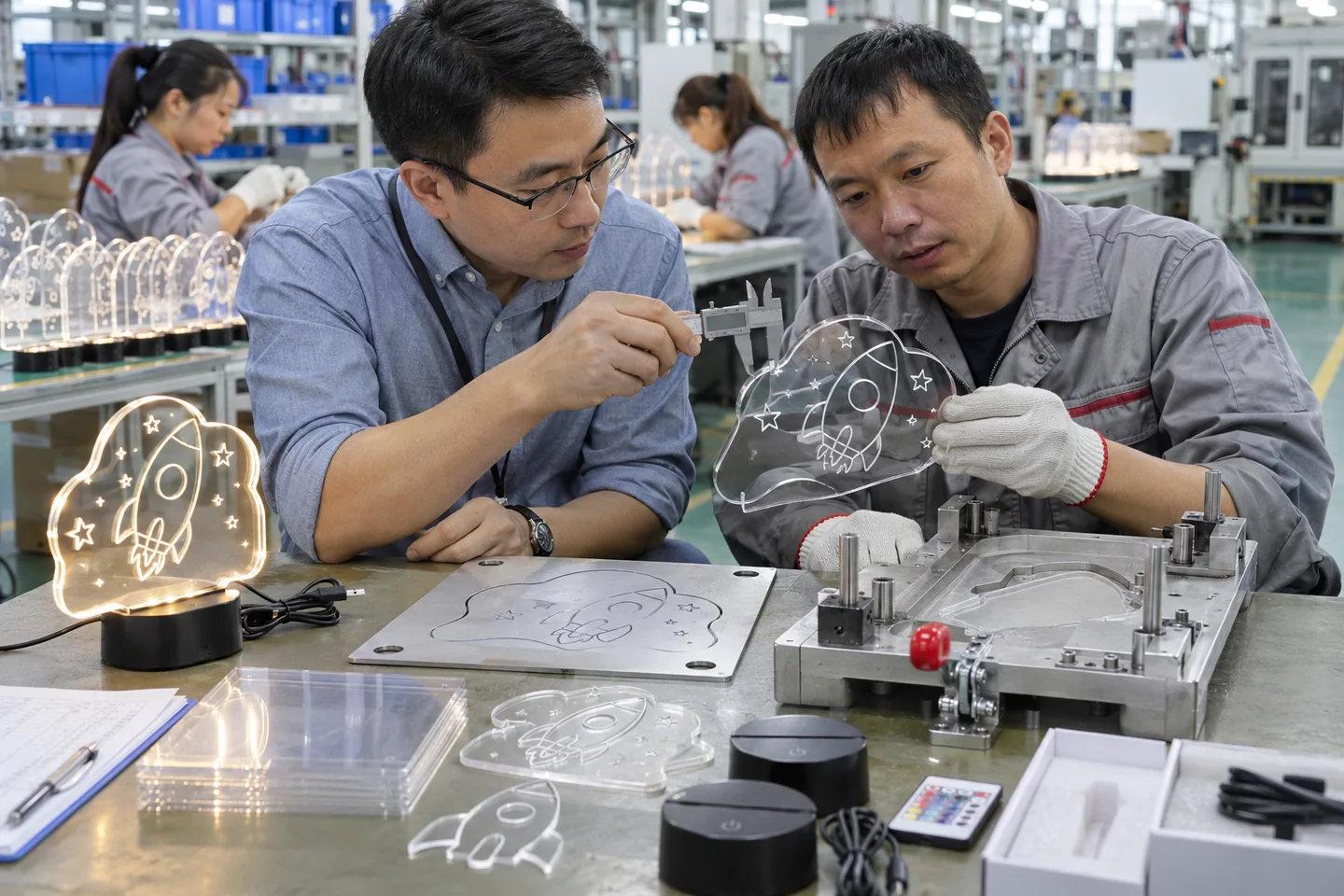
Asian buyer engineer and Chinese tooling technician reviewing a custom shaped acrylic LED board
SHAPE FEASIBILITY REVIEWGeometry, support and illuminated presentation checked together.
BEST FORImportersDistributorsToy & gift retailEcommercePrivate label
FROM IDEA TO IDENTIFIED VERSION

A successful custom shape balances recognition and manufacturability.

Narrow features, internal corners, engraving density, edge treatment, light entry, base slot and packaging protection interact. The development file should show which choices are confirmed and which still require physical evidence.

01

Shape feasibility

Review geometry, material behavior, edge condition, base support and pack protection before treating artwork as production-ready.

02

Illuminated presentation

Consider engraving, line spacing and light path on the actual panel rather than judging the unlit vector alone.

03

Revision control

Connect each prototype, artwork file, dimensional change and approval comment to a named version.

BUYER DECISION GUIDE

Define the shape beyond its outline.

The buyer brief should explain the commercial role and the physical product. LumDigi can then identify standard-platform choices, adaptations and genuinely new development work.

Decision fieldWhat to provideWhy it matters
User and channelWho uses it and where it is soldGuides size, presentation and packed-set choices
Shape referenceVector, sketch or clear visual directionEstablishes the concept without assuming feasibility
Physical envelopeTarget size, base relationship and constraintsConnects the shape to support and packaging
Visual treatmentEngraving, print and light behaviorMakes the illuminated result reviewable
Supplied setPower, markers, accessories and packDefines the complete product under development
Approval evidencePrototype questions and decision ownersPrevents general comments from hiding open risks
HOW IT WORKS

A practical custom-shape path

Each stage should answer defined questions before investment moves to the next stage.

  1. 1

    Brief

    Define the user, channel, shape direction, size, function, supplied set and commercial context.

  2. 2

    Feasibility

    Review geometry, light path, support, process, protection and open buyer-owned requirements.

  3. 3

    Prototype

    Produce an identified version and record appearance, fit, function and requested changes.

  4. 4

    Release

    Align approved files, sample, pack direction, quotation and production checkpoints.

A STRONG FIT WHEN

A stronger project starts with a commercial purpose.

  • The shape supports a range or brand story
  • Target size and channel are understood
  • Prototype feedback owners are named
  • Quantity and packaging scenarios are available
CLARIFY BEFORE QUOTATION

Keep open points visible.

  • Copyright and artwork rights remain buyer responsibilities
  • A rendering does not prove production feasibility
  • Destination requirements need qualified review
  • Tooling or development terms require written confirmation
ENQUIRY CHECKLIST

Custom-shape development brief

Send useful context without waiting for every detail to be final.

  • Company and business email
  • Shape sketch, vector or reference
  • Target size and use context
  • Market and sales channel
  • Quantity scenario
  • Packaging and branding objective
FREQUENTLY ASKED QUESTIONS

Answers before you send the brief

Can every silhouette be manufactured?

No. Geometry, acrylic behavior, light entry, edge condition, base support, processing and packaging can limit or change a concept.

Do I need a final vector file to begin?

No. A clear sketch or reference can start feasibility discussion, but controlled artwork is needed before an approved production release.

Will custom tooling be required?

It depends on the geometry, process and existing platform. Any tooling scope, ownership, maintenance and approval terms should be stated in writing.

Who owns the artwork and intellectual-property review?

The buyer should confirm rights to supplied artwork, characters, trademarks and claims using qualified advisers where needed.

START A SHAPE-DEVELOPMENT BRIEF

Send the idea, market and product context.

LumDigi can organize the initial discussion around feasibility, prototype questions, supplied contents and packaging direction.

Send Your Design
Email Us